Showing posts with label cambodia travel. Show all posts

Wednesday, July 20, 2016

Incredible Angkor Wat

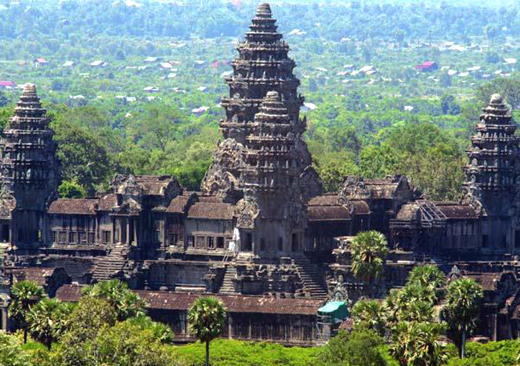
Sited inside the architectural complex of the Khmer Empire, Angkor had been constructed from the 9th to the 15th century with aim of creating a Hindu temple, before transforming into a Buddhist place of worship.

Angkor-Wat-Cambodia-1

By the way of using satellite imaginary, some scientists explained why the construction of Angkor Wat was capable of carrying out. The answer was that ancient Khmer people dig a canal 34km long to transport stone from mountains to the construction area of the temple.

Angkor-Wat-Cambodia-2

This enormous structure was built of 5 million tons of stone and within 35 years. As the icon of Cambodia and also pride of the Cambodian, it has appeared on the country’s national flag since 1850.

Angkor-Wat-Cambodia-3

Angkor Wat has a perimeter of nearly 6km and an area of barely 200ha. Its main tower rise a height of 65m. It is the unique temple mountain in Cambodia featuring the main entrance oriented to the west, the direction in which the sun goes down.

Angkor-Wat-Cambodia-4

The temple was built in the shape of a pyramid. Its central quincunx of five towers symbolizes the five peaks of Mount Meru, a sacred mountain Hindu cosmology, with three sets of steps leading up to the gopuras represent for three levels: the lowest set represents for hell or underground, the middle one represents for earth, and the highest one stands for heaven where deities live.

Angkor-Wat-Cambodia-5

Angkor Wat was inscribed on UNESCO’s World Heritage List in 1992, becoming the cultural icon of not only Cambodia but also Southeast Asia and over Asia.

angkor-wat-Cambodia-number-6

Sunrise is the best time in day that Angkor Wat is most beautiful. Every day from 5 a.m, hundreds of travelers flock to two sides of the lake in front of the temple to contemplate dawn.

Angkor-Wat-Cambodia-7

The entrance fee of Angkor Wat has several different kinds: $20 for one day, $40 for three days and $60 for seven days. Visiting hours are 5:00AM - 6:00PM. Angkor Wat closes at 6:00PM, Banteay Srey closes at 5:00PM and Kbal Spean at 3:00PM. While visiting, always carrying the ticket because it will be checked upon each park entry and at major temples.

Angkor-Wat-Cambodia-8

Angkor Wat was translated as “Temple City” or “City of Temples”.

Angkor-Wat-Cambodia-9

Its bas-reliefs proceed in a counter-clockwise direction, an evidence for the view that it served as a funerary temple, concluded via the truth that the temple is oriented to the west rather than the east like most Khmer temples.

Angkor-Wat-Cambodia-10

Every year, Angkor Wat attracts 50% of foreign tourists travelling to Cambodia.

Angkor-Wat-Cambodia-11

The most original trait of this temple is the sculptural paintings on the wall of the gallery in the first floor. This is one of the largest and longest carved-stone frescos in the world with the height of 2.5m and the length of 800m.

Angkor-Wat-Cambodia-12

The temple has 398 rooms, with stone carving art on ceilings, corridors, balustrades and colonettes manifesting excellent, virtuoso talent of ancient Khmer people. The second floor is adorned with depictions of dancing Apsaras (heavenly nymphs of the clouds and waters in Hindu myth). The third floor includes two corridors forming a cross and intersect perpendicularly at the middle.

Angkor-Wat-Cambodia-13

Another spectacular temple in the Complex of Angkor is Ta Prohm, well-known for giant roofs and vines that weigh down part of the temple. The structure was ever chosen as the shooting location of blockbuster Tom Raider.

Wednesday, May 6, 2015

Cambodia's Mysterious Beauty in Rain

Under a lens of a photographer, famous destinations in Cambodia like Angkor Thom, Killing Fields and Phsar Toul Tom Poung  (Russian market) unexpectedly become beautiful in an extraordinary way in rains. 

Cambodia in rain season 1
The rainy season in Cambodia runs from May to October. Barnaby Jaco Skinner – a Chinese photographer spent a month to travel around Cambodia and captured stunning moments about Cambodian people and country in wet climate condition. 

Cambodia in rain season 2
“Shooting photos in the rainy season is a big challenge.” – He told. However, looking at works after Barnaby Jaco Skinner’s journey, anyone also praises and admires as realizing enchanting beauty which is created by combination between ancient features of constructions and glitter of rainy drops.

Cambodia in rain season 3
Russian market is located in northern Phnom Penh. The name of the market was given after it attracted more and more interest of expatriate Russian people in 1980s. Here, travelers can choose and purchase craft products, gemstone, all kinds of jewelry, souvenirs and textiles.

Cambodia in rain season 4
Barnaby Jaco Skinner commended: “Russian market is one of the greatest markets in the world, where you can find and buy even motorcycle spare parts.”

Cambodia in rain season 5
Sliver pagoda or Preah Vihear Preah Keo Morakot pagoda lying in the core of Cambodian royal palace is a famous attraction in Phnom Penh. The name of the pagoda has its origin from the fact that there were 5,329 pieces of silver paved on the floor. Every piece is also handmade and weigh 1,125g. 

Cambodia in rain season 6
The memorial for ill-fated victims at Killing Fields, nearly 20km from capital Phnom Penh. This place has still maintained about 8,000 skulls of the people who were massacred by Pol Pot genocide regime. 

Cambodia in rain season 7
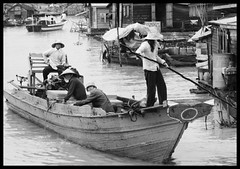
Barnaby Jaco Skinner advised travelers that they should hired a small boat to take photos in Mekong river and contemplated the residents who were fishing in the riversides. 

Cambodia in rain season 8
Below the lens of Barnaby Jaco Skinner, an abandoned house in Kampot also becomes attractive thanks to its mystery. 

Cambodia in rain season 9
The moment that dark clouds rolled was shot by the author in the outskirt of Kep city.

Cambodia in rain season 10
Barnaby Jaco Skinner enjoyed a pleasure when he stood in the top of hotel Two Moons in Kampot with several bottles of beer and contemplated patchy rays of light in the sky owning to thunder.
Cambodia in rain season 11
The photo was taken as he was sitting behind a tuk tuk in a heavy rain.

So, if you desire to have unique photos for your own, let be ready on an amazing adventure travel to Cambodia in the rainy season. 

Thursday, June 16, 2011

Cambodia off the beaten track

Mention you’re going to Cambodia and chances are you’ll end up comparing notes on the glorious temples of Angkor, among the most awe-inspiring – indeed, mind-blowing – monuments ever conceived by the human mind.


It is hardly surprising that so many travelers from around the globe dream of gazing upon the towers of Angkor Wat, walking through the root-strangled gateways of Angkor Thom, and staring back at the enigmatic smiling faces that have made the Bayon famous.

Thursday, June 2, 2011

Green stamp on jungle style

In a country best known for its temples, Jane Dunford finds a floating ecolodge that's a gateway to a pristine environment.

I am, it's fair to say, in the middle of nowhere. This is the Tatai River, east of Koh Kong, in the southern reaches of Cambodia's Cardamom Mountains. Halfway between Bangkok and Phnom Penh, this is a pristine area of rainforest and coastal mangroves that barely features on the tourist trail.

Sunday, May 29, 2011

Active Travel Asia Launches Great Vietnam & Cambodia Summer Promotion 2011

Active Travel Asia (ATA) is offering Great Summer Promotion 2011 in Vietnam and Cambodia. These promotions are guaranteed by luxurious adventure tours, add-on values and reasonable prices.


Active Travel Asia kicks off Special Summer Promotion 2011 covering all kinds of adventure tours include trekking, biking, motorcycling, kayaking and family adventure in Vietnam and Cambodia. All promoted tours are in Vietnam (http://www.activetravelvietnam.com), Cambodia (http://www.activetravelcambodia.com) and three others between Vietnam and Cambodia (http://www.activetravelshop.com). Depend on the value of tours; travelers are got special value-added services.

With this promotion is starting from May, 1st to Sep, 31st 2011, ATA guarantees the best Vietnam and Cambodia travel packages with good prices as well as attractive add-on values as below:
  • Travelers book tours and services with ATA under US$ 300, ATA offers free visa approval letter.
  • Travelers book tours and services with ATA from over US$ 301 to US$ 1000, ATA offers free visa letter, free water Puppet Show and free 2-hr rickshaw guided tour in Hanoi’s Old Quarter
  • Travelers book tours and services with ATA from over US$ 1000 to US$ 2000, ATA offers free visa letter, Free water Puppet Show +and free half-day guided city tour.
  • Travelers book tours and services with ATA from over US$ 2000, ATA offers free visa on arrival, free airport transfer (2 ways) and free guided half-day city tour.
Conditions:
  • This promotion is applied for group size from minimum 1 person to maximum 4 persons. If group is bigger than 4 persons, the promotion for 4 people is applied for the group.
  • This promotion is applied for booking from May, 1 to Sep, 31
The promotion provides travelers real experiences in hidden Indochina (Cambodia and Vietnam travel) with add-on valued services. This makes it suitable all types of groups and those who love any kind of adventure activities.

For the whole Summer Promotion of Cambodia and Vietnam Tours, please refer to http://www.activetravel.asia/special_offer/ or contact ATA at info@activetravel.asia

With the add–on values from this Great Summer Promotion 2011 of ATA, the hesitance will be replaced by the smart decision from who are exited in traveling and getting more real experience.

# # #

ACTIVE TRAVEL ASIA (ATA) is established in 2006 and has grown to become one of the Indochina's leading adventure travel companies. ATA offers a wide selection of Vietnam, Laos, Cambodia and Myanmar adventure tours, including hiking and trekking, biking, motorcycling, overland touring and family travel packages.

Friday, March 11, 2011

Travel to Cambodia, an Exotic Place for Adventure in Southeast Asia

I feel somehow changed by my visit to Angkor Wat. I have been to many wonderful venues in the world, but none made me feel the awesomeness of human determination and accomplishment as did this visit to Cambodia.

Visit to Angkor Wat Recharges the Spirit

Waking up before dawn in Saigon, Vietnam, today I would venture into Cambodia. Cambodia was a land I had heard so much about and had only dreamed of ever getting to visit.

Crossing into Cambodia was like entering a different world, though. Immediately things were not like in Vietnam. The bus ventured on for another seven hours to Siem Riep, the small but charming town that accommodates visitors to the magnificent and awe-inspiring Angkor Wat.

Angkor Wat

I had heard so much about Angkor Wat over the years of my life that is seemed more like a place in myth rather than in reality. I wanted to see it for myself to determine whether all the things I had heard about its magnificence were indeed true.

Angkor Wat temple

Angkor was actually more than just temples. As in any other city, there were houses, shops, medical facilities, and government offices. But only temples were considered important enough to be made of stone. All the other structures were made of wood and have long since ceased to exist. Only the temples, and a library building, remain today.

The spiritual feeling that the visitor to the temple gets is indescribable. I am not a religious person, but I cannot deny that I felt such an intense measure of peace and well being there that I sensed some kind of divine presence. It was so strong that I did not want to leave the temple. It really does capture your spirit and takes your breath away.

There is something magical about some places on earth, and Angkor Wat is certainly one of them.

My words are futile, worthless really. For what words can give life to such a powerful creation, something that is really larger than life itself, and certainly beyond words?

After such a great, uplifting experience exploring Angkor Wat and the other temples, the tour group decided they wanted to explore a floating village on a small river flowing from the gigantic Tonle Sap, Southeast Asia’s largest freshwater lake.

A floating village on the Tonle Sap River

It was yet another interesting adventure in this exotic land. None of the structures that comprise the village – houses, shops, schools, and even a library – was built on land. Every facility was actually a boat that constantly floated on the river. The fluidity and detachment of this village stood in marked contrast to the seeming permanence of the temples of Angkor.

Source: hubpages.com

Wednesday, February 16, 2011

Travel Cambodia by Photos

We’ve never had a disappointing photo trip to Cambodia or Myanmar (Burma) and once again both destinations delivered for us on our recent photo tour.

Angkor Wat and the Angkor Temples

Sunrise at Angkor Wat is a “bucket list” type experience and of course we were no exception. The only problem is that it always seems like every tourist in Cambodia has the same idea. It’s still possible to get some incredible images (I took the one to the left despite the scene around me looking like the image below).

One great thing about photographing Angkor from the West at sunrise is that the structure itself is silhouetted. That can be important as there is nearly perpetual restoration work on the temple itself so there are always some unfortunately colored green tarps somewhere on the towers that are hard to hide and painful to remove in Photoshop. But of course with a silhouette shot it is much easier to ignore them.


Once the sun is up you begin to realize just how many other amazing structures are lurking in the forest nearby. Some of them like Angkor Thom are actually larger than Angkor Wat and offer even more impressive photo opportunities like those we found at the North and East Gates and the Bayon towers. This year Cambodia was blessed with a very strong rainy season so many of the pools at the temples had plenty of water.

Since much of the source of power for the Khmer empire was their irrigation system—allowing them to have two or three rice crops per year, freeing up citizens for the army and temple building—and the temples are in many cases built to help glorify those efforts it is always special to see them in their natural condition with the various ponds and reflecting pools clean and full.

Cambodia Today

As inspiring as the many ancient temples are they are only one reason to visit Cambodia. This primarily rural country has many small villages full of friendly people, colorful markets, and lots of opportunities to learn about and help with some of their unique problems.


A large portion of the Cambodian population was either imprisoned or killed under the Khmer Rouge regime in the 1970s. Their “liberation” by the Vietnamese communists who then governed the country for another twelve years was only a relative improvement. But since their independence in 1980 the Cambodians have made great strides in creating the institutions of democracy and a market economy.

But the legacies of decades of war are still visible. One of the most horrific was the seeding of the country with millions of landmines from the literally dozens of different armed groups that were involved in the string of conflicts that raged through Southeast Asia in the 50s, 60s and 70s.

Temples off the Beaten Path

Some of my very favorite temples are ones which are a little off the beaten path or not on the “whirlwind tour” list of sights. Standing beneath their towers in the dead quiet jungle you can almost imagine that you were back a thousand years ago when they were built.

It is hard to believe when you first see the mammoth stone edifices but the Khmer never invented the arch, so all of the temples are made of stacks of large blocks of rock using either lintels or corbelling to create interior space.

More incredible is that they did not use any type of mortar so the structures were all “dry-stacked” together, in many cases so carefully hewn that a piece of paper would not slide between blocks each weighing many tons—and hauled as far as 60 miles from where they were originally quarried.


Beng Melea has been left nearly untouched from the way it was found in the jungle. Since it was surrounded by landmines until it was cleared just a couple years ago it is also very well preserved.

Wandering around it makes you feel a little like Indiana Jones.

Srah Srang Reservoir at Sunset. Water was central to the Khmer empire, whether it was the huge lakes used to feed their irrigation systems or “decoratitve” reservoirs like this one used by royalty.


Bantay Samre is nearly as intricate as the larger Angkor Wat, but because it is a little harder to get to it is much less crowded.

Stairs in this temple, like many, were steep on purpose as the “stairway to heaven” was supposed to be difficult. Today many of them are protected with wooden overlays which will preserve their rock faces and make climbing much easier for visitors.

Beyond Angkor—Rolous

Many tourists never get a chance to get very far from Siem Reap and the Angkor temples, since it typically requires having a driver and vehicle and it helps to have a Cambodian guide to translate as needed with the locals.

We always take a day to venture a little further afield and visit both the Rolous Group of temples—the pre-Angkorian Khmer temples—and the surrounding towns, monasteries and markets.


Many of the more remote temples are treated as a regular feature of village life by the locals. This girl was on her way to school cutting through the temple grounds when she stopped to pose for Alison to capture her portrait. Many of the children enjoy having their photos taken and even posing for shots in exchange for getting to look at the results in the LCD.

Source: http://www.cardinalphoto.com
By: David Cardinal

Sunday, January 30, 2011

Visit to Vietnam and Cambodia in uncommon vacation

If you are the type that enjoys the uncommon vacation and exploring areas of the world that most do not, I have some ideas for you in travelling to Vietnam and Cambodia.

How about flying into Bangkok, Thailand and exploring this fascinating Asian city before moving on to Angkor Wat in northern Cambodia followed by a visit to Vietnam.

Fly on to Siem Reap in Cambodia from Bangkok. Here is the mystical temple complex of Angkor. You will have the opportunity to visit the new Angkor National Museum, which showcases the Golden Age of the Khmer Era.

A guide will walk you through the temple complex which is vast and set in the outskirts of jungle. Angkor Wat and Angkor Thom are former temples with carved smiling faces and detailed bas-reliefs depicting scenes of everyday life in the 12th century.

Angkor Thom, CambodiaAngkor Thom, Cambodia

There will also be the opportunity to visit Ta Prohm, a haunting, jungle-bound temple. Angkor Thom was hidden from the outside world until the earlier part of the 20th century until French explorers found the area and put together a work force to clear the jungle overgrowth. Later other countries sent people to assist in the work. It is now open to visit for your exploration.

Angkor Wat was constructed between the 9th and 13th century. It is revered as one of the world’s most impressive temple sites.

I have had the pleasure to visit Angkor Wat and Angkor Thom twice in my lifetime and for me it is second only to the antiquities in Egypt.

On the outskirts of Angkor Wat is Angteay Srei temple, a true jewel of Khmer art. Its red sandstone walls, decorated with elaborate carvings, are amazingly preserved.

You will also have the opportunity to see Preah Khan, originally a Buddist monastery, now a temple showcasing elaborate carvings.

You can even set sail on Tonie Sap, the great lake of Angkor Wat. There are communities that live and work on the lake and you can see the population in their daily lives.

Next, I suggest your flying on to Hanoi in Vietnam. Here, you will also need to be part of an organized tour unless you choose to hire a private guide and automobile.

A guide will inform you about Vietnam’s economy, which has come up since the war. I just purchased a pair of shoes and I looked inside to see where they were made — Vietnam!

While there, step inside the Ho Chi Minh Mausoleum. At One Pillar Pagoda is seen Vietnamese history spanning a thousand years.

In Hanoi, explore the old quarter, revered as a jewel of Hanoi because of its idyllic setting around pristine Hoan Kiem Lake and the nearby labyrinthine streets dedicated to regional merchandise.

One night, book a seat at the famous Vietnam Water Puppet Theatre.

Halong Bay, VietnamHalong Bay, Vietnam

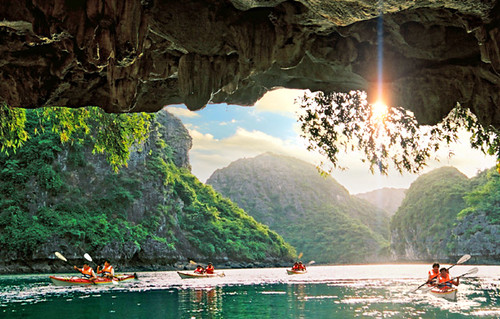
Another morning, drive to Halong Bay where you will board a junk boat for an overnight cruise. You can also take a sampan ride to discover a small gateway of the limestone karst, which opens into a scenic lagoon with coral reefs.

Another morning you can experience a Tai Chi lesson if you wish. Now, on to Danang and a short drive to the city of Hoi An, the 16th and 17th century trading port of Vietnam. How about taking a pedal cab tour of Hoi An to see and photograph the lifestyle of the local people and the Chinese architecture which is unspoiled since the 17th century.

Then you can drive along the coast from Hoi An to the city of Hue. Here is time to see the old Imperial City, including the Citadel and then Thien Mu Pagoda.

Also while in Hoi An, you can take a leisurely cruise up the Perfume River to the cooking school. You will be able to cook Vietnamese style when you get home. The school will show you how you can cook five traditional Vietnamese meals.

Now it’s time to visit the Mekong Delta and the agricultural region so well known during the war. Here, you can board a small boat to explore the small islands and perhaps stop at a fruit stand for a local snack.

How to travel there

ACTIVETRAVEL ASIA is one of leading tour operator include adventure tours and uncommon activities in Vietnam, Laos and Cambodia. Reach them at info@activetravel.asia or visit their website: http://www.activetravel.asia

Monday, January 10, 2011

Travel Vietnam & Cambodia - Fancy a Far East adventure

The New Year is fast approaching, so now is a good time to consider next year's break. With the economy slowly but surely improving, why not travel to somewhere a little more exciting in 2011?

Vietnam holidays are certainly an option worth considering, with the Far East nation offering visitors spectacular landscapes, a fascinating culture and a friendly population. A nation that has successfully emerged from the ravages of war, Vietnam is being explored by an increasing number of travellers, all of whom are keen to experience this most unique of destinations. While its recent history is inescapable, so too is its soaring mountains, stunning coastline and iconic rice fields.

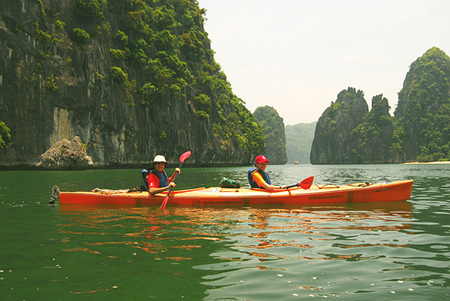
Kayaking tour in Halong Bay, VietnamKayaking tour in Halong Bay, Vietnam

With so much to take in, travellers arriving in Vietnam will want to arrange their transport as early as possible. Trains are perhaps the most comfortable way of travelling around the country, although there is only one major line; that linking Hanoi and Ho Chi Minh, a journey that takes around 30 hours to complete.

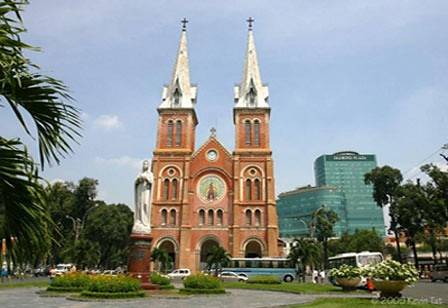
Notre Dame Cathedral, Ho Chi Minh, VietnamNotre Dame Cathedral, Ho Chi Minh, Vietnam

Buses are a cheaper option, with intercity services tending to depart at the crack of dawn in order to beat the morning rush. Services take a while, however, so be prepared to give up a day or two here and there for travelling. Once you've arrived at your chosen destination, you will certainly want to get out and explore your surroundings; in which case, car rental might be an option worth considering.

While hiring your own car is only possible in Vietnam's main cities, you can hire a vehicle with a driver elsewhere. So, not only will you avoid having to negotiate the country's often hectic road network, you will be able to take advantage of local knowledge, possibly discovering places a little off the beaten track and learning a bit of Vietnamese along the way.

The Far East is a long way to travel, so there's no reason to limit your trip to a single country. Neighbouring Cambodia is another nation that has fully embraced tourism. Fortunately, then, there are a number of Vietnam and Cambodia tours for travellers to take advantage of.

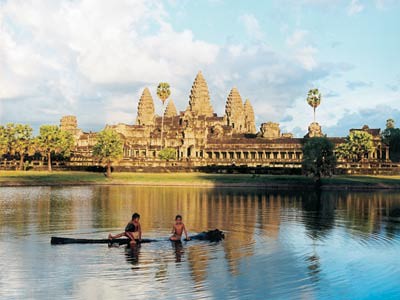
Angkor Wat Temple, CambodiaAngkor Wat Temple, Cambodia

Angkor Wat is arguably the jewel in Cambodia's crown. The huge temple complex, one of the finest examples of classical Khmer architecture, has become the nation's symbol. Dating back to the 12th century, Angkor Wat is the World's largest religious building and has pride of place on Cambodia's flag.

While Cambodia is awash with culture and historical artefacts, travellers will inevitably want some downtime during their Far Eastern adventure. Sihanoukville, known among tourists as Snookyville, is a popular seaside town and home to the country's best beaches. Seemingly becoming more popular as each year passes, Sihanoukville was recently referred to by the New York Times as "Asia's next trendsetting beach".

Seemingly a million miles away, Phnom Penh, Cambodia's capital, is referred to as one of the Far East's remaining undiscovered destinations. Despite being deeply affected by war and revolution, Phnom Penh is a city of optimism and colour; a place of Buddhists, spice markets and a burgeoning economy. It's likely you'll visit the city during your Cambodian adventure, and while the inevitable assault on the senses may exhaust you, it's certainly worth spending a day or two here.

No visit to the eastern corner of Asia can be complete without seeing some of the region's wildlife, so a visit to the 1,581 sq km Bokor National Park comes highly recommended. Home to green peafowl, chestnut-headed partridge and even tigers, the park is well worth a visit, even if it's just to see the deserted French hill station, Bokor, that it contains.

Vietnam and Cambodia are two nations opening their arms to tourism. Why not discover each country next year before everyone else does?

Source : forres-gazette

Thursday, January 6, 2011

Where and how to meet minorities in Southeast Asia

Minority cultures in Southeast Asia are often time capsules of earlier lifestyles that have escaped the full force of globalisation’s effects. Consequently, they are a highlight for travellers to the region who want to get a sense of a country’s past…as it collides with the present.

But how do you ensure that while visiting, you don’t cause unintended damage or offence? You can show your respect for a culture by being educated about its ways, beliefs and taboos. Here are a few general guidelines:

1. Always ask permission before taking photos of tribespeople.

2. Don’t touch totems at village entrances or sacred items hanging from trees.

3. Avoid cultivating a tradition of begging, especially among children.

4. Avoid public nudity and don’t undress near an open window.

5. Don’t flirt with members of the opposite sex.

6. Don’t drink or do drugs with the villagers.

7. Smile at villagers even if they stare.

8. Ask your guide how to say ‘hello’.

9. Avoid public displays of affection, which might be viewed as offensive to the spirit world.

10. Don’t interact with the villagers’ livestock; avoid interacting with jungle animals, which might be viewed as visiting spirits.

11. Don’t step on the threshold of a house, prop your feet up against the fire or wear your shoes inside.

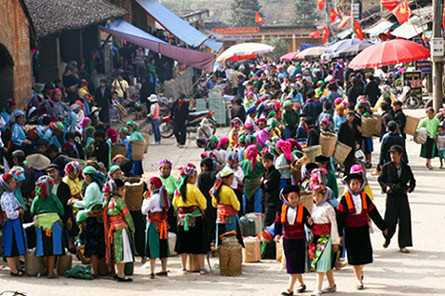
The local annual The local annual "love market" in Ha Giang, Vietnam

Where to meet Southeast Asia’s minority cultures

If you want to meet minority cultures, you’ll often have to get away from popular tourist centres; how far you’ll have to go depends very much on the country and how popular it is with visitors.

The trekking industry in Thailand is very developed and a minority visit can be a disappointment for some, but much depends on the operator organising the trip. Northern Vietnam and the Xīshuāngbǎnnà region of Yúnnán have emerged as popular places to experience minority cultures. Laos is really taking off as a destination to meet minority groups, partly due to its ethnically diverse population and in part due to the relatively small numbers of visitors venturing off the beaten path.

Cambodia and the Central Highlands of Vietnam provide a home to some minority groups in the northeast, but as they dress like lowland Khmer or Vietnamese, they have been less exposed to mass tourism than elsewhere. As for the effects of trekking on the host tribes, many agree that individuals within the village might financially benefit when the trekking companies purchase supplies and lodging, but the overall pluses and minuses are considered to be minimal compared to other larger institutional forces.

Lonely Planet has a suggestion of the top 5 spots for a genuine interaction with a minority culture in Southeast Asia:

1. Cambodia: Ratanakiri
2. Laos: Muang Sing
3. Thailand: Chiang Rai
4. Vietnam: Sapa
5. Yúnnán: Xīshuāngbannà

But there are many other important minority groups in the region, some rendered stateless by the conflicts of the past, others recent migrants to the region, including the many hill tribes.

Cham

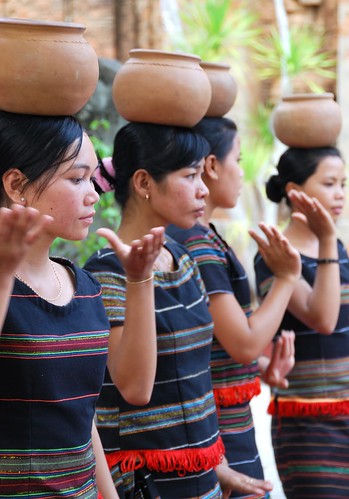
The Cham girlsThe Cham girls

The Cham people originally occupied the kingdom of Champa in southcentral Vietnam and their beautiful brick towers dot the landscape from Danang to Phan Rang. Victims of a historical squeeze between Cambodia and Vietnam, their territory was eventually annexed by the expansionist Vietnamese. Originally Hindu, they converted to Islam in the 16th and 17th centuries and many migrated south to Cambodia. Today there are small numbers of Cham in Vietnam and as many as half a million in Cambodia, all of whom continue to practise a flexible form of Islam. Over the centuries, there has been considerable intermarriage between Cham and Malay traders.

Hmong

Hmong peopleHmong people

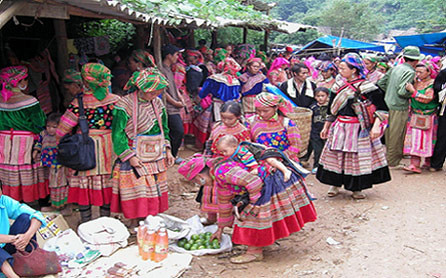
The Hmong are one of the largest hill tribes in the Mekong region, spread through much of northern Laos, northern Vietnam, Thailand and Yúnnán.Hmong groups are usually classified by their colourful clothing, including Black Hmong, White Hmong, Red Hmong and so on. The brightest group is the Flower Hmong of northwest Vietnam, living in villages around Bac Ha. The Hmong are known for their embroidered indigo-dyed clothing and their ornate silver jewellery. There may be as many as one million Hmong in the Mekong region, half of them living in the mountains of Vietnam.

Jarai

The Jarai are the most populous minority in the Central Highlands of Vietnam, northeast Cambodia and southern Laos. Villages are often named for a nearby river, stream or tribal chief, and a nha-Rong (communal house) is usually found in the centre. Jarai women typically propose marriage to the men through a matchmaker, who delivers the prospective groom a copper bracelet. Animistic beliefs and rituals still abound, and the Jarai pay respect to their ancestors and nature through a host or yang (genie). The Jarai construct elaborate cemeteries for their dead, which include carved effigies of the deceased. These totems can be found in the forests around villages, but sadly many are being snapped up by culturally insensitive collectors.

Dzao

The Red DzaoThe Red Dzao

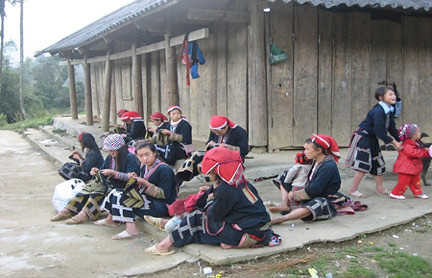
The Dzao (also known as Yao or Dao) are one of the largest and most colourful ethnic groups in Vietnam and are also found in Laos, Thailand and Yúnnán. The Dzao practise ancestor worship of spirits, or ban ho (no relation to Uncle Ho), and hold elaborate rituals with sacrifices of pigs and chickens. The Dzao are famous for their elaborate dress. Women’s clothing typically features intricate weaving and silver-coloured beads and coins – the wealth of a woman is said to be in the weight of the coins she carries. Their long flowing hair, shaved above the forehead, is tied up into a large red or embroidered turban, a sort of skinhead-meets-silk combination.

Source : lonelyplanet

Monday, December 13, 2010

ACTIVETRAVEL ASIA organized Unique Tour like “ James Bond film” near Angkor Wat, Cambodia

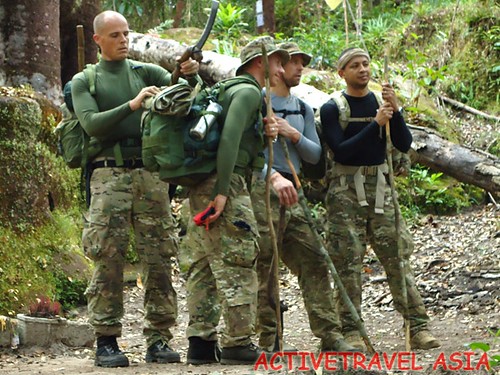
Travelers become the commandos with a mission to release the British Journalist in deep jungle of Cambodia who are searching a treasure and kidnapped by some Khmer rouge Soldiers. The commandos fly in on helicopter from Bangkok, Thailand and land and walk through jungle in Cambodia, crossing stream, abseiling big rock at night to reach the ruin.

The ruin in the deep jungleThe ruin in the deep jungle, Cambodia

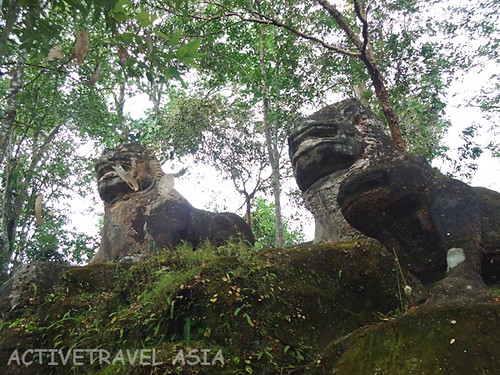
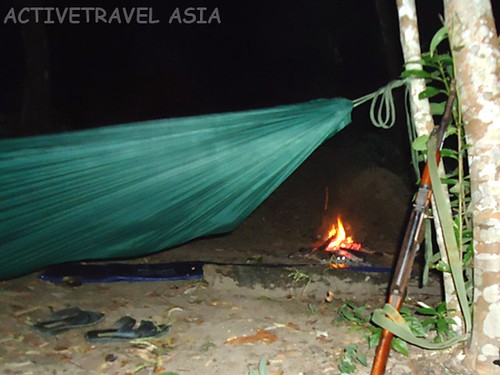
In the ruin of a 1000-year old temple hidden in deep jungle of Phnom Kuleane Mountain, 70 km from Siem Reap, Cambodia, a British journalist is captured and tortured badly by some Khmer rouge soldiers. The journalist has a mission of searching for a treasure that is believed to keep a great power which can open the door to future and could change the future of the world. The journalist has the coordinates where the treasure is hidden and he was kidnapped when he arrived in Siem Reap. The Khmer rouge soldiers base in the jungle of Phnom Kuleane and is also looking for the treasure in order to get back their power. They are informed about the journalist’s journey by their secret agent. And that happen… a team of commandos is sent to the Phnom Kuleane to free the journalist and help him to complete his mission. The commandos fly in on helicopter and land 9 km from the ruin, they walk through jungle, crossing stream, abseiling big rock to reach the ruin. They camp 1 km near the ruin under a big tree and sleep in hammocks. After settling and eating the commandos quietly approach the ruin, they used night vision to locate all the positions and plan for the attack the next day.

The commandos are ready for the rescueThe commandos are ready for the rescue

Next morning, while the Khmer rough soldiers gather for breakfast, the commandos launch the attack and quickly rescue the hostage. They escape into the jungle again and head to the treasure location. The reach the treasure location by 5 pm the same day and successfully find it. They camp the second night in jungle. The next day they find their way back to Siem Reap… the mission completed.

The hammock which they sleptThe hammock which they slept

That is not a script of a Hollywood movie though it happened exactly as it is described above. This is a tour organized by ACTIVETRAVEL ASIA ( ATA) for its client, a security service firm from UK. The tour was greatly successful and everybody who involved in playing it or organizing it enjoyed it so much. It was extreme and fun the first 2 days of the tour and relaxing on the last day with a sightseeing tour of Angkor Wat, a fancy dining in the luxurious Grand D’angkor Hotel and an interesting night-life exploration of Siem Reap.

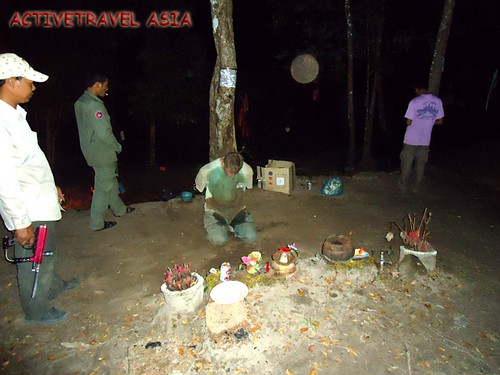
A hostage is capturedA hostage is captured

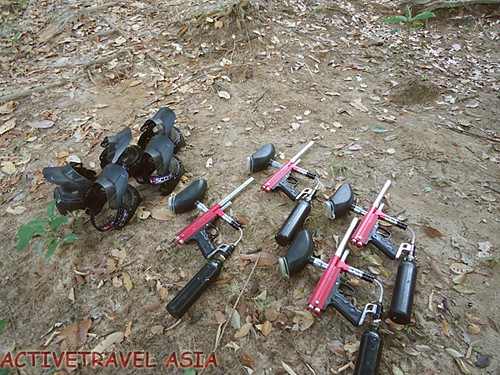
And the guns in the battleAnd the guns in the battle

This is the first one of this sort organized in Cambodia and ATA is planning to promote this sort of tour (game) in 2011. See below the rough some photos and behind the scene video of the tour. The complete video version will be updated soon.

By ACTIVETRAVEL ASIA