Showing posts with label Travel Angkor Wat. Show all posts

Friday, March 11, 2011

Travel to Cambodia, an Exotic Place for Adventure in Southeast Asia

I feel somehow changed by my visit to Angkor Wat. I have been to many wonderful venues in the world, but none made me feel the awesomeness of human determination and accomplishment as did this visit to Cambodia.

Visit to Angkor Wat Recharges the Spirit

Waking up before dawn in Saigon, Vietnam, today I would venture into Cambodia. Cambodia was a land I had heard so much about and had only dreamed of ever getting to visit.

Crossing into Cambodia was like entering a different world, though. Immediately things were not like in Vietnam. The bus ventured on for another seven hours to Siem Riep, the small but charming town that accommodates visitors to the magnificent and awe-inspiring Angkor Wat.

Angkor Wat

I had heard so much about Angkor Wat over the years of my life that is seemed more like a place in myth rather than in reality. I wanted to see it for myself to determine whether all the things I had heard about its magnificence were indeed true.
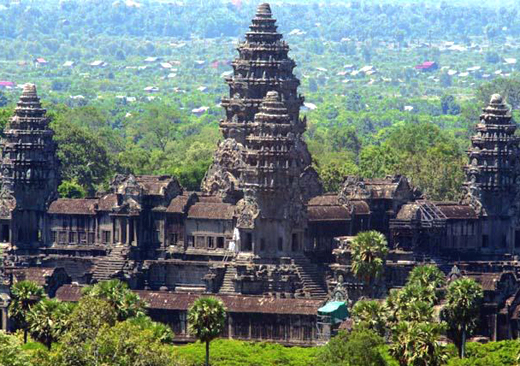
Angkor Wat temple

Angkor was actually more than just temples. As in any other city, there were houses, shops, medical facilities, and government offices. But only temples were considered important enough to be made of stone. All the other structures were made of wood and have long since ceased to exist. Only the temples, and a library building, remain today.

The spiritual feeling that the visitor to the temple gets is indescribable. I am not a religious person, but I cannot deny that I felt such an intense measure of peace and well being there that I sensed some kind of divine presence. It was so strong that I did not want to leave the temple. It really does capture your spirit and takes your breath away.

There is something magical about some places on earth, and Angkor Wat is certainly one of them.

My words are futile, worthless really. For what words can give life to such a powerful creation, something that is really larger than life itself, and certainly beyond words?

After such a great, uplifting experience exploring Angkor Wat and the other temples, the tour group decided they wanted to explore a floating village on a small river flowing from the gigantic Tonle Sap, Southeast Asia’s largest freshwater lake.
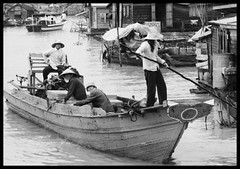
A floating village on the Tonle Sap River

It was yet another interesting adventure in this exotic land. None of the structures that comprise the village – houses, shops, schools, and even a library – was built on land. Every facility was actually a boat that constantly floated on the river. The fluidity and detachment of this village stood in marked contrast to the seeming permanence of the temples of Angkor.

Source: hubpages.com

Wednesday, February 16, 2011

Travel Cambodia by Photos

We’ve never had a disappointing photo trip to Cambodia or Myanmar (Burma) and once again both destinations delivered for us on our recent photo tour.

Angkor Wat and the Angkor Temples

Sunrise at Angkor Wat is a “bucket list” type experience and of course we were no exception. The only problem is that it always seems like every tourist in Cambodia has the same idea. It’s still possible to get some incredible images (I took the one to the left despite the scene around me looking like the image below).

One great thing about photographing Angkor from the West at sunrise is that the structure itself is silhouetted. That can be important as there is nearly perpetual restoration work on the temple itself so there are always some unfortunately colored green tarps somewhere on the towers that are hard to hide and painful to remove in Photoshop. But of course with a silhouette shot it is much easier to ignore them.


Once the sun is up you begin to realize just how many other amazing structures are lurking in the forest nearby. Some of them like Angkor Thom are actually larger than Angkor Wat and offer even more impressive photo opportunities like those we found at the North and East Gates and the Bayon towers. This year Cambodia was blessed with a very strong rainy season so many of the pools at the temples had plenty of water.

Since much of the source of power for the Khmer empire was their irrigation system—allowing them to have two or three rice crops per year, freeing up citizens for the army and temple building—and the temples are in many cases built to help glorify those efforts it is always special to see them in their natural condition with the various ponds and reflecting pools clean and full.

Cambodia Today

As inspiring as the many ancient temples are they are only one reason to visit Cambodia. This primarily rural country has many small villages full of friendly people, colorful markets, and lots of opportunities to learn about and help with some of their unique problems.


A large portion of the Cambodian population was either imprisoned or killed under the Khmer Rouge regime in the 1970s. Their “liberation” by the Vietnamese communists who then governed the country for another twelve years was only a relative improvement. But since their independence in 1980 the Cambodians have made great strides in creating the institutions of democracy and a market economy.

But the legacies of decades of war are still visible. One of the most horrific was the seeding of the country with millions of landmines from the literally dozens of different armed groups that were involved in the string of conflicts that raged through Southeast Asia in the 50s, 60s and 70s.

Temples off the Beaten Path

Some of my very favorite temples are ones which are a little off the beaten path or not on the “whirlwind tour” list of sights. Standing beneath their towers in the dead quiet jungle you can almost imagine that you were back a thousand years ago when they were built.

It is hard to believe when you first see the mammoth stone edifices but the Khmer never invented the arch, so all of the temples are made of stacks of large blocks of rock using either lintels or corbelling to create interior space.

More incredible is that they did not use any type of mortar so the structures were all “dry-stacked” together, in many cases so carefully hewn that a piece of paper would not slide between blocks each weighing many tons—and hauled as far as 60 miles from where they were originally quarried.


Beng Melea has been left nearly untouched from the way it was found in the jungle. Since it was surrounded by landmines until it was cleared just a couple years ago it is also very well preserved.

Wandering around it makes you feel a little like Indiana Jones.

Srah Srang Reservoir at Sunset. Water was central to the Khmer empire, whether it was the huge lakes used to feed their irrigation systems or “decoratitve” reservoirs like this one used by royalty.


Bantay Samre is nearly as intricate as the larger Angkor Wat, but because it is a little harder to get to it is much less crowded.

Stairs in this temple, like many, were steep on purpose as the “stairway to heaven” was supposed to be difficult. Today many of them are protected with wooden overlays which will preserve their rock faces and make climbing much easier for visitors.

Beyond Angkor—Rolous

Many tourists never get a chance to get very far from Siem Reap and the Angkor temples, since it typically requires having a driver and vehicle and it helps to have a Cambodian guide to translate as needed with the locals.

We always take a day to venture a little further afield and visit both the Rolous Group of temples—the pre-Angkorian Khmer temples—and the surrounding towns, monasteries and markets.


Many of the more remote temples are treated as a regular feature of village life by the locals. This girl was on her way to school cutting through the temple grounds when she stopped to pose for Alison to capture her portrait. Many of the children enjoy having their photos taken and even posing for shots in exchange for getting to look at the results in the LCD.

Source: http://www.cardinalphoto.com
By: David Cardinal

Sunday, January 30, 2011

Visit to Vietnam and Cambodia in uncommon vacation

If you are the type that enjoys the uncommon vacation and exploring areas of the world that most do not, I have some ideas for you in travelling to Vietnam and Cambodia.

How about flying into Bangkok, Thailand and exploring this fascinating Asian city before moving on to Angkor Wat in northern Cambodia followed by a visit to Vietnam.

Fly on to Siem Reap in Cambodia from Bangkok. Here is the mystical temple complex of Angkor. You will have the opportunity to visit the new Angkor National Museum, which showcases the Golden Age of the Khmer Era.

A guide will walk you through the temple complex which is vast and set in the outskirts of jungle. Angkor Wat and Angkor Thom are former temples with carved smiling faces and detailed bas-reliefs depicting scenes of everyday life in the 12th century.

Angkor Thom, CambodiaAngkor Thom, Cambodia

There will also be the opportunity to visit Ta Prohm, a haunting, jungle-bound temple. Angkor Thom was hidden from the outside world until the earlier part of the 20th century until French explorers found the area and put together a work force to clear the jungle overgrowth. Later other countries sent people to assist in the work. It is now open to visit for your exploration.

Angkor Wat was constructed between the 9th and 13th century. It is revered as one of the world’s most impressive temple sites.

I have had the pleasure to visit Angkor Wat and Angkor Thom twice in my lifetime and for me it is second only to the antiquities in Egypt.

On the outskirts of Angkor Wat is Angteay Srei temple, a true jewel of Khmer art. Its red sandstone walls, decorated with elaborate carvings, are amazingly preserved.

You will also have the opportunity to see Preah Khan, originally a Buddist monastery, now a temple showcasing elaborate carvings.

You can even set sail on Tonie Sap, the great lake of Angkor Wat. There are communities that live and work on the lake and you can see the population in their daily lives.

Next, I suggest your flying on to Hanoi in Vietnam. Here, you will also need to be part of an organized tour unless you choose to hire a private guide and automobile.

A guide will inform you about Vietnam’s economy, which has come up since the war. I just purchased a pair of shoes and I looked inside to see where they were made — Vietnam!

While there, step inside the Ho Chi Minh Mausoleum. At One Pillar Pagoda is seen Vietnamese history spanning a thousand years.

In Hanoi, explore the old quarter, revered as a jewel of Hanoi because of its idyllic setting around pristine Hoan Kiem Lake and the nearby labyrinthine streets dedicated to regional merchandise.

One night, book a seat at the famous Vietnam Water Puppet Theatre.

Halong Bay, VietnamHalong Bay, Vietnam

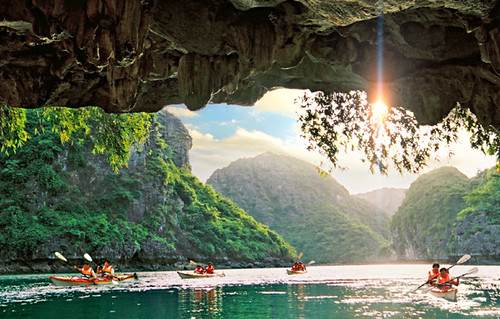
Another morning, drive to Halong Bay where you will board a junk boat for an overnight cruise. You can also take a sampan ride to discover a small gateway of the limestone karst, which opens into a scenic lagoon with coral reefs.

Another morning you can experience a Tai Chi lesson if you wish. Now, on to Danang and a short drive to the city of Hoi An, the 16th and 17th century trading port of Vietnam. How about taking a pedal cab tour of Hoi An to see and photograph the lifestyle of the local people and the Chinese architecture which is unspoiled since the 17th century.

Then you can drive along the coast from Hoi An to the city of Hue. Here is time to see the old Imperial City, including the Citadel and then Thien Mu Pagoda.

Also while in Hoi An, you can take a leisurely cruise up the Perfume River to the cooking school. You will be able to cook Vietnamese style when you get home. The school will show you how you can cook five traditional Vietnamese meals.

Now it’s time to visit the Mekong Delta and the agricultural region so well known during the war. Here, you can board a small boat to explore the small islands and perhaps stop at a fruit stand for a local snack.

How to travel there

ACTIVETRAVEL ASIA is one of leading tour operator include adventure tours and uncommon activities in Vietnam, Laos and Cambodia. Reach them at info@activetravel.asia or visit their website: http://www.activetravel.asia

Monday, December 13, 2010

ACTIVETRAVEL ASIA organized Unique Tour like “ James Bond film” near Angkor Wat, Cambodia

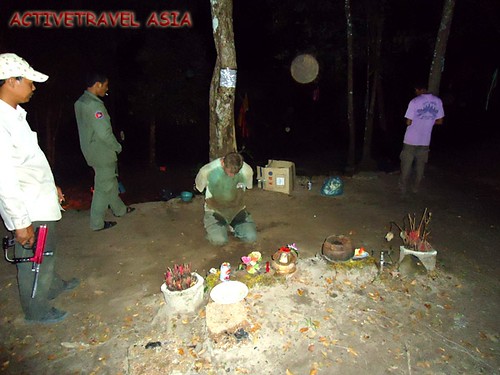
Travelers become the commandos with a mission to release the British Journalist in deep jungle of Cambodia who are searching a treasure and kidnapped by some Khmer rouge Soldiers. The commandos fly in on helicopter from Bangkok, Thailand and land and walk through jungle in Cambodia, crossing stream, abseiling big rock at night to reach the ruin.

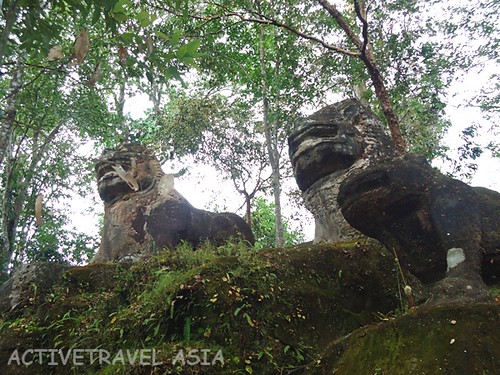
The ruin in the deep jungleThe ruin in the deep jungle, Cambodia

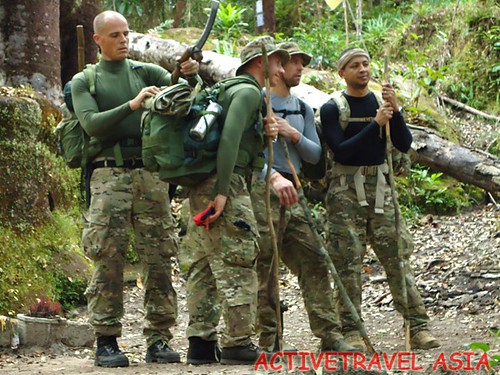
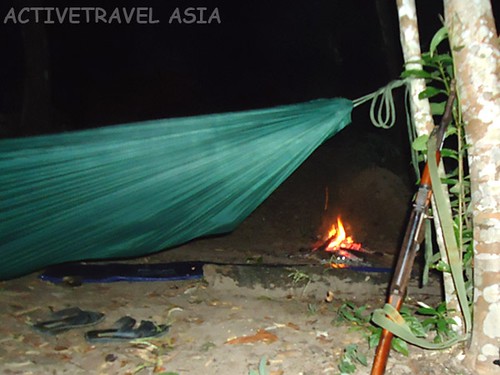
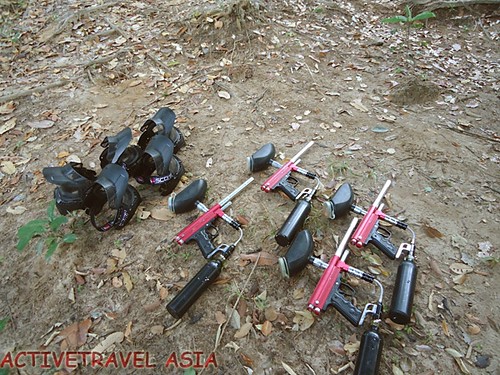
In the ruin of a 1000-year old temple hidden in deep jungle of Phnom Kuleane Mountain, 70 km from Siem Reap, Cambodia, a British journalist is captured and tortured badly by some Khmer rouge soldiers. The journalist has a mission of searching for a treasure that is believed to keep a great power which can open the door to future and could change the future of the world. The journalist has the coordinates where the treasure is hidden and he was kidnapped when he arrived in Siem Reap. The Khmer rouge soldiers base in the jungle of Phnom Kuleane and is also looking for the treasure in order to get back their power. They are informed about the journalist’s journey by their secret agent. And that happen… a team of commandos is sent to the Phnom Kuleane to free the journalist and help him to complete his mission. The commandos fly in on helicopter and land 9 km from the ruin, they walk through jungle, crossing stream, abseiling big rock to reach the ruin. They camp 1 km near the ruin under a big tree and sleep in hammocks. After settling and eating the commandos quietly approach the ruin, they used night vision to locate all the positions and plan for the attack the next day.

The commandos are ready for the rescueThe commandos are ready for the rescue

Next morning, while the Khmer rough soldiers gather for breakfast, the commandos launch the attack and quickly rescue the hostage. They escape into the jungle again and head to the treasure location. The reach the treasure location by 5 pm the same day and successfully find it. They camp the second night in jungle. The next day they find their way back to Siem Reap… the mission completed.

The hammock which they sleptThe hammock which they slept

That is not a script of a Hollywood movie though it happened exactly as it is described above. This is a tour organized by ACTIVETRAVEL ASIA ( ATA) for its client, a security service firm from UK. The tour was greatly successful and everybody who involved in playing it or organizing it enjoyed it so much. It was extreme and fun the first 2 days of the tour and relaxing on the last day with a sightseeing tour of Angkor Wat, a fancy dining in the luxurious Grand D’angkor Hotel and an interesting night-life exploration of Siem Reap.

A hostage is capturedA hostage is captured

And the guns in the battleAnd the guns in the battle

This is the first one of this sort organized in Cambodia and ATA is planning to promote this sort of tour (game) in 2011. See below the rough some photos and behind the scene video of the tour. The complete video version will be updated soon.

By ACTIVETRAVEL ASIA

Friday, November 19, 2010

Angkor Tops List of 'Most Recommended' World Heritage Sites

By: MTCO COMMUNICATIONS

A recent UNESCO / Trip advisor Survey reveals Angkor is the most recommended World Heritage site by a quarter millions travellers worldwide and that 72% would do more to help heritage conservation if they knew how.

Cambodia tours

TripAdvisor revealed the results to date of the biggest analysis ever conducted of UNESCO's World Heritage sites around the world.

The two year partnership between TripAdvisor, and UNESCO's World Heritage Centre launched in October 2009 to raise awareness of and gain travellers' support to preserve natural and cultural sites inscribed on UNESCO's World Heritage list. Within the partnership, TripAdvisor will also donate up to $1.5 million (USD) of support to the World Heritage Centre to help monitor the conservation of the world's most important cultural and historic sites.

Via on-site and email campaigns, TripAdvisor has, to date, collected nearly a quarter of a million (244,690) feedback submissions from travellers who have visited 789 of UNESCO's recently expanded list of 911 World Heritage sites. The results provide a unique insight into the views and recommendations of travellers themselves. As part of the partnership, TripAdvisor shares the feedback to the World Heritage Centre so that it may better engage UNESCO member states in matters of site conservation.

TripAdvisor travellers have given the nod to Angkor, Cambodia as the number one recommended UNESCO site to visit in the world, describing it as amongst other quotes, "Absolutely breathtaking" and "One of the wonders of the world." The second and third most recommended World Heritage sites are both in Italy and are respectively the Historic Center of Rome, the properties of the Holy See, and the Historic Centre of Florence.

The TripAdvisor travellers' feedback also highlights those World Heritage sites they consider need the most attention. At the top of UNESCO's sites in 'Worst Condition' comes the Kasbah of Algiers in Algeria, described as a "crumbling site". The site includes remains of old mosques, Ottoman-style palaces and traditional urban structures.

Because countries often hope to draw additional tourism following the inscription of their sites onto the WH List, traveller feedback from TripAdvisor can help them address some of the issues raised and improve tourism to their sites.

TripAdvisor is encouraging the contribution of reviews and opinions from its large and passionate community of millions of members to provide much needed information about the condition of World Heritage sites so they may be better protected. In order to compile traveler feedback on nearly 900 World Heritage sites across the globe, UNESCO's World Heritage Centre invited TripAdvisor, via its millions of members and technological expertise, to provide traveler insights and support to the Centre.

As part of the two-year campaign, TripAdvisor has also pledged to donate up to $1.5 million U.S. of support, including a cash donation that will be allocated to UNESCO World Heritage initiatives. Travelers can learn more about how to help at www.tripadvisor.com/worldheritage.

According to TripAdvisor travellers, the "Top Ten" most recommended sites are:


2). Historic Center of Rome, the Properties of the Holy See, Italy

3). Historic Center of Florence, Italy

4). Historic Areas of Istanbul, Turkey

5). Old and New Towns of Edinburgh, Scotland

6). Historic Center of Prague, Czech Republic

7). Venice and its Lagoon, Venezia, Italy

8). Works of Antoni Gaudí, Barcelona, Spain

9). Westminster Palace, Westminster Abbey and Saint Margaret's Cathedral,

London, England

10). Historic Center of Vienna, Austria