Showing posts with label Vietnam vacations. Show all posts

Tuesday, December 6, 2011

Experience Sapa

Attractive eco-friendly valleys, terraced slope attributes as well as tribes nevertheless subsequent their own historic customs — encouraged in order to Sapa.

Situated 350kms north-west associated with Hanoi, simply timid from the Chinese language edge may be the Lao Cai Land exactly where you’ll discover Sapa. It’s environment as well as amazing scenery tend to be about the reduce inclines from the Hoang Lien Boy hill variety, that additionally features Vietnam’s greatest hill Fansipan, having a elevation associated with 3142 metre distances.

Sapa is actually filled with a varied number of cultural minorities like the Hmong, Yao, Tay as well as Giay organizations. Considered to possess lived on the region because the 1800′s, these types of Sapa slope tribes continue to be close to these days ongoing their own life-style as well as customs because they did for hundreds of years.


The elements is extremely periodic, throughout the summer time it is very reasonable as well as wet. Throughout the winter season it may be chilly, misty as well as obtain the unusual compacted snow. Suggested occasions to visit tend to be 03 via Might as well as middle Sept in order to earlier Dec to obtain a hotter as well as better encounter.

Arranging your own go Sapa ahead of time via a journey professional is actually recommended. The easiest method to reach Sapa is actually through immediately teach, exactly where vacationers may rest the actual trip aside. Through Hanoi the actual trip requires around 10 several hours and also the locomotives go away every day. You will find 14 locomotives that offer the actual come back trip in between Hanoi as well as Lao Cai, just about all supplying air-conditioning as well as comfy cabins along with several berth choices. You will awaken rejuvenated as well as prepared for the Sapa experience to start whenever you appear in to Lao Cai earlier the following early morning.

Place your own strolling footwear upon as well as discover the actual valleys providing breathless surroundings top you to definitely nearby towns. The actual closest town associated with Kitty Kitty is just 3kms through Sapa, an additional choice is actually Ta Phin town house in order to Red-colored Dzao around 10kms aside. The majority of vacationers looks for helpful information as well as has a Xe Om (motorcycle) to some starting place 8kms through Sapa, after that journey the 14km cycle round the region going to towns on the way. There is lots of walking as well as hiking choices in the region for those health and fitness amounts, going to slope group towns as well as waterfalls. For that severe mountaineer why don’t you undertake the actual 19km trip towards the peak associated with Fansipan, Vietnam’s greatest maximum?

An additional appeal associated with any kind of Sapa journey may be the marketplaces. You will find several marketplaces kept round the region usually about the weekend break upon whether Sunday or even Weekend. The well-known marketplace may be the Back ‘Weekend marketplace, the industry buying and selling center as well as conference location with regard to family and friends. You will discover the neighborhood minorities putting on their own conventional clothes, the actual Hmong tend to be recognized through their own indigo stitched garb and also the Red-colored Dao through their own red-colored headdresses along with hanging cash as well as waistcoats which are intricately stitched as well as put on through the ladies. The actual Adore Marketplace is actually an additional famous marketplace — typically it had been a location in which the youths from the nearby slope tribes might arrive to locate a partner.

If you have fulfilled the actual local people, trekked the actual valleys as well as marvelled the actual sights associated with significantly terraced grain areas, shopped in the marketplaces and also have your own cherished times taken, you’ll return in order to Lao Cai train station for the immediately teach to Hanoi. The Sapa journey experience is really a particular emphasize associated with any kind of day at Vietnam.

Source: wannawatch.info

Recommended tours:

Thursday, December 1, 2011

Amazing rocky walls in Cham Islet

When touring Cham Islet, or Cu Lao Cham in the ancient city of Hoi An in Quang Nam Province you are bewitched by splendid landscapes with wonderful sandy beaches, forested hills and the glorious clear, blue sea.

A view of Cham islet in Hoi An ancient town, Quang Nam Province
The location is a popular spot for tourists to go camping, swimming and scuba-diving to explore coral reefs and beautiful marine life.
However, with a small boat you can take a cruise around the islet and travelers will discover it is enhanced due to its rocky mountain walls.

Forested hills and the glorious clear, blue sea

Cham Islet, 20 kilometres offshore of Hoi An, has been named a global biosphere reserve by UNESCO’s International Coordination Council of Man and the Biosphere Program.

It takes about twenty minutes by boat or canoe but it is worth the short wait as you drift amidst the sky and sea

Thursday, May 5, 2011

Sapa ranked among top ten places to walk

Sapa Town in the northern mountainous province of Lao Cai has been voted one of the world’s top ten spots for walking by popular travel guide Lonely Planet.

The other greatest places for walkers are the Grand Canyon in the US, Aoraki/Mount Cook Village in New Zealand, Lake District in England, Torres del Paine in Chile, Lauterbrunnen in Switzerland, Brecon Beacons in Wales, Kakadu National Park in Australia, Taman Negara in Malaysia, and Dartmoor in England.

According to Lonely Planet, walking can be the best way to experience a place.

“Heaven on earth”

Sapa - the Cloud city of Vietnam
For Vietnamese, Sapa is also a top holiday destination.

1.600m higher than the sea level, Sapa has a mild temperature of 15 to 18 Celsius degree.

Though this town welcomes visitors all year around, it is generally agreed to be most beautiful in April and May.

Ethnic people in Sapa
Before the summer, the weather may be a bit cold and foggy, and after the summer, the rain season sets in.

In April and May, Sapa is blooming with green pastures and flowers, many of which can’t be found anywhere else in the country, and few visitors fail to marvel at the beauty of the cloudy valleys here every summer morning.

Sapa is also home to many breathtaking spots such as Ham Rong Mountain, Silver Waterfall, Rattan Bridge, Bamboo Forest and Ta Phin Cave.

And this is here that adventurers can climb to Vietnam’s rooftop on Fansipan Mountain at 3.143m above the sea level.

Source: dtinews

Tuesday, March 29, 2011

Exploring Vietnam’s resort town of Nha Trang

It is a striking contrast from the cool, misty town of Dalat high in southern Vietnam’s central highlands — built by the French as an escape from the sweltering heat and humidity of Saigon to the glittering seaside resort of Nha Trang, which is barely a three hour drive away.

Leaving Dalat in the cool of the morning, we wound our way down through the forests and sub-tropical jungles of the Truong Son mountain range. We passed endless villages and small towns — all a hive of activity — before finally hitting the coastal lowlands and the warm sea breezes of the East Sea and Nha Trang Bay.

Nha Trang, at first look, is certainly a touristy beachside holiday town with its wide seaside boulevards, high-rise hotel towers, tourist shops, flashy bars, restaurants and streams of motorbikes and cars.

Nha Trang Beach, Vietnam
The hustle is only exacerbated by the heat of the day and thousands of holidaymakers. But this is a resort town Vietnamese-style, where more than a millennium of history, culture and tradition combine with hectic local markets, night food stalls and a myriad of small family-run restaurants and cafes. These generate an atmosphere way beyond that of your typical Western beachside destination.

Nha Trang is certainly a town to shop, to eat on the streets and to wander, soaking up the atmosphere along the way. It is also very friendly; the locals busy making a living and getting on with life as fast as they can, after enduring so much turmoil in their recent past.

For shopping head for the Cho Dam central market near Nguyen Hong Son Street, which is a maze of stalls stacked with brand name bags, shoes, jeans, leather, silk and plenty more, and a place where bargaining is the name of the game.

Nearby is the busy Phan Boi Chau Street, full of shops, and lined with colonial-style shuttered houses. It is this constant juxtaposition of the old and the new — from colonialism to ancient temples, to modern Vietnam, that makes the place so interesting. It all fits in together nicely.

Perched on a hill overlooking the city, Xong Bang Bridge and the vast Cai River estuary, is an incredible temple complex known as Cham Pongar that dates back to 700AD. The four temples, intricately carved, are dedicated to the gods and are a place of pilgrimage for many Vietnamese; the chanting of monks and incense filling the air. Families, couples and school children all come to pay homage and pray.

Po Nagar Cham Towers, Nha Trang
Below, in the Cai River estuary, Nha Trang’s traditional wooden blue fishing boats, trimmed in red, line the shore. Nha Trang, at its heart, is a fishing village and the boats still head out daily in their hundreds to the East Sea — their catch filling restaurant plates every evening. In the dark of night you can see their lights twinkling way offshore.

Unlike Thailand, there isn’t a huge massage industry in Vietnam, but one excellent way to relax is a soak in the mineral and mud baths of the Thap Ba hot springs. And for a group all in a hot mud bath together, it is loads of fun — though rather intimate.

The bubbling mineral water is 40 degrees and rich in sodium silicate while the mineral mud — a glorious thick, hot brown — stimulates the nerves. And yes, you do feel bizarrely rejuvenated when you finally wash it all off.

Nha Trang is, of course, changing. On the way to the airport the big Western-style resorts are now gaining a foothold. But hopefully, with so much imbedded history and culture, Nha Trang will not lose that individuality that makes it so attractive.

Source: travelweekly

Wednesday, January 26, 2011

Discover real Vietnam on travel review

The idea of Vietnam conjures strong images in the Western mind. Many come from a few iconic Vietnam War films. The country still features those lush rustic landscapes, peaceful now, of course, but modern Vietnam has grown beyond the definition of misty paddy fields and peeling houses, captivating as these certainly are.

Vietnam Travel
Sapa Field, Vietnam

Remnants of war – the Cu Chi tunnels near Saigon, for example – have been preserved for visitors to witness. However, the Vietnamese have very much put hostilities behind them, staying cheerfully focused on the future. These days, most Vietnam tours take in sights that range from pristine French architecture in Hanoi to jungle riverways in the Mekong Delta.

So, when you visit Vietnam, how can you encounter its complete personality? A good start is by leaving your preconceptions at home. Arrive in any country with a fixed idea of what it’s about and you risk overlooking things that don’t fit into your theory. Land in Vietnam with a clear head and you’ll begin to perceive the superb layers of culture that tint, obscure and highlight each other throughout this remarkable country.

Just over 1,000 years ago, long before the French colonised Vietnam, the Vietnamese secured independence from China and flourished, for hundreds of years, under their own dynasties. The emperors considered themselves divine, creating huge ornate palaces, and tombs designed for comfort in the afterlife. Many of these were destroyed by subsequent warfare and colonial development.

Luckily, Hue, on the coast, where the border between North & South once divided the country, has been preserved. Its fortified citadel is enormous: four square miles of forbidden city, once home to emperors and their concubines and inaccessible – on pain of death – to anyone else. This is one of the few places in the country where this era of dynastic Vietnam is still visible.

In 1885 the whole of Vietnam became part of the French Indochina colony. Both Hanoi and Saigon (now officially known as Ho Chi Minh City) are full of astonishing French architecture, from a post office designed by M. Eiffel in Saigon to the ornate Presidential Palace and French Quarter in Hanoi. When the Vietnamese leaders finally re-secured their country’s independence in the 1970s, they began using the old French government buildings as their own. The power symbolized by these imposing foreign structures suddenly belonged to the nation.

Hanoi is also home to the tomb of “Uncle” Ho Chi Minh himself, whose embalmed body is revered and on display for visitors to see. Expect to queue, here, but this somewhat macabre exhibition really transmits the magnitude of relief and gratitude the Vietnamese must have felt when Uncle Ho finally negotiated independence after centuries of occupation and war.

And yet, behind the triumphant modern bustle, along mountain passes and misty valleys, lies another remarkable achievement. Despite all the turmoil, a number of indigenous tribes still lead traditional lives, coming into villages to trade and greet visitors. They’re very friendly – you may be surprised by how well they speak English -and their existing at all demonstrates Vietnam’s determined pride in survival.

Monday, January 17, 2011

Discover Hanoi, Vietnam on traveler's eyes

Each foreign tourist arrives in Hanoi and when they return to their home, they all have an individual impression. Hanoi is ancient and peaceful; Hanoi bustles and is full of vitality; Hanoi has precise and unique gastronomy; Hanoi is brilliant with colours; and Hanoi is passionate and charming.

Common impressions for tourist to easily recognize are the friendly, enthusiastic and hospitable people of Hanoi. Living in California, US, Dr Gish chooses Hanoi capital as the tourism destination for his family. He said that his family had visited many famous landscapes, enjoyed traditional delicious dishes in Hanoi and contacted many people. However, the most memorable impression for his family was the vibrant vitality of Hanoi’s traditional culture.

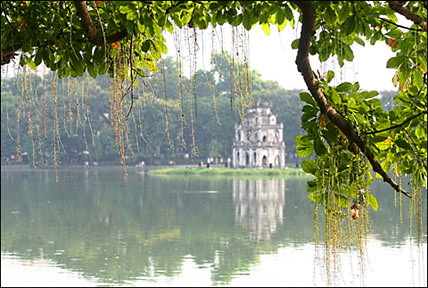
Sword Lake, Hanoi, Vietnam

Sword Lake, Hanoi, Vietnam

“Hanoi leaves good impressions for me because the city has preserved its cultural heritages, for example, Tortoise Tower in Sword Lake, daily life and business activities of inhabitants in the Old Quarter. I think that Hanoi is trying to preserve its essential cultural values of previous years and be determined to develop a modern city at the same time,” Dr Gish said.

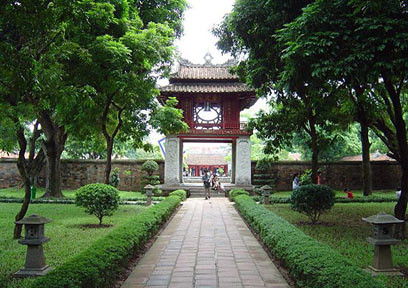
Sharing these thoughts with Dr Gish, Mr. George Saxton also loves to visit historical sites in Hanoi. For him, these are memorable places during his visit. “I’m sure to remember Sword Lake, Ngoc Son Temple, the Temple of Literature, the house on stilts where Uncle Ho lived and the whole area. I like the way the house on stilts is preserved, that is what I remember about Hanoi.”

The Temple of Literature, Hanoi, Vietnam

The Temple of Literature, Hanoi, Vietnam

For Ms Marcia of Maryland, US, dishes like pho (noodle soup), cha ca (fried fish), rice vermicelli and meat rolls or coffee in Hanoi are all wonderful but her most memorable impression about Hanoi is completely different. It is the people and cultural character of Hanoi. Hanoi’s culture is charming and plentiful. One of the most beautiful images among Asian countries she has ever seen is the image of Vietnamese women in long-dresses and “any time I close my eyes I see that image”. “I also like the image of farmers growing rice in the fields,” she happily said. That is what she remembers about Hanoi.

That is also the comments of Ms Johnson from Idaho, US. She said that it is hard to use any word to fully describe the people in Hanoi. Therefore, she has to come back Hanoi many times. “Hanoi people are very wonderful and enthusiastic and eager to help strangers. The first time we came to Hanoi was in 1995 we were a little worried of not being welcomed, but unexpectedly every one treated us very kindly. We were helped any time we needed assistance. We had close friends and they treated us very well when we were there. We can not talk all about the wonderful people in Viet Nam,” Ms Johnson said.

Living in Hanoi for many years, James Rhodes and his wife from Alabama, US, were eager to return Hanoi in the autumn to welcome the capital’s 1,000th birthday. Hanoi attracts him and his wife with special things.

“The thing we like most in Hanoi is the Viet Nam National Symphony Orchestra. This is a wonderful orchestra. I must say that we have listened to symphonies all over the world but the Viet Nam National Symphony Orchestra is excellent. Additionally, in Hanoi, the folk music is also good. This year, we come back to celebrate the 1,000 years of Thang Long – Hanoi and we don’t intend to leave this city. We choose to live in Hanoi because this is a cheap city and people there are friendly. My wife and I decided to choose Hanoi as our home.

Mr. Steve Ball living in Maine, US said that for him, Hanoi is an ancient city. Hanoi truthfully reflects the culture of Viet Nam, this is a beautiful city for tourists to visit, go for a walk and are welcomed. Mr. Steve always encourages his friends to come to Hanoi.

“I want to send sincere congratulations to all people of Hanoi capital on the occasion of the Hanoi’s 1,000th birthday. I desire that Hanoi continues to develop prosperously. I myself also expect to arrive in Hanoito share this happiness with the people in the capital about this event. I wish the best things for Hanoi people. Good bye and see you in Viet Nam,” he said on the occasion of Hanoi’s 1,000th birthday.

Source: vietnamtourism

Recommendations:

Northern Highlights
West to East Biking Exploration

Monday, January 10, 2011

Travel Vietnam & Cambodia - Fancy a Far East adventure

The New Year is fast approaching, so now is a good time to consider next year's break. With the economy slowly but surely improving, why not travel to somewhere a little more exciting in 2011?

Vietnam holidays are certainly an option worth considering, with the Far East nation offering visitors spectacular landscapes, a fascinating culture and a friendly population. A nation that has successfully emerged from the ravages of war, Vietnam is being explored by an increasing number of travellers, all of whom are keen to experience this most unique of destinations. While its recent history is inescapable, so too is its soaring mountains, stunning coastline and iconic rice fields.

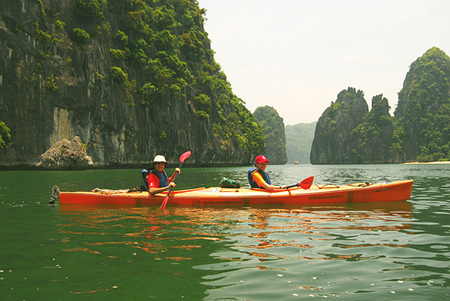
Kayaking tour in Halong Bay, VietnamKayaking tour in Halong Bay, Vietnam

With so much to take in, travellers arriving in Vietnam will want to arrange their transport as early as possible. Trains are perhaps the most comfortable way of travelling around the country, although there is only one major line; that linking Hanoi and Ho Chi Minh, a journey that takes around 30 hours to complete.

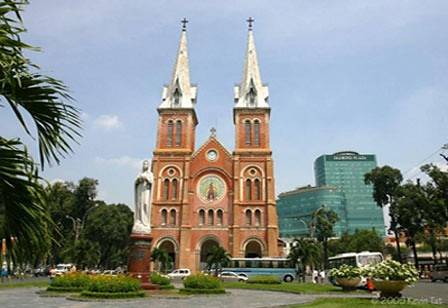
Notre Dame Cathedral, Ho Chi Minh, VietnamNotre Dame Cathedral, Ho Chi Minh, Vietnam

Buses are a cheaper option, with intercity services tending to depart at the crack of dawn in order to beat the morning rush. Services take a while, however, so be prepared to give up a day or two here and there for travelling. Once you've arrived at your chosen destination, you will certainly want to get out and explore your surroundings; in which case, car rental might be an option worth considering.

While hiring your own car is only possible in Vietnam's main cities, you can hire a vehicle with a driver elsewhere. So, not only will you avoid having to negotiate the country's often hectic road network, you will be able to take advantage of local knowledge, possibly discovering places a little off the beaten track and learning a bit of Vietnamese along the way.

The Far East is a long way to travel, so there's no reason to limit your trip to a single country. Neighbouring Cambodia is another nation that has fully embraced tourism. Fortunately, then, there are a number of Vietnam and Cambodia tours for travellers to take advantage of.

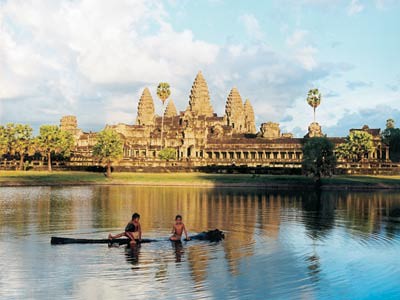
Angkor Wat Temple, CambodiaAngkor Wat Temple, Cambodia

Angkor Wat is arguably the jewel in Cambodia's crown. The huge temple complex, one of the finest examples of classical Khmer architecture, has become the nation's symbol. Dating back to the 12th century, Angkor Wat is the World's largest religious building and has pride of place on Cambodia's flag.

While Cambodia is awash with culture and historical artefacts, travellers will inevitably want some downtime during their Far Eastern adventure. Sihanoukville, known among tourists as Snookyville, is a popular seaside town and home to the country's best beaches. Seemingly becoming more popular as each year passes, Sihanoukville was recently referred to by the New York Times as "Asia's next trendsetting beach".

Seemingly a million miles away, Phnom Penh, Cambodia's capital, is referred to as one of the Far East's remaining undiscovered destinations. Despite being deeply affected by war and revolution, Phnom Penh is a city of optimism and colour; a place of Buddhists, spice markets and a burgeoning economy. It's likely you'll visit the city during your Cambodian adventure, and while the inevitable assault on the senses may exhaust you, it's certainly worth spending a day or two here.

No visit to the eastern corner of Asia can be complete without seeing some of the region's wildlife, so a visit to the 1,581 sq km Bokor National Park comes highly recommended. Home to green peafowl, chestnut-headed partridge and even tigers, the park is well worth a visit, even if it's just to see the deserted French hill station, Bokor, that it contains.

Vietnam and Cambodia are two nations opening their arms to tourism. Why not discover each country next year before everyone else does?

Source : forres-gazette

Wednesday, December 29, 2010

Ha Long Bay, Con Dao Islands among best tourist destinations

Two of Vietnam’s coastal destinations have been listed among the world’s ten most outstanding tourist destinations by Lonely Planet Magazine, according to the Vietnam National Administration of Tourism (VNAT).

Ha Long Bay, in the northern province of Quang Ninh, has made it onto the list of the 10 most outstanding coastal destinations.

Ha Long Bay, Vietnam

About 500 ships ply the waters of Ha Long Bay, designated as the World Heritage site in 1994, carrying millions of tourists every year, according to the VNAT.

Quang Ninh has attracted 5.3 million visitors so far this year, 2.5 million of whom visited Ha Long Bay.

The other nine locations were the Norwegian Fjords, the Amazon River, the Franklin River in Australia, the Quetico

Provincial Park in Canada, the Kerala backwaters in India, New Zealand's Milford Sound Bay, the Greek islands, Disco Bay in Greenland, and the Galapagos Archipelago off the coast of Ecuador.

Con Dao Islands, an archipelago off the coast of Ba Ria-Vung Tau Province, was listed in the top 10 most mysterious and outstanding islands in the world for an ideal holiday.

The island was featured for its unspoiled beaches and dark history as a site for inhumane prisons – often known as the Alcatraz of Southeast Asia.

The list includes Socotra off the coast of Yemen, Australia’s Torres, Yaeyama from Japan, Iles du Salut of Guyana, Ulleungdo from Korea, San Blas Islands from Panama, Taiwan’s Penghu; Bay and Hog Islands of Honduras and Uganda’s Ssese.

Source :thanhniennews

Recommendations:

Friday, December 3, 2010

MERRY CHRISTMAS AND HAPPY NEW YEAR FOR SICK AND POOR VIETNAMESE KIDS

Hanoi December 13 - December 24, 2010

Volunteer project: International and local volunteers will organize Christmas and New Year festival for extremely poor children living in the Fisher village at the Red River and for the patients of the National Pediatric Hospital in Hanoi. The volunteers will make nice gifts for the children such as light stars.

In the fisher village, in collaboration with the local volunteers and the children, the international participants will organize a big party on the bank of the Red River (theatre, dance, BBQ, etc.). In the Hospital, the volunteers will visit the children in their rooms, dressed as Santa Claus, and will hand out candies and small gifts.

The smile of poor kidsThe smile of poor kids

Between the parties, the volunteers will cook for the children attending the Street children school, and will organize leisure activities for them after school.

The volunteers need to bring Santa Claus clothes. They will also collect second hand clothes to give to the very poor children who don’t have enough warm clothes for the winter.

Language: English

Accommodation: The volunteers will live in a house near the Red River. Kitchen and sanitary facilities available. Please bring a sleeping bag.

Location: Hanoi, the capital of Vietnam, a thousand year old city, situated at the banks of the Red River, with an estimated population of about 4 million inhabitants.

Age range: 18 and over

Extra fee: 150 Euro

The extra fee is intended to support the hosting organization who does not have sufficient funds. It is due upon arrival on the project.

Source: www.cadip.org

Monday, November 1, 2010

A Path To Somewhere

If it’s all about the journey and not the destination, there is a “journey to a journey” involving quite a few ups and downs, not to mention twists and turns, that awaits the nature lover in Vietnam’s northern region.

The destination is a path, 40 kilometers long, that winds its way through a dense bamboo grove in Thanh Hoa Province. In order to reach the Suoi Muong bamboo path, there’s a long way to go, past high mountains and deep valleys. A motorbike is an indispensable accessory.

Mai Chau, Hoa BinhMai Chau, Hoa Binh

Let’s get going from Hanoi and head to Hoa Binh, where Muong Lat Street along the Laos border leads to the mountainous western part of Thanh Hoa. The first village on the road is named Thanh Son, where backpackers can tuck in for the night in local homes after a simple supper. As we go further, more villages appear, as do the first bamboos. Here, the road is named Suoi Muong after a local stream.

Along the red-soil road, which gets narrower toward the end, are tall, dense bamboo grasses that cast their green shadows on the Ma River flowing alongside. Then the bamboos disappear, and the Mau Village market comes into view, several minutes from the pier across the Ma River.

Stationed at the pier is a woman in her sixties. Her teeth are dyed in black, a beauty aid for Vietnamese women in the old times and a tradition to protect their teeth. “I row until four in the afternoon, then go home to rest,” said the ferrywoman who has been doing this job nearly 20 years and knows everyone in the area.

There are close to 30 streams, big and small, in the area and they put in an appearance after every turn along Suoi Muong road that is 100 kilometers long. But not every stream has a boat to take you across. Sometimes, people have to wade into the water first and lead others waiting to take their bikes across.

Vietnam Motorcycling TourVietnam Motorcycling Tour

And the adventure is only the beginning. Some parts of the road are piles of rock, some are slippery soil, some are in between the cliff where the bikes have half a meter width to drive on. The bike driver needs to be firm and the pillion rider should be ready to jump off at all times to help push the motorbike. It can be discouraging, but if you’re in a mood to take things on, the tough road is the perfect challenge.

The Ma River continues to flow alongside, playfully switching from the left to the right and vice versa. On some parts of the road, the river is so close you can lean over and wash your hands in the flowing waters.

It’s best to make this journey early May, when it’s not raining and the bamboos are in their post-spring prime. November or December is also good as the monsoon has passed and the bamboos throw in a dash of yellow. The journey is an absolute no-no during the first days of rainy season as the road gets very muddy, the rocks get very slippery and the streams get very fierce.

Every 10 or 15 kilometers on the road is a village where such necessities as instant noodles, eggs, soaps, cookies and sweets can be procured. Most villages are home to ethnic minority groups who invariably bade visitors passing by their stilt houses to come in and rest, freshen up and even use their ovens to cook.

Not far from Chieng Nua, one of the villages, is a cemetery on a cliff that dates back to the 11th century. The place is also home to vestiges of the Dong Son Culture, a prehistoric Bronze Age in Vietnam, and temples worshiping heroes of the Lam Son revolution during the early 15th century against Chinese invaders. The journey can take longer, but patience is rewarded when, almost unnoticed, the magnificent bamboo path is there in front, casting a mysterious aura and allure.

Long and slender, the leaves sparkle in the sun and make joyful rustling and creaking sounds as the breeze blows through them. The play of light and shade is soothing and exciting at the same time. Where does the path lead? But that’s it. There is nowhere to go but where the path takes you. In fact, the path is “home”. You have arrived.

Source : thanhniennews.

Wednesday, October 27, 2010

Halong Bay: A World of Mystery Viet Nam

Halong Bay is probably where you would find yourself. Majestic and mysterious, Vietnam’s Halong Bay is a breathtaking location with over 2000 incredible jagged islands and islets rising from the emerald waters of the Gulf of Tonkin.

Halong Bay, VietnamHalong Bay, Vietnam

This superb panorama of limestone peaks enshrouded in mist, tumbling into the gently lapping sea and enclosing within its folds striking hidden caves is a UNESCO World Heritage Site.

The near-perpendicular pinnacles conceal the remains of many grottos and caverns, created over millions of years ago through a complex process of erosion whereby water trickled through limestone cracks enlarging them to create spectacular caves and resulting in the distinctive towers seen today.
About a 3 hour ride south of Hanoi, Halong Bay draws a steady stream of travelers year-round, who mostly opt for several days of cruising on a typical Vietnamese junk. Beyond the breathtaking seascapes on a boat trip through the bay, an amazing range of adventure travel opportunities are on offer: Travelers to Halong come to explore the spectacular caves, among them the amazing “Surprise Cave” with its 3 enormous caverns, where illuminated stalactites grow down to touch the rising stalagmites; to kayak and scuba dive around the islands and in and around some of the more remote, less accessible caves, such as the Dark Cave; to get to know “real-life” Vietnam, cycling through farm fields and remote tiny villages, where self-reliant locals raise and prepare their own food; to experience one of Vietnam’s most fascinating cultural features – the floating villages, nestling in the sheltered bays, where houses are set atop barges and year round, inhabitants catch and cultivate fish.

Surprise Cave

Cruising on a typical junk is in itself an adventure, and experiencing the star-studded night sky and lapping sea waves with the outlines of dozens of limestone towers silhouetted in the backdrop makes for a surreal picture. Halong Bay’s breathtaking splendor, enormous scale and unique geomorphology make it one of Vietnam’s most spectacular experiences.

For an off-the-beaten-path adventure, Ninh Binh, or “Inland Halong Bay”, north of Halong is a paradise of lotus-covered ponds, meandering waterways and lush green rice paddies where contorted limestone pinnacles, caverns, spires and hills, shaped like mythical creatures provide the setting. Here, ornate temples, pagodas and Buddhist shrines rise from the center of small lakes and rustic homes perch under natural overhangs or nestle into the living rock. The steady rhythm of traditional Vietnamese village life continues here as women tend to the rice fields while men in wooden boats cast nets into the tranquil waters. A motorbike ride into the nearby mountains is a great adventure and a half-day boat trip to Tam Coc or Trang An into caves and old temples is well worth the journey.

On the Way to Tam Coc

What make this entire region unique are not the towering cliffs themselves, but rather their sheer number and unique shapes. Halong Bay, translated as “where the dragon descends into the sea” is the stuff of myths. Legend has it that the islands were created by a great dragon that lived in the mountains. As it charged towards the sea, its tail gouged out valleys and crevasses, and as it spat out jewels and jade, these turned into ,the dramatic towering pinnacles for which the bay and its surroundings are renowned.

Source: familyadventuretravelwork

Recommended Tours in Vietnam:
Halong bay Kayking
Biking Hidden Paths of Mai Chau & Ninh Binh

Vietnam's Phu Quoc island slowly opening up to the world

Its growing popularity and developing hospitality might make it a runaway success, which at least one visitor hopes won't spoil its tropical perfection and laid-back atmosphere.

Phu Quoc Island, Vietnam

Reporting from Phu Quoc, Vietnam-During the four years I lived in Hanoi, where I was The Times' bureau chief in the late 1990s, I did a pretty good job of getting around Vietnam and exploring new places, from Can Tho in the southern Mekong Delta to Sapa on the northern border with China. But I missed Phu Quoc, Vietnam's largest island. So did most people. Unless you were a backpacker looking for a cheap beach hotel, there wasn't much reason to go.

Fast forward to 2010. Phu Quoc, once known mainly for its pungent fish sauce and wartime history, is the hottest new tourist destination in Vietnam, a slice of tropical perfection with mile after mile of wide, uncrowded beaches, dense jungle, virgin rain forests and a lazy, laid-back atmosphere that reminds a visitor of what Phuket, Thailand, was like a generation ago.

Chuck Searcy, a former U.S. serviceman who lives in Vietnam and runs humanitarian programs, remembers his only visit to Phu Quoc about a dozen years ago. His plane circled the airport three times to scare cows off the runway, and the island had only three hotels, "all decidedly 'no star,' to put it kindly." Said Searcy: "I'm sure I wouldn't recognize the place today."

A few weeks ago, my wife, Sandy, and I hopped onto one of the nine daily turboprop flights Vietnam Airlines runs from Ho Chi Minh City (formerly Saigon) to Phu Quoc. No cows impeded our arrival. Our taxi took us through the dusty town of Duong Dong and down a dirt road lined with little patio restaurants; a cemetery, crammed between two bars; and a bamboo hut that served as a laundry. Although I had a moment of doubt, our driver insisted that just ahead lay La Veranda, Phu Quoc's first five-star resort.


The jungle parted, and we caught a glimpse of the Gulf of Thailand and Long Beach, which stretches for 12 miles. And in a waterside clearing lush with flowers and foliage stood La Veranda, a 48-room boutique hotel and spa with two restaurants. It seemed as though we had stumbled onto a French colonial plantation, its large louvered windows open to the sea, its deep balconies, high ceilings and overhead fans reminiscent of a bygone era.

That, in fact, is exactly what the owner, Catherine Gerbet, had in mind when she designed the hotel, now 4 years old. A French Vietnamese, she was born in Cambodia, raised in Hong Kong and lived in Saigon. Her goal was to build something that captured her childhood memories of Asia, and she didn't miss a touch. I wouldn't have blinked had I seen Graham Greene sipping a martini while sitting in one of the bar's wicker chairs.

I asked La Veranda's Swiss general manager, Nicolas Josi, what attracted foreigners to Phu Quoc and what they did when they got here.

"First, the island is just being discovered. It still feels authentic," Josi said. "You won't, for instance, find a building over two stories. A lot of our guests are tourists who have been hurrying about in Ho Chi Minh City and Hue and Hanoi. They take a break here to recharge their batteries. What they like to do here is often nothing, just relax."

Phu Quoc, a triangle-shaped island just 30 miles long, is closer to Cambodia than to the Vietnamese mainland. Settled in the 17th century by Vietnamese and Chinese farmers and fishermen, it was occupied in 1869 by French colonialists who built rubber and coconut plantations. The island was so remote for so long that when Saigon fell to Communist troops in April 1975, Phu Quoc's 10,000 people hardly seemed to notice and went quietly about their daily business, catching squid and tending their pepper vines.

But the island's isolation did not shelter it from war. Vietnam's largest prisoner-of-war camp was here, near the U.S. naval base at An Thoi on the southern tip of the island. Pol Pot's murderous Khmer Rouge guerrillas invaded and briefly occupied the island after Saigon's fall, and some of the non-Communist South Vietnamese forced out of the cities by Vietnam's harsh, new rulers were resettled here and told to become farmers.

"My parents were teachers. They didn't know how to grow turnips. We nearly starved," said Hoi Trinh, a Vietnamese Australian lawyer, who arrived here with his family in 1977 as a 7-year-old. To help support his family he sold watermelon seeds on Long Beach, not far from where La Veranda now stands. When he and his father were caught trying to flee by boat to Malaysia, young Trinh was sentenced to a month in Prison No. 7.

It was a full day before my wife and I emerged from La Veranda. We were massaged, fed, pampered at the swimming pool and on the beach by a locally recruited and trained staff whose eagerness to please and unfailing politeness more than compensated for its struggle with foreign languages. We checked out a trip to Ganh Dau on the northwest coast: Scuba diving, including transportation, lunch and equipment, was $80 for the day; snorkeling, $25. The water, we were told, was 88 degrees with a visibility of 30 feet. Instead we hired a taxi with a driver who spoke some English and set out to explore the island. The cost for three hours would be $30.

Scores of beachside bungalow-style hotels with open-air bars and restaurants were tucked unobtrusively among clusters of palms on the coastal road south. Some charged as little as $25 a night. French road markers along the way showed the distance to the next village. Hammocks, often occupied, hung in tree-shaded front yards. Peppercorns lay drying on faded blue tarpaulins, a reminder that Vietnam is among the world's largest exporters of pepper. Sometimes we caught a whiff of nuoc mam fish sauce, which the Vietnamese use to flavor almost every dish. We stopped at one of the many pearl farms, where a clerk showed us a $9,000 necklace. Happily, Sandy settled on a pair of $70 earrings.

The fishing boats had long since pulled out of An Thoi and other little ports, having left at dawn not to return until sunset, by the time we reached Coconut Prison. It was built by the colonialists in 1953, a year before Vietnam defeated France at Dien Bien Phu. The Americans and their South Vietnamese allies took over the 1,000-acre site in 1967, and for a time it held 40,000 North Vietnamese prisoners of war. More than 4,000 were said to have died there.

Guard towers still loom over rows of windowless tin POW barracks that are surrounded by coils of concertina wire. Except for an occasional tourist, the place was silent and empty. The small nearby museum (admission is 3,000 dong, about 16 cents) is not for the faint-hearted, with its scenes of torture depicted by chillingly real life-size mannequins.

The grimness of the place seemed incompatible with the tranquility of Phu Quoc, and leaves one thankful that Vietnam has known 35 years of peace. And what changes that peace has wrought. Less than three decades ago Vietnam had no tourist industry, and Vietnamese were forbidden to speak or socialize with foreigners.

Today, Vietnam attracts nearly 4 million tourists a year and luxury resorts — which numbered one when the five-star Furama opened on Da Nang's China Beach in the mid-1990s — reach up the coastline from Vung Tau, south of Ho Chi Minh City, to Thanh Hoa, near the former demilitarized zone.

With tourism creating jobs and spreading wealth, Phu Quoc's population has surged to 70,000, even though the northern part of the island, home to a large national park, is mostly uninhabited. Phu Quoc absorbs well the 50,000-plus visitors it draws annually, but changes are afoot.

The government has a master plan to develop Phu Quoc into a high-quality eco-tourism destination by 2020, when it aims to attract 2.3 million visitors a year. An international airport is scheduled to open in two years to accommodate nonstop flights from Japan, Thailand, Singapore and Hong Kong. Roads and bridges are being rebuilt and a deep-water port is being dug at An Thoi. Life may never be the same for an island that now uses generators to produce much of its electricity and gets its water from wells.

Driving north from An Thoi at sunset, watching the fishing boats return to port, we passed Duong Dong's night market, where $2 gets you a fresh seafood dinner, and got out of the taxi to walk on a deserted beach the last mile to La Veranda. Phu Quoc, I hoped that warm, star-lit night, would not lose its character in the tidal wave of coming development, because even by the toughest of standards, it's just about perfect as it is.

Source: Chicago Tribune

Monday, September 27, 2010

Floating Markets of the Mekong Delta, Vietnam

Vietnam is incredible and still authentic – it’s not “spruced up” for tourists. Nowhere is this more obvious than in the Mekong Delta, with its floating markets, where locals live, work and earn a living from the many tributaries of the river. You can easily get a feel for the real workings of this country and how things are done. Here, everyone is an entrepreneur of sorts!

floating market, VietnamFloating market, Can Tho, Vietnam

As the food basket of Vietnam, the Mekong Delta covers an immense area winding its way over 3000 mi. from Tibet through Cambodia to Vietnam’s Peninsula, where it spills into the South China Sea. It is marvelously fertile, and views here are all related to riverside life, orchards, rice paddies and any food-related small industry. From snakes swimming in whisky to coconut candy, everything here reflects the flavors of Vietnamese culture.

The floating markets in the Mekong highlight the shape of life here, where people live, shop, sell and eat from and in their vessels and homes on the water. Getting to the area involves a lot of boat/bus/ferry/foot combinations, but its well worth the effort. We arrived from Saigon on our 3-day trip, which included Can Tho and Vinh Long.

The journey down was a long, hobbling, creaking bus ride, passing paddy fields and other fields with every variety of food being grown here. We stopped for lunch in Vinh Long. We walked around the “land” market of local shops with their goods set up in baskets on the street, where all kinds of colors and scents greeted our senses. A small motor launch took us along a peaceful tributary (away from the madding crowd of the main river) where each bend brought a new surprise and gorgeous scenery before we reached the home of a local farmer for lunch.

We arrived in vibrant Can Tho, the delta’s largest city, in the late afternoon and spent the time exploring this busy and lively port city. We rose the next morning at 4 am in raw anticipation. The day on the river begins at the crack of dawn and floating markets are held every morning from about 5 am till noon. We got into a small motor boat and made our way up the river to our first “stop” – the Phung Hiep market, the largest of the floating markets, located at the crossroads of 7 major canals.

The picture that greeted us was like laundry hanging out to dry. A maze of hundreds of sampans spread out on the busy river, hoisting samples of their wares on towering bamboo poles, to be seen from a distance. Coconuts, melons, mangoes, a heap of turtles, snakes, vegetables, fish, urns and vases and so much more all piled high on the vessels.

floating market, VietnamFlowers in floating market, Vietnam

A beehive of activity where traders snapped up everything by the bushels to resell at local markets; where smaller merchants weaved their way between larger boats and suddenly, a spectacle of pineapples or cabbage flying through the air between vendor and shopper. In between, floating restaurants, floating bars, floating gas stations and many other floating shops winding deftly between the boats. The lively, near –frenzied pace here was an unmatched view into local culture.

We made our way to land for an afternoon cycling trip through the quiet lanes near Can Tho, biking through small villages and beautiful countryside, and in spite of the language barrier, meeting some very pleasant and friendly people.

Early the next morning, we visited the Cai Rang floating market for a second taste of this experience. Primarily a produce market, it is always busy, bearing all the characteristics of local life. After the market, we visited some small home industries where villagers made everything from coconut candies to rice paper. We ended our trip with a trek through lush orchards and bee farms. The highlight of the afternoon was a visit to the Dong Nam snake farm, where over 20 varieties of venomous snakes are used in drinks and food for medicinal purposes – some soaked in large flasks of whisky!

The Mekong Delta, with its hustle-bustle, its genuine locals, its overgrown streams and great scenery, and above all, its characteristic floating markets is one of the most fascinating parts of this fascinating country and a springboard for getting to know Vietnamese culture and its people up close.

Source: familyadventuretravelworks

Recommendations for traveling in Mekong Delta,Vietnam:
Mekong Explorer
The Mighty Mekong