Showing posts with label Vietnam travel news. Show all posts

Friday, June 15, 2012

The Old Quarter - The Unique Classical Feature of Hanoi

The Hanoi’s Old Quarter is the soul of city, and the top special historical vestige and sight-seeing of the capital.

There’s an old Vietnamese saying, “Hanoi has thirty-six streets and guilds – Jam Street, Sugar Street, Salt Street…”. Inside a modern and dynamic city, there appears an antique quarter, the Hanoi’s Old Quarter – the represented eternal soul of the city. These days, most Vietnamese and Westerners are familiar with the phrase “Hà Nội - Ba mươi sáu phố phường” (translated as “Ha Noi - 36 districts” or “Hanoi – 36 Old Streets”), or “Phố cổ Hà Nội” (translated as “Hanoi’s Old Quarter”), the top special historical vestige and sight-seeing of the capital, luring international visitors thanks to their mostly original state.

Hanoi 's old quarter

History of 36 streets old quarter

It would be a big surprise should you know that Hanoi's Old Quarter came into being at the time King Ly Thai To selected Thang Long as the country’s capital in 1010, that is, the streets have a nearly 1,000-year old history and became crowded & lively in 15th century. What makes them unique is that many of them remain in their very ancient architecture of the 15th century. Up to now, it has been the oldest continuously developed area of Vietnam.

Hanoi 's old quarter in the past

Due to their long-lasting age, they are called “Old Quarter” or “36 Old Streets” (as consisting of 36 member streets). Similarly to the Guilded age of Europe, “Ha Noi's 36 districts” is Vietnam's version of the guild concept. In the past, as artisans moved to the capital city to do business, they gathered together in this area to share the resources. As a result, many of the streets were named after the crafts sold at that individual street. Pho Hang Bun (Vermicelli), Pho Hang Ma (Paper Product), Pho Hang Bac (Silver), etc. are examples of the streets carrying the name of the products sold there.
The phrase “36 pho phuong” often causes much confusion for most people; “Phố” means a street or a place for merchants to gather to do business, while “Phường”, a district or a guild of artisans specializing in a particular trade (phuong cheo, phuong tho, etc.). Yet, in any case, both are right to some extent.

Hanoi old quarter now

Although the old section of Hanoi is often called the "36 Old Streets," there are more than 36 actual streets. Some researchers believe that the number 36 came from the 15th century when there might have been 36 guild locations, which were workshop areas, not streets. When streets were later developed, the guild names were applied to the streets. Others attribute the 36 to a more abstract concept. The number nine in Asia represents the concept of "plenty." Nine times the four directions makes 36, which simply means "many". In fact, there are now more than 70 streets in the area.

Exploring the maze of back streets is fascinating; some streets open up while others narrow down into a warren of smaller alleys. The area is known for its tunnel, or tube, houses – so called because their small frontages hide very long rooms. These tunnel houses were developed to avoid taxes based on the width of their frontage onto the street. By feudal law, houses were also limited to two storeys and, out of respect for the king, could not be taller than the Royal Palace. These days there are taller buildings (six to eight storeys high) but there are no real high rise buildings.

Some of the more specialized streets include Pho Hang Quat which has red candlesticks, funeral boxes, flags and other temple items; and Pho Hang Gai which is somewhat more glamorous with silk, embroidery, lacquer ware, paintings and water puppets – the silk sleeping bag liners and elegant Vietnamese ao dai are very popular with travellers. Finally, no trip to the Quarter would be complete without a trip to Dong Xuan market, on Pho Hong Khoi and Pho Dong Xuan, which was rebuilt after a 1994 fire.


A stroll through the historic Old Quarter can last anywhere from a few minutes to the better part of a day, depending on your pace and how well you navigate the increasing motor traffic plaguing the streets. However long, or whatever detours you might take, the following course will provide you with a good dose of Vietnamese culture, and some insight into the country’s long history.

A logical starting point is the Ngoc Son Temple in the northern end of Hoan Kiem Lake. After crossing back over the bright red Huc Bridge, stop for a quick look at the Martyrs’ Monument, erected to those who died in fighting for Vietnam’s independence. Head north on Pho Hang Dau past the Water Puppet Theatre (see the ‘Punch & Judy in a Pool’ boxed text in this chapter) and you’ll soon be surrounded by shoe shops selling every shape, size and style, demonstrating how serious Hanoians are about their footwear. Crossing over Pho Cau Go, pop into the colourful flower market which occupies the narrow eastern terminus of Pho Gia Nhu.

Back on Pho Hang Be; continue north to the ‘T’ intersection with Pho Hang Bac. Near here are several shops that carve intricate gravestones (most bearing an image of the deceased) by hand. A short detour north on Pho Ma May will lead you to the Memorial House at number 87 (see the main text entry earlier in this chapter), an exquisite Chinese merchant’s home that was recently restored and opened as a museum.

Return to Pho Hang Bac and head west past a strip of snazzy jewellery shops, then right onto Pho Hang Ngang past a row of clothing shops, and right again onto Pho Hang Buom; this will take you past the small Bach Ma Temple (White Horse Temple). As you pass the pagoda, with its red funeral palanquin, look for its white-bearded temple guards, who spend their days sipping tea. Legend has it that Ly King used the pagoda to pray for assistance in building the city walls because they persistently collapsed, no matter how many times he rebuilt them. His prayers were finally answered when a white horse appeared out of the temple and guided him to the site where he could safely build his walls. Evidence of his success is still visible at Cua O Quan Chuong, the quarter’s well-preserved Old East Gate at the eastern end of Pho Hang Chieu, near the intersection with Pho Tran Nhat Duat.

Head west, back along Pho Hang Chieu past a handful of shops selling straw mats and rope to reach one of the most interesting streets, Pho Hang Ma (literally ‘counterfeit street’), where imitation ‘ghost money’ is sold for burning in Buddhist ceremonies – it even has US$5000 bills! Loop around and follow your ears to the sounds of skilful blacksmiths pounding away on metal on the corner of Pho Lo Ren and Pho Thuoc Bac. Moving south on Pho Hang Duong, head right past the towel shops onto Pho Lan Ong, a fantastic row of herb sellers filling the street with succulent aromas.

Finally, head south past the tin box makers (opposite the mirror shops) on Pho Hang Thiec, then left toward the interesting shops selling Buddhist altars and statues along Pho Hang Quai. Time permitting, loop around and zigzag west over to check out the leather shops along Pho Ha Trung, working east again to end the tour at the superb, neo-Gothic St Joseph Cathedral (see the main text entry earlier in this chapter). If you’re feeling a bit knackered from the walk, a few steps from the church along Pho Nha Tho there is an alluring cluster of stylish restaurants and cafes.

Although many of the streets no longer sell the products after which they were named, some still do. Today, the Old Quarter has become the unique classical feature of Hanoi, and the inspiration of numerous writers, poets, and painters, and one of the desired tourist destinations in Hanoi.

Thursday, December 1, 2011

Amazing rocky walls in Cham Islet

When touring Cham Islet, or Cu Lao Cham in the ancient city of Hoi An in Quang Nam Province you are bewitched by splendid landscapes with wonderful sandy beaches, forested hills and the glorious clear, blue sea.

A view of Cham islet in Hoi An ancient town, Quang Nam Province
The location is a popular spot for tourists to go camping, swimming and scuba-diving to explore coral reefs and beautiful marine life.
However, with a small boat you can take a cruise around the islet and travelers will discover it is enhanced due to its rocky mountain walls.

Forested hills and the glorious clear, blue sea

Cham Islet, 20 kilometres offshore of Hoi An, has been named a global biosphere reserve by UNESCO’s International Coordination Council of Man and the Biosphere Program.

It takes about twenty minutes by boat or canoe but it is worth the short wait as you drift amidst the sky and sea

Sunday, November 27, 2011

Active Travel Asia announced the prizes for the contest “Indochina in Your Eyes”!

First word Active Travel Asia sent to you to joint our competition “Indochina in yours eyes” most sincere thanks!

“Indochina in yours eyes” contest lasted over 2 months (1st Sep 2011 to 20th Nov 2011) and ends on 20 Nov 2011. Organizing Committee has received many entries with unique ideas, deeply felt and very sincere, especially from customers love traveling and traveled to Indochina in a lifetime.

Now is the time to honor the winner.

Thursday, November 3, 2011

Ha Long – a wonder of the creator


Located in Quang Ninh Province, Ha Long Bay includes the sea areas of Ha Long City, Cam Pha Town and a part of Van Don island district. With the admirable natural beauty and multiform, special values, Ha Long has become the must-see destination in Viet Nam for domestic and international visitors.

The legend has it that, once upon a time, soon after the Viet people established their country, invaders came. The Jade Emperor sent Mother Dragon and her Child Dragons down to the earth to help the Viet people fight against their enemy. When the dragons landed down on the earth, invaders' boats were rushing to the shore.

The dragons immediately turned into thousands of stone islands emerging in the sea like great walls challenging the invaders' boats. The fast boats couldn't manage to stop and crashed into the islands and broke into pieces. After the victory, Mother Dragon and Child Dragons didn't return the heaven but stayed on the earth at the place where the battle had occurred. The location Mother Dragon landed is present Ha Long Bay and Child Dragons landed is present Bai Tu Long Bay. The dragons' tails waving the water created Bach Long Vi (present Tra Co Peninsula). 


Ha Long Bay covers the area of 1,553km² and encompasses 1,969 islands of various sizes which are mainly limestone islands with tectonic age from 250 million to 280 million years. The process of long geological evolution created the unique Ha Long Bay in the world with thousands of islands which look like fantastic sculptural and artistic works of various graceful shapes such as Canh Buom (Sail) Islet, Trong Mai (Cock and Hen) Islet, Lu Huong (Incense Burner) Islet… All of them are vivid and soulful.

Sunday, October 23, 2011

The first expedition to Son Doong Cave with ATA – Unrevealed stories!

On 28th Sep, 2011, carrying the eager to explore the grandeur of nature, the first travelers together with ATA’s product manager – Mr. Tony Tran had launched the discovery to Son Doong Cave, the biggest cave in the world.

Accompany with the group is Mr. Ho Khanh who found the Son Doong Cave as a tour guide. The first meet with Mr. Ho Khanh really impressed everyone. Just a warm smile, a strong handshake from him is enough to make everyone feel warm at heart. At Ho Khanh ‘s house, the group had the moments of relax with green tea, a simple lunch with steamed rice cake and salted peanut and an open conversation. All of that was promising for a memorable journey.

Mr. Ho Khanh in old costume of troop

The first obstacle for the group is leaches. They are everywhere and all in hungry for blood. It was really a nightmare at first but as time passes, the scare was fade when everyone got used to them and they weren’t the obstacle anymore. In the deep jungle under shade, the expedition team followed jungle trails that on limestone Mountains to the Swallow Cave.

Wednesday, October 12, 2011

Vietnam: ethnic tourism among the valleys with no name

A typhoon had blown in during the day. White rain clouds lay like a boiling sea in the valleys, creating the illusion that the twisting mountain pass was an ocean road. As our vehicle turned a blind corner we came across a gaggle of motorcyclists, caped against the rain and gawping over the edge.

A Red Dao mother and child

A lorry had gone over while overtaking another lorry, trusting to a hard shoulder that had gone soft in the rain. Through the clouds we saw that the plummeting vehicle had ploughed a vertical groove of red earth in the sheer mountainside. Its roof was visible, a couple of hundred feet below.

Incredibly, the driver had just been hauled up alive and whisked off to hospital. As the men continued to stare, a woman in a beautiful and strange costume strode away from the scene as if in disgust. She was the reason we had come to this remote, mountainous region in the north of Vietnam, just 50 miles from the Chinese border.

Her distinctive look – black tunic and trousers embroidered with red-and-white patterned panels, red scarf and headdress – marked her out as a member of the Dao ethnic minority, one of 54 ethnic groups in Vietnam. The Viets are the biggest group, accounting for 86 per cent of the population and dominating mainstream culture. To varying extents, the remaining minorities lead marginalized lives, both culturally and geographically.

Most live in rural areas, growing rice, practicing slash-and-burn farming, keeping animals, making handicrafts, worshipping their ancestors and believing in spirits. Many still wear their distinctive, traditional dress – or at least the women do; men tend to go for the easy option and wear Western clothes these days – and this is part of what makes them especially intriguing and attractive to foreigners. Market days, when different groups come together in a throng of color and noise, are thrilling spectacles.

In recent years, tourism has cottoned on to this, and some minority communities have benefited by offering homestays and selling their beautiful textiles. This "ethnic tourism" is at its busiest in the old French hill station of Sapa, 150 miles north-west of Hanoi, where each year hundreds of thousands of trekkers and photographers pitch up via train and bus from the capital.

Hearing stories of commercialization and exploitation in Sapa, my partner and I had decided to hire a car, driver and guide and head instead to less-visited minority areas, culminating in the province of Ha Giang to the north-east of Sapa. Abutting the border with China, this province was the scene of heavy fighting with the Chinese in the Eighties; though it is now completely safe, tourism there remains undeveloped.

Hmong women in Sapa

Our goal, a cluster of ridges and valleys said to harbor the largest diversity of ethnic populations in Vietnam, is so little known by the outside world that it doesn't yet have a name. If I were a marketing person, charged with putting it on the map, I would name it after the high pass that is the main route into it.

The pass is called Cong Troi, which means Heaven's Gate. We crossed it shortly after passing the scene of the lorry accident. The landscape around us, glimpsed through the clouds, was indeed celestial – rice paddies cut into the hillsides that looked like the steps of Aztec temples, valleys plunging to hazy nothingness and waterfalls in noisy spate. Here, where many had seen white faces only on television, we were often as much objects of curiosity to the minority peoples as they were to us.

From Cong Troi we twisted down through clouds to the valley bottom and the village of Thong Nguyen, which serves a local population of about 5,000 living in the surrounding hills. Tourism has already arrived in a small way here – there's a French-owned lodge on the outskirts – and the village authorities are evidently fearful of what it may yet bring.

Using Pan Hou Lodge as a base, we spent the next two days trekking up into those shimmering green hills to visit remote communities perched on the lips of steepling rice paddies. In a Dao village we drank green tea beneath an old picture of Ho Chi Minh and then, inevitably, the woman who made it, with a baby in a sling on her back, submitted to photographs.

And that, of course, is the subtext of ethnic tourism. You come to gawp and click, to capture those eye-catching costumes and quaint customs in pixels. One woman I tried to photograph, with a mouth blackened by betel nut, covered her face, saying, "I am not beautiful any more. I look like a goat!"

I knew what she said because our guide translated. Having him around enabled us to enrich encounters that were inherently voyeuristic. And his life story, which he related in a series of chats over the week, provided great insight into the minority way of life.

On our visits to minority houses he would explain layouts and functions. The houses tend to be built on stilts, with motorbikes and chickens kept on the open ground floor and cooking and sleeping taking place on the enclosed first floor.

The Dao, of which there are several subgroups such as Red Dao and Long Dress Dao, live pretty hard and basic lives up in these mountains. One woman laughed at the idea of having a day off. "If we rest, nothing to eat," Son translated. Other communities are visibly more prosperous.

We had started our tour in the village of Mai Chau, a three-hour drive south-west of Hanoi, where the Mai Chau Lodge was the base for walks out to White Thai villages. Here, among gardens of jackfruit and banana, and fighting cocks in wicker cages, they sell textiles and offer homestays with Western lavatories and hot showers.

As thunder drummed on the surrounding hills, women toiled in the paddy fields, their conical hats periodically bobbing up to the surface of the rice (quick, photo!). Daily life here is still back-breaking, but not as tough as it once was, judging by the cars parked next to some of the stilt houses.

Between Mai Chau and Ha Giang Province we broke our journey at Thac Ba Lake, where La Vie Vu Linh Eco-Lodge is part of a long-term project aimed at rejuvenating the local minority culture. The lodge – jointly owned by a French-Vietnamese called Frédéric Tiberghien and a Dao family from the adjacent village – runs a school teaching cultural history, languages and hotel management to 15 or so children.

Vietnam's ethnic minorities had a particularly hard time of it following reunification, but projects like this give hope that their distinct ways of life can flourish. Tourism is certainly a vital part of the process. And it's not, of course, a one-way street. As Tiberghien said to me, "Next time you come to Vietnam, stay longer with the ethnic people. After two weeks, you will be amazed how similar you are."

Source: http://www.telegraph.co.uk

ACTIVETRAVEL ASIA's recommented tours:

Tuesday, August 16, 2011

Vietnam Cat Tien National Park Recognized Global Biosphere Reserve

On 30 June 2011, the United Nations added 18 new sites to its global list of biosphere reserves, bringing the total to 581 in 114 different countries, the UN Educational, Scientific and Cultural Organization (UNESCO) reported.


Cat Tien is the new name of the former Dong Nai Biosphere Reserve in Viet Nam, which was designated in 2001. Two new core zones have been added to the site, bringing its total area to 966,563 hectares. Cat Tien National Park covers the area of Dong Nai, Lam Dong and Binh Phuoc Provinces in southern Vietnam. Cat Tien National Park is 15km north of Ho Chi Minh City (or Saigon).

Biosphere reserves are places recognized by MAB (The International Coordinating Council of UNESCO’s Man and the Biosphere Programme ) where local communities are actively involved in governance and management, research, education, training and monitoring at the service of both socio-economic development and biodiversity conservation. They are thus sites for experimenting with and learning about sustainable development.

Soure: travelnewsnow 

Tour Trekking Nam Cat Tien National Park with ActiveTravel Asia, at: http://www.activetravel.asia/mountain-biking-to-dalat-down-to-nha-trang-t279.html

Friday, March 18, 2011

Ba Be National Park recognised as Wetland of Internationnal Importance

The Ba Be National Park in the northern mountainous province of Bac Can has been named on the Ramsar Convention on Wetlands List as a Wetland of International Importance.

The biodiverse 10,048-ha park is home to 1,268 species of flora and fauna. The site earlier was recognized as an ASEAN Heritage Park in 2004.

Ba Be National Park, Vietnam

As summarized by Marian Gwilliam, regional assistant advisor for Asia-Oceania, Ba Be National Park supports the only significant natural mountain lake in Viet Nam and is the most important wetland in the country's protected area system because it is the only site that has a natural lake surrounded by a mountainous karst ecosystem.

Ba Be National Park is the third Wetland of International Importance in Viet Nam, joining the Xuan Thuy National Park in the northern province of Nam Dinh and the Bau Sau in the Nam Cat Tien National Park across the southern provinces of Dong Nai, Lam Dong and Binh Phuoc.

According to director of the Ba Be National Park - Nong The Dien, the decision will mean that the site will join an international network of wetlands that are important for the conservation of global diversity.

The Convention on Wetlands - known as the Ramsar Convention - is an intergovernmental treaty that embodies the commitments of its member countries to maintain the ecological character of their Wetlands of International Importance and to plan for the "wise use", or sustainable use, of all of the wetlands in their territories. Viet Nam first participated in the Ramsar Convention in 1989.

Source: VNN

Monday, February 28, 2011

Motorbiking in Southeast Asia: two-wheeled adventures from mountain to coast

Southeast Asia is home to some of the greatest adventures on earth. Throw a motorbike into the mix and you’ll have the time of your life. Here’s our guide to a two-wheeled adventure in the Mekong region.

Vietnam and Laos – sublime scenery from mountain to coast

Ho Chi Minh Trails, VietnamHo Chi Minh Trails, Vietnam

To kick off, the infamous Ho Chi Minh Trail has been upgraded into a major highway running along the spine of the country and offers some sublime scenery. The stretch from the old US airbase of Khe Sanh north to Phong Nha-Ke Bang National Park is a beauty.

Elsewhere in Vietnam, Ha Giang is the final frontier for motorbiking aficionados in Indochina. Like Halong Bay on high, karst peaks protrude from the top of rolling mountains and secluded villages are home to a colourful mosaic of ethnic minorities. The gorge road from Dong Van to Meo Vac is the stuff of biker yore, its towering cliffs looming high above and plummeting to the Nho Que River in the distance below. Just remember to keep an eye on the road, despite the breathtaking scenery. A word of caution, however, Ha Giang still requires an official permit to visit more remote areas.

Ha Giang, VietnamHa Giang, Vietnam
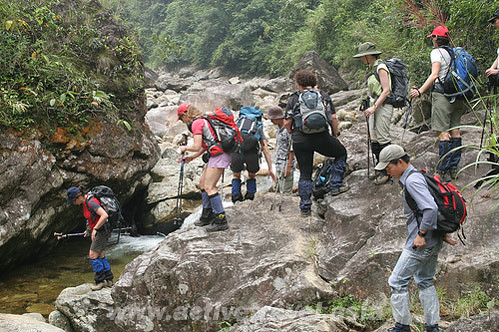
If the coast is more your cup of tea, then try the Top Gear thing and ride notorious Highway 1 between Saigon and Hanoi. The traffic can be daunting around major cities, but there are some remote and desolate stretches with empty beaches. Aim high over the Hai Van Pass, ignoring the tedious tunnel that has been conveniently burrowed through the mountain.

Take the Top Gear theme further and team up with some friends to ride a Minsk, a Vespa and a Honda Cub. Converting the bikes to amphibious vehicles to explore Halong Bay might be a step too far for a holiday.

Back to the Ho Chi Minh theme, for experienced dirt bikers, it is possible to explore remnants of the old Ho Chi Minh Trail across the border in Laos. Rusting tanks and forgotten field guns litter the jungle of Southern Laos. Combine a ride through the region’s recent history with some of the most remote and wild regions of the country in Salavan and Attapeu.

Recommended tours:

Motorbiking Adventure Vietnam
Motorbiking Adventure Cambodia

Source: lonelyplanet

Wednesday, February 23, 2011

Travel to Dong Van Plateau, Explore Global Geo-parks Network in Vietnam

During the traditional Tet holiday 2011, there were nearly 4.000 domestic and foreign tourists to Dong Van karst plateau Geopark to excursion and travel. With total tourism revenue reached over 3 billion.

Under the instruction of Ha Giang province People’s Committee, all relevant districts has implemented well-organized culture, sports, entertainment and travel activities to meet local people and travellers’ needs. Performing the external politics very well, Vietnamese national visit to their homeland during Tet holiday.

Numerous travellers visit to Vuong palace, Ha Giang, VietnamNumerous travellers visit to Vuong palace, Ha Giang, Vietnam

In particular, after nearly 3 years to prepare, Dong Van karst plateau has been recognized as a member of the Global Geoparks Network. Creating an important premise for tourism development of the province, Development of cultural community tourism villages as well as concerned about the investment and development of tourism infrastructure.

Ha Giang has promoted powerful of tourism forms such as eco tourism, adventure discovery travel, cultural tourism and so on. Ha Giang have alot of tourism sites has attracted numerous visitors to the city in the New Rabbit Year, namely, Dong Van karst plateau Geopark, Lung Cu flag tower, Dong Van Old street, Vuong Dynasty’s artistic architecture monument (Dong Van district), Co Tien double mountain (Quan Ba district); Ma Pi Leng Pass.

Ma Pi Leng Pass, Ha Giang, VietnamMa Pi Leng Pass, Ha Giang, Vietnam

Come to Ha Giang, tourists enjoy not only the traditional food of all tribes but also yourself in the life of the highlanders. Especially, they will have opportunity to attend the traditional festival of ethnic minorities of the province such as Long Tong Festival of Tay ethnic group, the crop-praying festival of Dao ethnic minority, fighting buffalo ceremony, fighting chicken festival. They also have chance to participate in traditional games like pushing stick, throwing con, walking on stilts, jumping .etc. It’s cultural identity of the ethnic groups.

About Dong Van karst plateau Geopark:

Dong Van karst plateau Geopark consists of four districts, namely, Meo Vac, Dong Van, Yen Minh, Quan Ba. Located in the North of Ha Giang province, Viet Nam. The karst plateau is created by at least 80 percent limestone and many fossils of ancient creatures species from 400 - 600 million years ago. Its average elevation is 1400 -1600 meters above sea level.

Dong Van Plateau, VietnamDong Van Plateau, Vietnam

Dong Van karst plateau Geopark is situated in a temperate climate and divided into two seasons: Rainy and dry seasons. The annual mean temperature is 24 -28 degree Celsius, while the winter temperatures may be down to 5 degree Celsius.

Dong Van rocky highland Geopark was official 77th member of the Global Geopark Network on 3/10/2010. It became the first global Geopark in Viet Nam, the second in Southeast Asia.

Source: dongvangeopark - Edited by Tony Nguyen - Active Travel Asia

Sunday, February 20, 2011

Spanish magazine spotlights ‘Great Wall of Vietnam’

Spanish writer Mark Jenkin has extolled the wonderful beauty of Son Doong (Mountain River Cave) in Quang Binh central province.

In a reportage entitled “Vietnam Cave” published in theNational Geographic magazine in January, M. Jenkin wrote “There is a jungle inside Vietnam’s mammoth cavern.”

Son Doong Cave, VietnamSon Doong Cave, Vietnam

M. Jenkin cited his teammate Jonathan Sims, who was a member of the first expedition to enter the cave, as saying that his team could explore two and a half miles of Son Doong before a 200-foot wall of muddy calcite stopped them.

They named it the Great Wall of Vietnam.

Explorers stop to contemplate a rock wall looking like a waterfallExplorers stop to contemplate a rock wall looking like a waterfall

The passage to Son Doong is perhaps 300 feet wide, the ceiling nearly 800 feet tall: room enough for an entire New York City block of 40-storey buildings, he wrote, adding that “And the end is out of sight.”

Vietnam Cave
Located in Phong Nha-Ke Bang National Park recognized as a world natural heritage site by UNESCO in 2003, the cave, 200m high and 150m wide, is believed to be almost twice the size of the current record holder, Deer Cave in Sarawak Malaysia.

The massive cavern currently said to be the largest-known cave on Earth was discovered by a local man named Ho Khanh in 1991.

However, not until 2009 was it made known to the public when a group of British scientists from the British Cave Research Association, led by Howard and Deb Limbert, conducted a survey in Phong Nha-Ke Bang.

Source: en.baomoi

Recommended tours:

Wednesday, February 16, 2011

US TV station highlights Vietnam’s tourist attraction

KPVI News 6, the local NBC (National Broadcasting Company) affiliated television station for Idaho, has advised Americans to tour Vietnam to get to know “Southeast Asia's rising star".

According to the TV station, as the world discovers more of Vietnam's treasures, this Southeast Asian country is climbing higher on travellers' must-see lists. A Vietnam tour is often the most effective way to take in the best of this fascinating country's attractions including the highlands of the far north and the beaches of the south.

One pillar pagoda in Hanoi, VietnamOne pillar pagoda in Hanoi, Vietnam

In its website, KPVI News 6 writes that travellers won't want to miss Hanoi, Hue, Da Nang and Ho Chi Minh City.

In Hanoi, Vietnam's capital, its citizens are justifiably proud of that long history. However, most visitors find that Hanoi isn't just stuck in the past - it's a forward-thinking metropolis even though it's filled with the elegantly crumbling vestiges of French colonial architecture and dotted with ancient temples and pagodas.

The best historic sights are the One-Pillar Pagoda, built in 1049 to resemble a lotus bud; and Hoa Lo Prison, which might be more recognizable by its other moniker, the Hanoi Hilton. One of the country's delightful folk traditions with an evening at a water puppet theater performance, which have been held for centuries, is advisable.

Also according to the website, few visitors to the former imperial capital of Hue are disappointed. The city's incomparable art and architecture make an impression with the grandeur of former imperial residences and temples. Ones should visit the Citadel and take part in Hue's legendary cuisine, which is renowned throughout the country as being uniquely refined.

Citadel, Hue, VietnamCitadel, Hue, Vietnam

Da Nang is described as Vietnam's appeal as a relaxing beach destination; a bustling, lively city, with ample opportunities to shop and play in the waves and a reputation for great food.

Ho Chi Minh City, also known as Saigon, is an essential stop. Its reputation is that of a pulsing, vibrant metropolis that is always on the go. It's more modern than Hanoi, but there are still plenty of historic sights to see - like the History Museum, Saigon Notre Dame Cathedral and Giac Vien Pagoda - between stops at the city's many shopping boutiques and great restaurants.

Saigon Notre Dame Cathedral, Ho Chi Minh, VietnamNotre Dame Cathedral, Ho Chi Minh, Vietnam

KPVI News 6 concludes that many travellers find that Vietnam fits well into a longer itinerary that also takes them to other popular Southeast Asian destinations like Cambodia and Thailand.

Source: VOVNEWS

Monday, February 7, 2011

Vietnam: A land of beauty rises among memories of war

A 15-minute drive and 20-minute boat ride from Dalat, you can climb into a makeshift seat atop an elephant and begin a bumpy and pleasant ride into the jungle, guided by a tiny, barefooted man who straddles the elephant’s head with ease.

Tea and English

Sometimes I remember the story beginning as we stepped out of the airport, greeted by a wave of oppressive humidity and hundreds of Vietnamese holding signs for someone named “Nguyen.” Getting into a Vietnamese taxi that wove its way through a sea of cars and bikes and motorbikes that would’ve terrified us had we not been too tired to care after the 17-hour flight. But in reality, we spent our first two hours in Vietnam trying to leave the airport. Trying to convince the customs officers that, although we did attend a Baptist university, we weren’t there to convert the defenseless masses. Our first encounter with a communist nation.

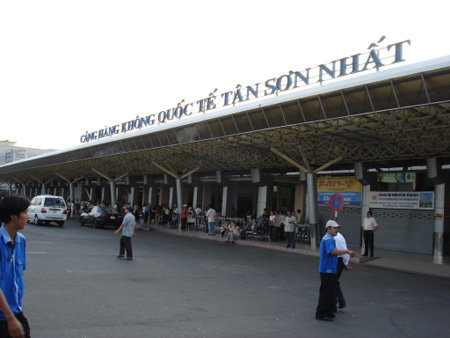
The entrance to Tan Son Nhat airport, Ho Chi Minh, VietnamThe entrance to Tan Son Nhat airport, Ho Chi Minh, Vietnam

Most visitors to Vietnam have come to experience what they imagine is a culture about as foreign to their own as any still in existence. But what most Vietnamese are anxious to show visitors is how well they can speak English. As we walked into an English class at a university in Ho Chi Minh City, the topic for the day was the impending threat of helmet laws for motorbike riders. Riders who maneuver traffic everyday that makes New York or even Rome look like the Disney’s Autotopia. Most Vietnamese couldn’t afford a helmet if they wanted to buy one, let alone pay the fines imposed if this law passed and they didn’t. Still, the conversation took a strange turn. “Helmets look funny,” one boy complained. “Yes,” another girl chimed in, “When you get to your date, your hair not look pretty.” Consensus was that the law shouldn’t pass.

After class, students migrate to the nearby “Tea & English.” If you appear foreign or let slip a word of English, expect to make new friends. For them, learning the language means they can get a job at a hotel or restaurant or shop — and maybe, one day, get to America.

The other side of the war

Visiting the Cu Chi Tunnels is often on the list of things to do for the first-time visitor to Vietnam. Before going down into the tunnels, government employees acting as tour guides lead you into a room where you sit in neat rows, staring at the ever- close- of Ho Chi Minh’s head floating on a backdrop of red until the video begins. The video gives the history of the Trail, explaining how it was built and the decisive role it played in the war.

Next, visitors stop to pose for photos on top of a rusty American tank; meanwhile, the tour guide explains how the Vietnamese stopped this tank in its tracks, killing the soldiers inside. Adding to the feeling of being in a war zone is the constant gunfire from the nearby shooting range — open to tourists for an additional fee — and the sound of mock land mines detonating if your foot trips one of the wires strung across the path. You then get a taste of travel down in the tunnels, which were clearly not sized for American frames. As you bend and squat and scrape your elbows on the jagged rock walls, you imagine Vietcong plots being hatched in the underground meeting room. Be sure to visit the souvenir/snack shop that finishes off the tour.

Chance encounter in a college town

Two lakes, a famous pagoda and one large waterfall draw many tourists to Dalat, six hours northeast of Ho Chi Minh City. There, in spite of its renown as the honeymoon Mecca of the nation, one feels a bit more as though they’re in their imagined Vietnam. Tiny women with brown, wrinkled skin waddle down the dirt roads balancing a stick with baskets of bread and vegetables on either side. Conical hats are everywhere and fewer people speak English, though enough to help the steady stream of tourists get by.

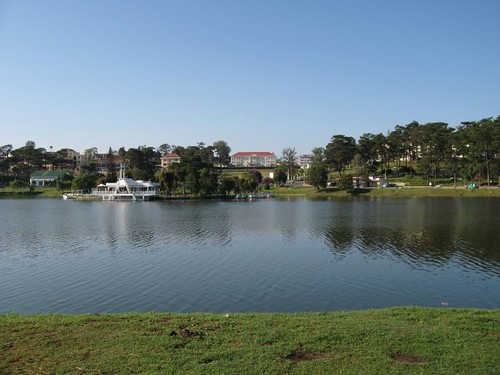
Xuan Huong Lake, Dalat, VietnamXuan Huong Lake, Dalat, Vietnam

The street market in Dalat is an experience unlike any other. Thousands of people pack the street so tightly that, when looking down on the scene from the balcony of a nearby restaurant, the ground is hardly visible. When you are in the middle of the throng, you are being called in every direction: “Flowers!” “Pigs’ feet!” “Baskets!” “Fish!” The vendors lines the road, further excited by the sight of what they can only assume are wealthy foreigners. The meat market can be a bit overwhelming for the faint of heart. Nevertheless, this singular experience is worth getting up at 6 a.m. to witness (and hear and smell...).

A 15-minute drive and 20-minute boat ride from Dalat, you can climb into a makeshift seat atop an elephant and begin a bumpy and pleasant ride into the jungle, guided by a tiny, barefooted man who straddles the elephant’s head with ease. Plastic sheets are provided to protect you from the rain that comes without warning and exposes the surrounding jungle for its most vibrant of greens. After a 45-minute ride, with only a brief interruption to adjust the seat that’s begun to slide around to the belly of the beast, you’ll arrive at scattered bamboo homes lining a creek that swells by the minute with the falling rains. There, you may choose from one of several one-room “cabins” planted firmly on the ground, or you can bravely venture into the “tree house” towering 30 feet in the air.

Saying goodbye

Throughout the trip, the fact that you are in a Communist country is difficult to forget. And with that farewell, I said a regretful goodbye to the nation of Vietnam.

Wednesday, January 19, 2011

ACTIVETRAVEL ASIA completed the survey in Quan Ba, Ha Giang, Vietnam in a tourism cooperation with Caritas Switzerland.

The ACTIVETRAVEL ASIA (ATA) team spent 4 days (18-22 Dec 2010) to scan three communes of Thanh Van, Quyet Tien and Tung Vai in order to locate the potential spots for home-stay and seek for walking and biking routes that links those spots.

This survey is the first step of the tourism project named “Quan Ba District Integrated Community Development Project, Ha Giang province” which is implemented by Caritas Switzerland in Vietnam.

This project aims to set up sustainable livelihood for the poorest households and the poorest community with attention to indigenous knowledge, strengthening the culture which is facing a risk of oblivion, and obtaining sustainable maintenance of the environment resources.

The ATA team spent 4 days to scan three communes of Thanh Van, Quyet Tien and Tung Vai in order to locate the potential spots for home-stay and seek for walking and biking routes that links those spots.

With the distinguishing natural and cultural features the area has great potential in following tour categories:

Adventure Travel:

Adventure travel is a type of tourism, involving exploration or travel to remote, exotic and possibly hostile areas. Adventure tourism is rapidly growing in popularity, as tourists seek different kinds of vacations. With extreme terrain Quan Ba is ideal for developing adventure tours such as trekking, biking, motorcycling and even river kayaking.

The way to Lung Tam Cao village

The way to Lung Tam Cao village

Culture Exploration:

Another highlight of the area is ethnologic value which can also be an attraction for tourism. There are a huge number of travelers nowadays travel to remote area to experience and learn different culture. Travelers have demand to experience the real life of the locals and such activities like “home-stay” would let traveler to have an insight of the local culture. Through home-stay other tourism oriented products also have opportunity to thrive e.g: handicraft, traditional medicine, agricultural products,… All that would result in an improvement of local living standard.

Home-stay is now very popular term in tourism industry and Quan Ba has all advantage to develop such activity.

Nam Dam village

Nam Dam village

Charity Travel:

This is a new term in tourism industry but it has become very popular. Nowadays, lots of traveler want to do more than just booking a “responsible tour” they want to support the local community where they travel to with tangible action like teaching school children, building a house for poor people, … they would do this via the organized service of a tour operator or via NGOs’ programs.

The survey team proposes some sample tour itineraries which highlight the previously mentioned tourism potential of the area.

The team also proposed 3 demo program tours providing main information: route, duration and suitable type of activity in order to provide the materials for the TO, TA who would like to exploit the potential tourism in this area.

By ACTIVETRAVEL ASIA

Thursday, January 13, 2011

Travel to Vietnam & Discover traditional Tet Holiday

The lunar calendar shows that Tet is coming, and from now until then, all things are Tet. The streets are Tet, the talk is Tet, the thoughts are Tet, the shopping is Tet, it's a Tet world in Vietnam right now and everybody knows it.

Tet is the most cherished time of the year in Vietnam. It is when the cities empty out and thousands go back to the countryside where they were born. City dwellers often choose to spend time at home. The streets empty out. The horns quiet, the traffic no longer congests and the hustle and bustle of city life, for a few days every year, comes to a halt.

New year's Eve in VietnamNew year's Eve in Vietnam

As Vietnam develops and its expat population grows, the holiday has also come to hold a special meaning with foreigners as well.

"For me, Christmas was always the big holiday but now, Christmas is just a sign that Tet is approaching," shared Karen Merlin who has lived in Hanoi for over 4 years now. "It's hands down the best time of year, it is a time to catch your breath, relax and reflect on the last year."

Hitting the streets, Tet for foreigners residing in Vietnam means various things. For Stephen McGrath, living in Ho Chi Minh City, "Tet is a cultural event that perplexes and entertains me, but no-one ever knows when it is until a week beforehand," he said jokingly.

Paula, a long-time ESL teacher in Vietnam said for her, "Tet is the one true break I get all year. I cherish every moment and usually spend half in the city with my Vietnamese friends and half traveling somewhere outside of Hanoi."

As vendors try to stock up and sell as much as they can, many foreigners make plans to travel and get as far away as they can.

"I get as far out of the city as possible. It's the one time every year that I don't want to be in the city, I want to be out and traveling. It's so quiet it is lonely so I always grab a bag and hit the road. For me, Tet is my only chance for a big trip every year, so I take it," shared NGO worker Jason.

Adam, who is married to a Vietnamese woman said, "Tet is obviously a very important holiday. It's family time. We do all the traditional activities and it has been a remarkable cultural experience for me. Local food, local people, local everything. We go out to the countryside and celebrate with a huge and loving family."

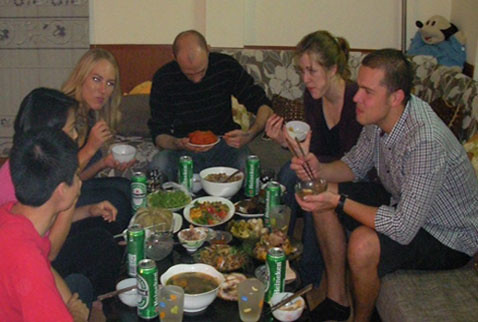
Foreign friends enjoying a traditional Tet meal with a Vietnamese familyForeign friends enjoying a traditional Tet meal with a Vietnamese family

One resident of Hanoi for over 15 years griped, "As much as I love Tet, it is also the time of year where for two months, the price of anything and everything goes up. From a business standpoint, Tet is terrible but once the day arrives, and my wife's family gathers, I realize that I love it. It's really my Christmas now."

For the plethora of teachers living and working in Vietnam, many refer to it simply as, "Tet is for travel."

Tet's meaning can also change drastically as it did for Eric Burdette, "My first four Tet's used to mean time off for continuous partying... However, over the past two years I have courted (and recently married) a Vietnamese woman. Now that I have a family in Vietnam, Tet has a completely different meaning. After over five years of living in Vietnam, being accepted into a family and having a real home during Tet makes me feel like I truly belong here."

Eric’s Family in Vietnam during Tet holidayEric’s Family in Vietnam during Tet holiday

Tet is a time for family and friends and has different meaning for different people. It is a holiday that like Christmas, both Vietnamese and foreigners have come to embrace and celebrate. It is East meets West. It is a time of joy for all. One embassy worker I spoke with simply said, "It's Tetmas." And this is Tet through the eyes of some foreigners.

Source: dtinews

Monday, December 27, 2010

ACTIVE TRAVEL VIETNAM UPDATES DISCOUNT POLICIES FOR LOYAL TRAVELERS 2011

Active Travel Vietnam ( www.activetravelvietnam.com ) has updated discount policies for travelers who plan to travel Vietnam, Laos and Cambodia. ATV also offers special discount for loyal travelers and their relatives or friends in 2011

Book a private tour or more and take the advantage of our discounts to save the money. Get discount when travelers travel with their family and friends, get discount when travelers book more than one tour at the same time... Travelers can save up to 10% or more. Enjoy our discount now!

Kayaking tour in Halong Bay, VietnamKayaking tour in Halong Bay, Vietnam

Travel with Family and Friends and save money

6 or more – Save 3%: If a group of 5-8 people travels together, a discount of 3% per person applies to the LAND-only portion of their tour. So it pays to get together with their family and friends!

9 or more: If 9 or more people travel together, ATV offers attractive group discounts based on how many people travel. In a group of 9 passengers, 1 traveler qualifies for a 50% discount off the LAND-only portion of the tour. In a group of 16 passengers, 1 traveler qualifies for 100% discount off the LAND-only portion of the tour.

Important: All traveling passengers' names must be advised to ATV at the time of booking in order to qualify.

When travelers book a second tour

Book two ATV tours for a reduction of 5% off the LAND-only portion of the second tours.

Important: Tours must be booked at the same time. The discount is per person only. This discount is not combinable with the discount for Loyal customer.

Sapa, VietnamSapa, Vietnam

Loyal customer

Already made a trip with ATV and now come back to book another trip. 5% off the LAND-only portion.

Important: Applied only for booking of package tour. This discount is not combinable with the discount for When you book a second tour

Child discount

Children under 12 years is generally granted a reduction of 50% of the land tour, 25% of airfare, provided that they are accompanied by at least two full-paying adults and stays in the same room. An extra bed is fully charged as adult.

Get our interesting Travel Gift

Either travelers book the whole country package or a shorter set departure tour travelers will receive our Travel Gifts, which can be Water Puppet Show ticket or silk sleeping bag, airport transfer or private half-day city tour and more... ATV's travel consultant would advice travelers the available gifts at the time of booking and travelers can choose the one travelers like.

Wednesday, December 22, 2010

Christmas spirit stretching across Vietnam

The exciting atmosphere of Christmas has filled the streets from Hanoi to Ho Chi Minh City with striking colours and decorations.

In Ho Chi Minh City, major streets such as Dong Khoi, Hai Ba Trung, Le Loi, Nguyen Hue, Nguyen Thi Minh Khai and Tran Hung Dao were covered with lights and Merry Christmas decorations.

Ben Thanh Market, Ho Chi Minh city, VietnamBen Thanh Market, Ho Chi Minh city, Vietnam

Saigon Tax Trade Centre, which attracts many visitors on holidays and festivals, has been decorated with distinguished features of different countries such as France, Egypt, Italy and Vietnam.

Hoang Thi Kim Xuyen in District 1, who was taking her children to walk around the streets shared, “Christmas this year, the decoration style of hotels are simple but extremely meaningful. Coming here, my children can play and also learn about specific characteristics of countries around the world.”

Not only locals but also international tourists are interested to see images displayed in Vietnamese hotels and streets during the Christmas holiday season. Mr. Ambrey, a French traveler said, “I can not imagine that I can see images of my country here. Watching the Christmas scenery in Vietnam makes me miss my hometown and family.”

Most high-rise buildings, hotels and restaurants are decorated with signs of Christmas. The upcoming Christmas holiday at Kenh Dao Area, Phu My Hung New Urban Area, has brought a bustling atmosphere for people.

Streets in Nha Trang City, central Khanh Hoa Province, are also exciting and colourful with sparkling trees, symbols of Santa, lights, and children who are wearing Christmas clothes. The cooler weather seems to make it feel even more like Christmas.

Lights, pipe trees, reindeer and Santa Claus are also being largely displayed in streets in Hue City, central Thua Thien-Hue Province. The weather in Hue has been very nice with warm sun in the daytime with cooler temperatures at night, encouraging locals to flock to the streets to welcome Christmas early.

Hotels, supermarkets and restaurants have been decorated with themes of Christmas. “Recently, more customers have come to our supermarket, boosting the sales,” a salesclerk at Big C Supermarket shared.

Many young people have come to big stores and supermarkets to buy gifts for their friends and relatives and shopping has been on the rise.

Ho Chi Minh City:

Christmas in Vietnam

People buying Noel clothesPeople buying Noel clothes

Nha Trang city:


Christmas in VietnamHue city:

Christmas in Vietnam
Source : dtinews

Recommendation for Christmas Holidays in Vietnam:
Biking Tours in Vietnam
Family adventure tours in Vietnam

Wednesday, November 24, 2010

Vietnamese Tour Companies support Eco and Responsible Travel in Vietnam & Indochina

Eco and Responsible travel now are the way of traveling while respecting and benefiting local environment, cultures, practices and economy. It also highlights significant elements of how to improve standard of living for ethnic poor communities, educate local people to protect the environment, help in reducing carbon emission, and helping nature by planting trees, protecting endangered animals.

Besides that responsible tourism can also include efforts to help humanity by giving to the people in need, by volunteering time and knowledge, treat them or take care of their special needs.

Eco Travel in Vietnam

A group of companies that have founded responsible travel club in Vietnam (www.rtcvietnam.org) and Indochina include ACTIVETRAVEL ASIA( www.activetravel.asia/responsible_travel/ ). They co-operated with NGO’s such as SNV (Netherlands Development Organization) and Caritas Switzerland and created their products which are included the activities that not only give travelers the chance to discover the destinations in Vietnam, Cambodia and Laos, but show them who to improve local standard of living and protect the environment while their travels.

Some of the ATA tours are, Ha Giang Tour or Adventure in Northern Vietnam: An Eco-experience. The former is a 14 days, 10 nights tour which combines sightseeing with visits to local communities and ethnic cultural villages. During this tour you will be using motorbikes en route. During the tour the travelers will stop at some villages and learn how NGOs are helping in preserving the Vietnam culture and heritage and how travelers can contribute towards it.

Travelers also get to explore the local culture as part of responsible travel through cultural ceremonies. ACTIVETRAVEL ASIA and Caritas expect to educate ethnic communities in Quang Ba, Ha Giang how to accommodate travelers and protect travel resources. Children in Ha Giang do not have the much resources to educate themselves and this helps in giving them some form assistance to get educated and also make you feel good about your contribution to these children.

The above is just one of the ACTIVETRAVEL ASIA Responsible Travel products. There are several others which are coming soon in 2011 include countries such as Vietnam, Cambodia and Laos .

Wednesday, October 27, 2010

Get Ready Adventures in Vietnam’s Best Eco Lodges

Renowned for hiking, highly qualified local guides, stunning backdrops and a rich cultural heritage, Vietnam’s northwestern highlands are a prime destination for travelers looking for an off-the-beaten-path adventure like no other. Making the region even more attractive are the spectacular eco-friendly accommodations built on a vision of community sustainability.

Mai Chau, VietnamMai Chau Valley, Vietnam

Mai Chau Lodge
Nestled in the stunningly beautiful mountainous region of Hoa Binh Province, 135 km south of Hanoi, Mai Chau Lodge strives to preserve local traditions, culture and the natural surroundings of its lush valley setting. The lodge is built from a socially and environmentally responsible vision. Using sustainable local materials, Mai Chau Lodge boasts a natural beauty, blending perfectly into its surroundings.

Set among rice fields, misty mountains and fascinating hill tribe people, this community-minded gem boasts 24 immaculately maintained rooms. The thoughtfully appointed quarters offer unique charm with cozy wood furnishings and local décor, some offering private verandas which open onto views of the lily pond and the setting sun. Waking to the scene of lotus flowers and farmers grazing their water buffalos in the nearby rice fields is an unbeatable experience which reflects the authentic character of the region.

Activities at Mai Chau
In addition to sustainable building practices, Mai Chau Lodge offers excellent adventure trips. Local qualified guides lead travelers to Thai hill-tribe communities in the region for a highly authentic experience, immersing them in the traditions and lifestyles of natives. A community effort, the well-designed tours to Pu Luong Reserve, one of 5 natural reserves in the area, for wildlife and bird watching, a visit to nearby White Thai village, or to the lodge’s Mo Luong Bat Cave and to the local Black Hmong market, fishing at Mo Luong Lake, kayaking, cycling the green countryside and returning in the evening after a fun-filled day to relax in the sauna, jacuzzi or steam room – all round out the activity offerings at this unique lodge.

Set amongst some of Vietnam’s most stunning scenery, a trip to the northwestern highlands of Mai Chau Lodge offers a mix of off-the-beaten-path eco adventure and culture in an up-close encounter with some of Vietnam’s most colorful inhabitants and traditions.

Victoria Sapa Resort
High in Vietnam’s remote northwestern highlands near the Chinese border, the former hill station of Sapa, famous for its pristine verdant environment, unparalleled scenery and cool climate is home to more than 30 colorful ethnic tribes and to Vietnam’s highest peak, Mt. Fansipan. Perched on a hill overlooking the valley, the Victoria Sapa Resort provides an excellent base for those seeking adventure on a road less traveled in close harmony with nature and an authentic cultural experience.

The Resort
Built as a traditional mountain chalet with warm wooden décor and a cozy stone fireplace, the Victoria Sapa Resort perfectly blends into its natural setting, surrounded by lush green gardens, rural terraces and breathtaking mountainscapes. Guests feel at ease in the mountain chalet atmosphere where welcoming accommodations bring together the elegance of traditional local ethnic handicraft with the comfort of French colonial style in earthy tones, hardwood floors and vibrant embroidered native tapestry. Each unit features a private terrace with spectacular views in all directions. This child-friendly resort offers spacious studios ideal for families of 4-5 as well.

The most exciting adventures at the resort center on mountain trekking, cycling and excursions to the foothills of Mt. Fansipan, and to the area’s authentic hill tribe villages and markets. Russian jeep safaris to the more remote markets and ethnically diverse areas, boating on the Chay River, trekking around Ta Van area and overnight homestays in local villages are also on offer.

Mt Fansipan, VietnamConquer Mount Fansipan, Vietnam

Trekking in Mt. Fansipan Foothils
Reserved for in-house guests, the romantic overnight train rides from Hanoi to Lao Cai (Sapa) aboard the resort’s own Victoria Express train is an experience in itself. Kids will especially enjoy the sleeping carriages with berths, the plus-red dining carriage, comfortable seats and exotic landscapes en route.

Victoria Express Train Berths
Committed to environmental protection and local tourism sustainability, the Victoria Sapa Resort served as an ideal base for exploring the wonders of Sapa’s enchanting surroundings and very authentic hillside tribes.

Source: familyadventuretravelworks
Recommendations:
Biking Maichau
Conquer Mount Fansipan - Sin Chai Route