Showing posts with label Vietnam motorcycling. Show all posts

Wednesday, February 17, 2016

Top Trails for Vietnam Discovery in 2016

So surprise when seeing stunning photos taken along trails stretching on this S-shaped country. Once riding through breathtaking, rustic, untouched but imposing regions in Vietnam, it will be the most memorable experience in life.

Here are the 16 best trails for Vietnam discovery in 2016. What makes you hesitate? Let snatch a motorbike and ride your own world. 

#1: Da Nang – Lang Co

Once set foot on Da Nang, don’t skip motorcycling on the trail Da Nang – Lang Co, just only 30km in length but splendidly beautiful. Its southern part features Hai Van pass – the highest and most imposing pass in Vietnam, while its northern part is Phu Gia pass appearing intermittently. Under Hai Van pass, it is Lang Co bay with fine, white sandy beaches stretch and interfuse with ultramarine water that makes anyone also love the bay right in first sight.

da nang - lang co vietnam

hai-van-pass-vietnam-1

hai-van-pass-vietnam-2
Hai Van pass

#2: Saigon – Ca Mau

Crushing this route, it is just the way to conquer the southernmost point of the country. Atmosphere and landscapes dominating this trail are imbued in essence of the South, with boundless rice paddies, wooden bridges and bamboo monkey bridges span over opaquely alluvial canals, and orchards laden with fruits.

>> Recommended journey: Mekong delta exploring on bike

long-an-mangrove-forest-vietnam
Long An mangrove forest

ben-tre-vietnam
Ben Tre

ca-mau-vietnam
Ca Mau - the southernmost point

#3: Hanoi – Moc Chau – Ta Xua – Bac Yen

For ones who love coping with demanding challenges, it will be a pity if skipping this route, which leads to peacefully limitless flower grounds, and real heavens where sky and the earth blend into one… Let take an expedition to Pha Luong summit – the roof of Moc Chau plateau, or vanquish renowned spots like Kem slope, Cun slope and Thung Khe pass.

>> Ready to conquer: 
mount-pha-luong-moc-chau-vietnam
Pha Luong peak - Moc Chau

moc-chau-vietnam-1

moc-chau-vietnam-2

moc-chau-vietnam-4
Moc Chau in seasons of flowers

ta-xua-vietnam
Ta Xua

#4: Hanoi – Nghia Lo – Mu Cang Chai 

With this trail, surmounting Khau Pha pass, the over-30-km pass rated as one of the four greatest passes in the North Vietnam, is a must. After crossing over ethereal fog covering Khau Pha, a majestic view will unfold with forests and mountains linking to picturesque rice terraces and tranquil villages of ethnic tribes.

>> Ride your world: Motorcycling west to east northern Vietnam

khau-pha-pass-vietnam
 Khau Pha pass

mu-cang-chai-vietnam
Mu Cang Chai

#5: Hanoi – Dien Bien Phu – A Pa Chai

Ideal time to ride on this trail is on the dry season from November to April. Eager more as it takes to meaningful place-names like the westernmost point of the country - A Pa Chai, one of the four greatest passes in the North namely Pha Din pass and the historical Command bunker of General De Castries.

>> For something unknown: Motorcycling on historical trail of North West

pha-din-pass-vietnam

pha-din-pass-vietnam-1
Pha Din pass

#6: Hanoi – Hai Hau

A mere 2 days on a weekend for the trip Hanoi - Hai Hau will be truly worthy. With a distance of barely 120km, this trail soon become a famous “night stormy” route. What is awaited more than welcoming first sunlight of dawn beaming down Hai Ly ruined cathedral (in Hai Hau) and admiring Phu Nhai church - the largest church in Southeast Asia in a quiet morning.
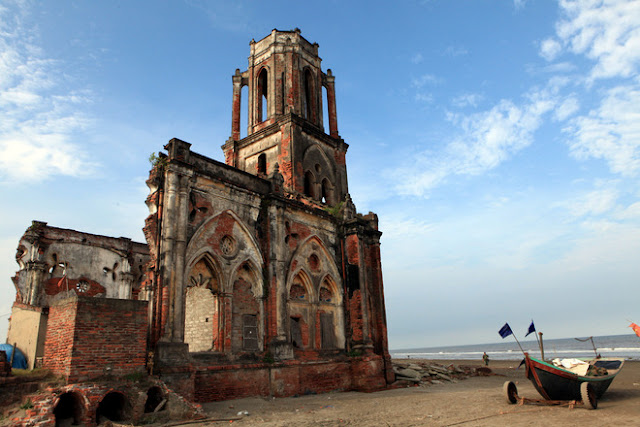
ruined-cathedral-hai-hau-nam-dinh-vietnam-1

ruined-cathedral-hai-hau-nam-dinh-vietnam-2

#7: Hanoi – Lao Cai – Hoang Su Phi

This is one of “mecca” routes to the native backpackers as well as adventurous travelers and trekking lovers, with Vietnam's the hot hub of trekking - Sapa. If just reaching here once, it’s impossible to discover all various landscapes spectacular in an amazing way, from superb, towering Mount Fansipan – the roof of Indochina, O Quy Ho pass – the king pass among the four greatest passes in the North, to Vietnam's the recent snow heaven – Sapa, and Hoang Su Phi - land of alluring terraced fields.

>> Let travel: Conquer Vietnam north pole
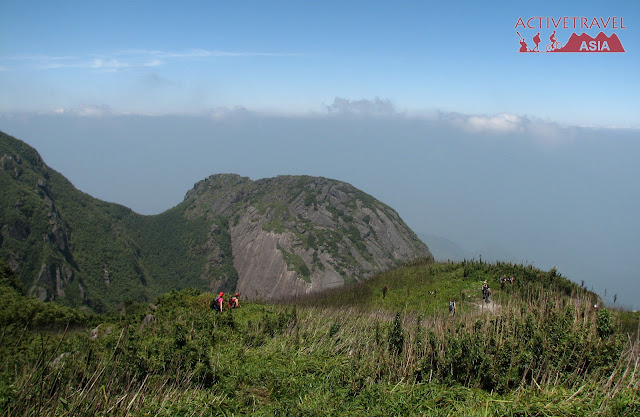
mount-fansipan-vietnam

mount-fansipan-vietnam-1
 Mount Fansipan

o-quy-ho-pass-vietnam
 O Quy Ho pass

sapa-vietnam

sapa-vietnam-1Sapa

hoang-su-phi-vietnam
Hoang Su Phi

#8: Quan Ba - Yen Minh – Lung Cu – Dong Van – Meo Vac – Ha Giang city

Have you ever heard largest buckwheat fields in Vietnam spreading fabulously on the rock plateau, do you expect to conquer Lung Cu flag pole – the northernmost point of the country, or simply contemplate dreamy pine hills in Yen Minh and glide on meandering roads? If so, you will not be able to resist “charm” of this inspiring route.

>> Discover Vietnam's hidden Himalayas: Complete trekking in Ha Giang province

ha-giang-vietnam-1

ha-giang-vietnam-2


ha-giang-vietnam-4

ha-giang-vietnam-5

#9: Hanoi – Tam Dao

Another wonderful trail for a weekend trip if departing from Hanoi, Hanoi – Tam Dao. Just nearly 2 hours motorcycling, you will be lost in a white cloudy paradise.

tam-dao-vietnam

tam-dao-vietnam-1

#10: Hanoi – Nghia Dan

From November to the end of the year, Nghia Dan (in Nghe An province) will be mightily magnificent by vastest sunflower fields in Vietnam. This trip is also exciting with a visit to Kim Lien village, where Ho Chi Minh president was born and grew, and roaming on Mombasa grass fields, corn fields and farms of milk cows.

nghe-an-vietnam

#11: Saigon – Dalat

After overcoming 107 sudden turns in Bao Loc pass, let your mind find to the cherry blossom road, the less-known marvelous maple forest and weird house blocks Paris in style settled right in Vietnam, or feel the gentle cold, breezes pervaded pine scent of highland, and creep of long-abandoned ghost villas.

>> Ride now: Mountain biking in Dalat

da-lat-vietnam

da-lat-vietnam-1

da-lat-vietnam-2

#12: Saigon – Binh Thuan – Lam Dong – Dong Nai

This trail offers diverse experiences: beating exactingly mountainous parts of Gia Bac pass on way to Di Linh, sinking into sea in Phan Thiet, admiring romantic landscapes in Dalat, turning urgently on Bao Loc pass, and sliding through green forests in Nam Cat Tien.

binh-thuan-vietnam
Binh Thuan

#13: Saigon – Nha Trang

Shifting along coastal roads, it is a chance to get into eyesight completely ravishing scenery of sea and serene sandy beaches along the roads. Not only attractive views, abundantly fresh and inexpensive seafood for free enjoying certainly please even gourmets that nowhere is better.

nha-trang-vietnam
Nha Trang

#14: Saigon – Pleiku

Tasting tremble but being thrilling when crossing over the “death pass" Phuong Hoang. Dramatic mountainous landscapes and very special, very plain beauty of hamlets will make anyone also deeply attached and not want to leave.

>>  Head to Vietnam Central Highland: http://goo.gl/15s6Ee

phuong-hoang-pass-vietnam
Phuong Hoang pass

#15: Sai Gon – Binh Dinh

This trail will receive travelers with acutely green sight of rice fields and orchards along Di Linh district, and pretty sea in Quy Nhon, where the famous Vietnamese poet Han Mac Tu rested in peace. On this journey, let stop a little to look over immense Thi Nai lagoon, where the longest sea bridge in Vietnam spans over, and savor safe and sound minutes as looking sea and mountains in Eo Gio (Wind Channel). All are deserved to get.

binh-dinh-vietnam

eo-gio-binh-dinh-vietnam
Eo gio (Wind channel)

thi-nai-bridge-vietnam
Thi Nai bridge 

#16: Ta Nang – Phan Dung

It’s not untruthful to say Ta Nang – Phan Dung is the most beautiful trekking trail in Vietnam. With a length to even 55km, it stretches over three provinces of Lam Dong, Ninh Thuan and Binh Thuan. The trail bring trekkers varied challenges: walking inside forests, climbing passes and hills, and wadding over streams. However, the present received is absolutely worthy thanks to green scenery beyond eye-view of grass and trees, brilliant sunshine, and tortuous paths. All seemingly lead hikers to an endless paradise.

ta-nang-phan-dung-vietnam

ta-nang-phan-dung-vietnam-1

ta-nang-phan-dung-vietnam-2

Vietnamese source: Tri thức trẻ

Wednesday, October 12, 2011

Vietnam: ethnic tourism among the valleys with no name

A typhoon had blown in during the day. White rain clouds lay like a boiling sea in the valleys, creating the illusion that the twisting mountain pass was an ocean road. As our vehicle turned a blind corner we came across a gaggle of motorcyclists, caped against the rain and gawping over the edge.

A Red Dao mother and child

A lorry had gone over while overtaking another lorry, trusting to a hard shoulder that had gone soft in the rain. Through the clouds we saw that the plummeting vehicle had ploughed a vertical groove of red earth in the sheer mountainside. Its roof was visible, a couple of hundred feet below.

Incredibly, the driver had just been hauled up alive and whisked off to hospital. As the men continued to stare, a woman in a beautiful and strange costume strode away from the scene as if in disgust. She was the reason we had come to this remote, mountainous region in the north of Vietnam, just 50 miles from the Chinese border.

Her distinctive look – black tunic and trousers embroidered with red-and-white patterned panels, red scarf and headdress – marked her out as a member of the Dao ethnic minority, one of 54 ethnic groups in Vietnam. The Viets are the biggest group, accounting for 86 per cent of the population and dominating mainstream culture. To varying extents, the remaining minorities lead marginalized lives, both culturally and geographically.

Most live in rural areas, growing rice, practicing slash-and-burn farming, keeping animals, making handicrafts, worshipping their ancestors and believing in spirits. Many still wear their distinctive, traditional dress – or at least the women do; men tend to go for the easy option and wear Western clothes these days – and this is part of what makes them especially intriguing and attractive to foreigners. Market days, when different groups come together in a throng of color and noise, are thrilling spectacles.

In recent years, tourism has cottoned on to this, and some minority communities have benefited by offering homestays and selling their beautiful textiles. This "ethnic tourism" is at its busiest in the old French hill station of Sapa, 150 miles north-west of Hanoi, where each year hundreds of thousands of trekkers and photographers pitch up via train and bus from the capital.

Hearing stories of commercialization and exploitation in Sapa, my partner and I had decided to hire a car, driver and guide and head instead to less-visited minority areas, culminating in the province of Ha Giang to the north-east of Sapa. Abutting the border with China, this province was the scene of heavy fighting with the Chinese in the Eighties; though it is now completely safe, tourism there remains undeveloped.

Hmong women in Sapa

Our goal, a cluster of ridges and valleys said to harbor the largest diversity of ethnic populations in Vietnam, is so little known by the outside world that it doesn't yet have a name. If I were a marketing person, charged with putting it on the map, I would name it after the high pass that is the main route into it.

The pass is called Cong Troi, which means Heaven's Gate. We crossed it shortly after passing the scene of the lorry accident. The landscape around us, glimpsed through the clouds, was indeed celestial – rice paddies cut into the hillsides that looked like the steps of Aztec temples, valleys plunging to hazy nothingness and waterfalls in noisy spate. Here, where many had seen white faces only on television, we were often as much objects of curiosity to the minority peoples as they were to us.

From Cong Troi we twisted down through clouds to the valley bottom and the village of Thong Nguyen, which serves a local population of about 5,000 living in the surrounding hills. Tourism has already arrived in a small way here – there's a French-owned lodge on the outskirts – and the village authorities are evidently fearful of what it may yet bring.

Using Pan Hou Lodge as a base, we spent the next two days trekking up into those shimmering green hills to visit remote communities perched on the lips of steepling rice paddies. In a Dao village we drank green tea beneath an old picture of Ho Chi Minh and then, inevitably, the woman who made it, with a baby in a sling on her back, submitted to photographs.

And that, of course, is the subtext of ethnic tourism. You come to gawp and click, to capture those eye-catching costumes and quaint customs in pixels. One woman I tried to photograph, with a mouth blackened by betel nut, covered her face, saying, "I am not beautiful any more. I look like a goat!"

I knew what she said because our guide translated. Having him around enabled us to enrich encounters that were inherently voyeuristic. And his life story, which he related in a series of chats over the week, provided great insight into the minority way of life.

On our visits to minority houses he would explain layouts and functions. The houses tend to be built on stilts, with motorbikes and chickens kept on the open ground floor and cooking and sleeping taking place on the enclosed first floor.

The Dao, of which there are several subgroups such as Red Dao and Long Dress Dao, live pretty hard and basic lives up in these mountains. One woman laughed at the idea of having a day off. "If we rest, nothing to eat," Son translated. Other communities are visibly more prosperous.

We had started our tour in the village of Mai Chau, a three-hour drive south-west of Hanoi, where the Mai Chau Lodge was the base for walks out to White Thai villages. Here, among gardens of jackfruit and banana, and fighting cocks in wicker cages, they sell textiles and offer homestays with Western lavatories and hot showers.

As thunder drummed on the surrounding hills, women toiled in the paddy fields, their conical hats periodically bobbing up to the surface of the rice (quick, photo!). Daily life here is still back-breaking, but not as tough as it once was, judging by the cars parked next to some of the stilt houses.

Between Mai Chau and Ha Giang Province we broke our journey at Thac Ba Lake, where La Vie Vu Linh Eco-Lodge is part of a long-term project aimed at rejuvenating the local minority culture. The lodge – jointly owned by a French-Vietnamese called Frédéric Tiberghien and a Dao family from the adjacent village – runs a school teaching cultural history, languages and hotel management to 15 or so children.

Vietnam's ethnic minorities had a particularly hard time of it following reunification, but projects like this give hope that their distinct ways of life can flourish. Tourism is certainly a vital part of the process. And it's not, of course, a one-way street. As Tiberghien said to me, "Next time you come to Vietnam, stay longer with the ethnic people. After two weeks, you will be amazed how similar you are."

Source: http://www.telegraph.co.uk

ACTIVETRAVEL ASIA's recommented tours:

Monday, August 8, 2011

Riding Vietnam's Ho Chi Minh trail

The mountain paths of the legendary Ho Chi Minh Trail offer visitors to Vietnam an adventurous alternative to the well-worn coastal route - especially if you travel on the back of a motorbike

It was more like a hamlet than a village. A simple collection of stilted wooden houses perched on the side of a mountain overlooking seemingly-endless rows of rice terraces, but even after a long and tiring day on the back of a motorbike passing through startling terrain it was hard not to be caught breathless by its isolation and beauty in the twilight.
Rows of rice terraces are a continual feature on any ride through northern Vietnam.

The primitive village of Ban Hieu is inaccessible except by motorbike or on foot – it's up a long, steep and winding two-metre-wide dirt path flanked on one side by a sheer drop into the paddy fields far below. It was precisely the reason I had set off the previous day along paths once used by the Vietcong to deliver weapons and supplies to the armies fighting in the south during the Vietnam war.

The Ho Chi Minh Trail has always been the stuff of legends, a seemingly endless number of backwater paths and trails that started near Hanoi and ran almost 1,000 miles down the length of the country, crossing into Laos at several points, and ending near Saigon (today's Ho Chi Minh City) where it deposited weapons into the hands of the communist guerrillas fighting against US and Southern Vietnamese forces.

While most visitors to Vietnam travel the well-worn coastal road, I had set out the day before from Hanoi, along with a friend and our mechanic/guide, on the back of three sturdy Russian Minsks, heading south on what would be a three-day bike trip following less well-developed and at times almost non-existent roads. (This would allow me to do part of the northern section, though not enough time to complete the whole route, which takes upwards of 14 days.)

A local rides through paddy fields in Hoa Binh province, northern Vietnam.

With little chance to dwell on the fall and already far from civilization, I had simply but shakily climbed back on the bike and, following Dang Van Diep, our smiling, non-English-speaking mechanic, soldiered on.

An hour later the fall was already far from my mind as I emerged for the first time from a patch of mountain fog to look down upon the vast, green landscape of rural Vietnam stretching out before me.

The view would repeat itself regularly over the next few days (and would never cease to thrill) as our small convoy climbed and descended thin mountain paths, crossed through knee-deep rivers, and rode through dozens of isolated villages of smiling and waving children. All the while we were flanked by miles upon miles of muddy rice paddies filled with young and old women cultivating the land by hand as they and their ancestors have done for centuries.

I soon found a simple but beautiful monotony in riding through these lush green areas, with long hours between stops passing in a meditative blink of the eye. Yet by the end of each day, as the strain of holding firm to the throttle as the bikes bounced over rock and skidded through mud, thoughts of that night's accommodation slowly crept into our minds.

The Russian-made motorbikes outside the homestay in the village of Ban Hieu.

We spent the first night in Mai Chau, a scenic village without roads 135km from Hanoi that is quickly being discovered by tourists looking for somewhere off the beaten path.. That night, after 10 hours on the bikes, we arrived at the truly isolated Ban Hieu.

A village of a few dozen families, an hour by motorbike from the nearest community with a shop, and inaccessible by car, it felt like a forgotten land. The manmade rice terraces – irrigated by intricate bamboo piping snaking down the hillside – and other human intrusions all felt in harmony with nature, and in the miles upon miles of land spread out before us, no city, town, or even single human dwelling was in sight.

Our smiling hosts were already pouring hot water for us and preparing food and beds for the night as I returned.

The following day at dawn we started our journey back north, reaching the noisy and crowded streets of Hanoi by nightfall. Despite one bad fall, aching limbs and over 300-plus miles of dirt trails on the back of a relic of the Soviet Union, it was hard not to turn the bike around and head back out to continue down the trail southwards.

• Hire motorbikes and all-inclusive organized tours can be arranged through tour companies such as Ride Ho Chi Minh Trail (www.ridehochiminhtrail.com).

Recommended tours:

Taste of Ho Chi Minh Trail
Motorcycling the Ho Chi Minh Trail - Half Challenge

Source: guardian.co.uk