Showing posts with label trekking Sapa. Show all posts

Friday, August 22, 2014

Motorcycle Chronicles - Northwest Vietnam - Sapa

By Brian Keels
Jacob and I started our 800 km epic motorcycling northwestern Vietnam on a 5 day loop through the rugged mountains and countryside.  What started out as one of the greatest experiences of my life, it's definitely an experience I'll never forget.  We planned to visit an old French hill station high in the mountains in a town called Sapa which lies near the Chinese border as well as several other interesting towns along the way.  

motorcycling northwestern Vietnam 1

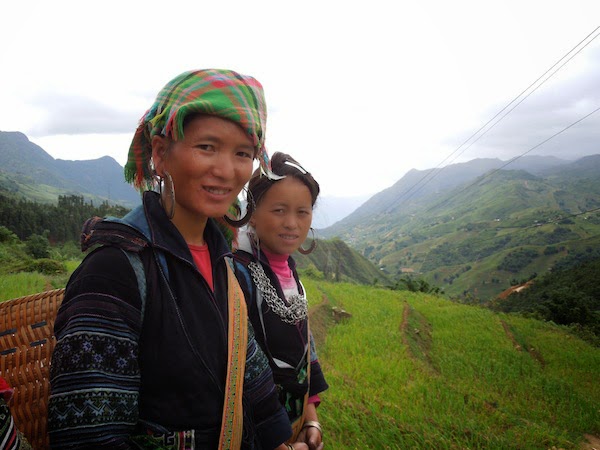
We explored Sapa by motorbike and ended up picking a place high up on a hill (with an awesome balcony) overlooking the cartoon-like emerald green valley.  $10 a night between the two of us for a ridiculous view, free internet, and clean sheets -- what more can one ask!  Many of the people around Sapa are Hmong, which is an ethnic minority that I believe originated in Mongolia, but over time were pushed further and further south into Vietnam, Laos, China, and Thailand.   The town really has an out of this world feeling.  The Hmong men wear navy blue French pettycoats with popped collars and silver bands around their necks. Women wear traditional clothing which they make themselves from hemp and dye with local indigo.  They are a truly 'ethnic' looking people and those involved in tourism speak excellent English.  

motorcycling northwestern Vietnam 2

We hired a tour guide to take us on a trekking Sapa tritp through the local Hmong villages and the countryside.  The views were almost beyond what I can describe.  It was the kind of thing that sent chills down your spine.  The entire mountain was a network of terraced rice fields framed by impossibly steep peaks .  Again, I don't think I can even put into words how beautiful the scenery is and I am convinced there is no other place like this in the world. It's as if the scenery was digitally enhanced by some computer nerd and you're sitting in a movie theatre with 3D glasses just soaking it in.   Words really can't describe the place or the feeling, but see the pictures for yourself and just know that pictures can't even do the place justice.

motorcycling northwestern Vietnam 3

During our time in Sapa, we met a lot of the Hmong women as they were selling handmade hemp clothes, bags, etc. They would all come up and with broken English say "You buy from me?!". It was funny because it was all ages (from 4yrs to 85yrs old), and they would say the same thing. I assume that tourism must be their main source of income, aside from the old days of opium cultivation

motorcycling northwestern Vietnam 4

The next day Jake and I spent time exploring the town and checking out the local markets, which had some interesting hand made souvenirs we bought.  Realizing that we needed to get on with our trip, we left early the next morning for what turned out to be a 10 hour test of endurance.  We drove through every type of terrain imaginable: mud, gravel, potholes, washed out sections due to small rivers crossing the road or because of rock slides, dusty back roads, you name it.  The weather varied nearly as much as the terrain: rain, cold, and fog turned to radiating heat and humidity.   We were literally in the middle of nowhere and due to some major construction on a new highway, we were forced to take all the back roads through small and remote villages. 

motorcycling northwestern Vietnam 5

The hard work was completely worth it though because the scenery was even more impressive than Thailand and Laos with continuous views of the mountains and rice terraces that constantly gave us goose pimples. The elements and construction work slowed us down a lot, and although we tried to make good time we didn't make it to our stop in Dien Bien Phu (the famous site where the Vietnamese won a decisive battle that ousted the French) until 8:30pm. When we arrived we were both covered from head to toe with mud and backcountry Vietnamese dust. To say the least we slept good that night!

trekking Sapa 1

That next morning we got on the road early in anticipation for another long-haul day.  The views again were absolutely stunning.  

motorcycling northwestern Vietnam 6

I am probably a good 2 weeks behind on the blog, but will do my best to catch up...for some reason I can't access the blog site.  Stay tuned.

trekking Sapa 2

Thursday, August 14, 2014

Trekking to discover a surprising life in Sapa

By Monica S.
I'm starting this blog post with a quote I found in the "South East Asia Backpacker," a monthly magazine full of inspiring stories written by people who are either traveling through or have moved to South East Asia. I find it to be quite appropriate for the story I'm about to tell. Firstly, I knew absolutely nothing about the hill tribes living in the north of Vietnam before I took a trekking Sapa . Secondly, had I not met them in person, I would not be inclined as passionately as I am to do something to help them. And lastly, it made me aware of how fortunate I am to be able to travel. So many people are "vegetating" in their own corner of the earth and could only dream of traveling, but are too poor to do so. I used to be one of these people up until not long ago. Coming from a developing country myself, I've experienced poverty and lack of mobility. But I kept dreaming. And I am now so grateful to have fulfilled some of those dreams.

Trekking Sapa 1
We really wanted to do a trek through northern Laos and stay with one of the hill tribes there, but we didn't have enough time. When we got to Vietnam, we were happy to find out that they have similar tribes living in the mountains in the northern part of the country. We were able to arrange going up there, hiking around and staying overnight with a local family. Despite the cold weather that took me unprepared and reminded me of San Francisco, I absolutely loved this trip and would've gladly stayed there longer, had we had more time.

Trekking Sapa 2

The Black Hmong villages in northern Vietnam are located very close to the border with China. Apparently, many of them migrated centuries ago from China and parts of Mongolia. To get there we took an overnight train from Hanoi to Lao Cao, a sad and grim, communist-looking town on the border with China. It reminded me a lot of childhood winters in Communist Romania. We arrived in Lao Cao at 6am and were shuttled in a packed minivan over a windy mountain road for about an hour until we reached the town of Sapa. Sapa is like a mountain resort, and the starting point for a lot of activities, such as hiking Fansipan, the highest mountain in Vietnam. It also boasts a full-on North Face fake store. Everything in the store is a copy and it costs about $20. I haven't been inside, but some people we met said the clothes looked the same quality as original North Face clothes.

Our guide was waiting for us in Sapa and after we ate some breakfast we started the trek. During this time of the year, it is very cold and foggy, so you can't see much. The rice paddies are also not in full swing, so they don't boast the lush green you'd expect. Also, because of the heavy rains, the roads turn into a deep, slippery mud. Our hike was basically walking uphill or downhill through intense mud. Downhill was quite treacherous, at times it felt like hiking down a slip-and-slide.

Trekking Sapa 3

The girl on the right is our guide. The one on the left is one of the many women that followed us during the entire hike. They ask us a million questions:  where you're from, how old are you, how many siblings you have, if you're married and have babies, if you have a boyfriend, etc. When you look like you're about to lose balance and fall, they're right there, holding your hand and showing you where to step next. Your heart melts and you think you just made a new friend. You are impressed at how friendly and helpful the people are.

The tribes distinguish themselves mostly through the type of clothes and hats women wear. Zay women wear red hats and embroidered pants, while Hmong women wear embroidered skirts and colorful head scarves. After harassing Daniel for the longest time possible, the two ladies called mission accomplished. He succumbed and bought a pack of postcards for 5 USD. Mind you, in Vietnam, $5 is the equivalent of a day's wages.

Trekking Sapa 4

The landscape, shrouded in fog the entire time, was magic. Tons of suspension bridges everywhere, but we didn't get to cross any. For every suspension bridge there was a new sturdier bridge built nearby. And some suspension bridges were really shabby, missing entire sections.
Main street and grocery store in a Hmong village. I can't begin to describe how poor these people are. The only other place I've seen similar levels of poverty is Bolivia. Despite that, people seemed happy. It seemed normal. It felt like the simple kind of life that humans have led for centuries in these parts of the world.

Hiking through mud along rice paddies. I felt really grateful for having my sturdy comfy hiking boots. This was yet another extreme test for how awesome they are.

Trekking Sapa 4

Our wonderful guide and her 10-month old baby. The cutest, smiliest, happiest baby in the world! Our guide was 19 years old and she had been married for 3 years already. Her husband, a year younger than her, takes care of the baby in the mornings while she's guiding tourists. At noon she gets back home and brings the tourists with her, to show them where she lives. She does this, so she can breast-feed the baby, strap him on her back and then continue the hike in the afternoon. At the end of the hike, she cooks for all of us and after dinner her husband comes to pick the two of them up with the motorbike. For the late night ride, the 10-month old baby gets strapped to the front of the mommy, so it can be sandwiched between its parents on the motorbike and protected from the cold. For guiding a group of tourists like this, she gets paid 5 USD/day. She works 4 days a week. Her husband is currently building their house, where she invited us. The house consists of a big room, walls made of bamboo leaves, no bathroom, no kitchen. Just a hole in the ground with a fire burning above it, a bed in a corner, a few clothes hanging on a rope and a few plastic stools.

Trekking Sapa 5

The magic bridge - a photographer's dream. You probably can't even tell it's a bridge. It's suspended really high above rice fields, it's very narrow (a car can't fit), doesn't have railings and has zero visibility. We didn't see anyone walk on it, so we don't really know what its purpose was. 

Trekking Sapa 6

One of my top favorite photos of this trip so far. I guess by the end I'll have a solid collection of Anne jumping shots. Anne tried to do a few shots of me jumping, but apparently I can't jump for a photo for the life of me. I look goofy in all of them.

Our guide's English was excellent, by far better than that of many people we've met in Hanoi or entire Vietnam for that matter. I asked her how she managed to speak so well and she said she started out following tourists and trying to sell them things. She would engage in conversations with them and pick up words really fast. Some tourists really liked her and wanted her to be their guide. The word got out that she's a likable girl with good command of English, so the trekking company hired her. The frequency of her gigs is solely based on feedback and reviews from tourists.

Trekking Sapa 7

The kitchen of the homestay where we slept. It was so cold inside the house that you could see your own breath. A few of our group of 9 gathered around the fire. The pot in the middle is boiling food for the pigs: a mix of cornmeal and leftover scraps.

Trekking Sapa 8

Food in northern Vietnam is plain and some of the dishes remind me of Chinese food, maybe because they are so close to the border with China. All the food is stir-fried in a wok. We got stir-fried cabbage, chicken with bok choi and vegetables, steamed rice, spring rolls and fried tofu. The family also served us rice wine, which tastes more like vodka than sake.

Trekking Sapa 9

The next day the visibility was a bit better, so we could see the beautiful landscapes hiding behind the thick fog on the previous day. 

Trekking Sapa 10

There was no bridge for this river, so we crossed the water on two metal beams, suspended across two rocks. We didn't want to do it at first, but it was actually easier than we thought. I love the ingenuity of the people here. There's always a solution for everything, even if it's not the most elegant, safe or logical solution. Things seem to always work out, somehow.

Trekking Sapa 11

The woman right next to me is the one who befriended me during the hike. She told me she is 36 years old and already has several children. I told her I am 31 years old and she couldn't believe me. Again, another resemblance to women we met in Peru and Bolivia: hard physical labor, marriage and kids from an early age make these women mature faster and look older than they actually are. In the mountains of Peru and Vietnam, villagers look almost 20 years older than they are. 

Monday, August 11, 2014

Things to do in Sapa


Just a cushy overnight train journey (350km North of Hanoi) towards the Chinese border, lies the mountainous market town of Sapa. Cooler temperatures, extravagantly dressed hill tribe folks and a French colonial flavour make you feel like you’ve stepped into a different world. The little town is charming in it’s own right, with it’s quaint little streets, coffee shops and bustling markets, but it is best used as the starting point for adventures into the surrounding hills and valleys.

Trekking Sapa Vietnam 1

Trekking amidst misty mountains and steeped rice terraces to visit traditional hill-tribe villages is where the real magic of Sapa can be found. And, although the area is now very accustomed to visits from tourists, you’ll still experience a fascinating way of life and witness a different side to Vietnam. (You’ll even come away with a fetching cushion cover you never knew you needed!)

For longer trekking Sapa, (two or three days) it’s possible to arrange home stays with the Black H’mong, Red Dzao and Dzay ethnic minorities, where you’ll be welcomed into their homes as part of the family – ladle upon ladle of delicious homemade food and lashings of potent local moonshine ‘Xeo’ guaranteed! Waking up to the fresh mountain air and the beautiful scenery all around is an experience that you won’t forget.

Trekking Sapa Vietnam 2

Further day trips from Sapa include visits to the traditional markets, such as Bac Ha Weekend Market and Muong Hum Market. Mingle with the locals as they trade homemade goods, haggle for some unique souvenirs and try some local delicacies. For a unique cultural experience, don’t miss the Saturday night ‘Love Market’ in Sapa where local hill tribes congregate from villages all around to find their perfect match.

If you’re feeling really adventurous you can climb (and hopefully summit) the highest mountain in Vietnam, ‘Fansipan.’ (3143 m) Climb through pine forest and bamboo thicket to reach the summit and be rewarded with amazing panoramic views over Vietnam and North to China and Yunnan province.
Source:Southeastasiabackpacker

Sunday, August 10, 2014

Impressive trekking Northern Vietnam

By Lloydalex
With the aid of Max the Australian raconteur and Kangaroo Cafe owner and tour organizer, we found our way onto the train. Whilst it's no Orient Express, the 4 berth cabin is a much better way to travel than bus (I'm sure our friends in the Philippines understand what I mean). Tucked up in your little bunk it's not too difficult to get to sleep. Of course you wake up a few times through the night but on the whole, a good rest. Before I knew it, Alexandra was waking me from a deep sleep to tell me that the conductor had been knocking on the door... We have arrived... well almost, wait around for an hour and catch a minibus to Sapa, some 30 kilometers south of the China border... How exotic. 

Trekking Sapa, 1
Trekking Sapa, Vietnam

Not too long ago we had the privelege of visiting the spectacular rice terraces in Banaue and Batad with some good friends in the Philippines. The weather was perfect. So naturally, we are inclined to compare one place with another... Well the weather was also perfect in Sapa, perfect for growing rice that is. You need a lot of water to grow rice.

Trekking Sapa 2

Much effort was expended in just trying to stay upright on the steep slippery trail and along the edge of the rice terraces. Fortunately we were accompanied by sure footed H'mong ladies including one who is due to give birth in 2 weeks, always ready to extend a helping hand. We walked through valleys and over hills, through lush bamboo forests infested with leeches, luckily our guide saved Alex from one. On the second day the weather lifted a little and we did get to see more of the terraces. And like the Philippines, they too were spectacular.

Trekking Sapa 3

Our little 2 day trekking Sapa tour took us from the tourist town of Sapa through the villages of Linh Ho, Lao Chai, Ta Van and Giang Ta. Along the way we encountered several different tribes including various H'mong (pronounced "mong"), Dzay, Dzao and others. What we didn't see in terms of views were made up for by the time spent with the hill tribe people, especially our guide.

Su is a humble lady with a warm smiling face that lights up the mountain. She never had the opportunity to go to school and says she cannot read. Happily the government does now provide free primary age schooling which her children attend. 

Thursday, August 7, 2014

Trekking Sapa diary

By Jessica 
After arriving in Sapa by overnight bus at 6:30 a.m., I signed up for the next trek departing from my guesthouse. It sounded promising: a day roaming the hillsides, stopping in several hill-tribe villages along the way, learning about the the ethnic minorities of the country who still live on and tend their own hillside rice paddies, and getting a bit of exercise at the same time.

But remember when I said Vietnam tended to make me overlook certain things, make do with others, and generally work a little bit harder to appreciate it? Sapa ended up being my first indication of this.


Trekking Sapa 2

Because besides its scenery and its climate, Sapa is famous for the fact that its hill-tribe women, decked out in hand-embroidered tunics and elaborate, technicolor headdresses, will trek with you. Wherever you go. It’s what they do, day in and day out, their children strapped to their backs and their conversation topics at the ready. They latch onto a group of passing tourists, ask them their names, and follow them all day chatting. What’s your name? Where are you from? First time in Vietnam?

It starts off as kind of a charming set-up, really. With all these strangers taking such an interest in you, you get caught up in the spirit of cultural exchange and start answering questions and tossing them right back. The women quickly prove themselves to be so open, and so adept at English, that you can ask them almost anything you want about their culture, their lifestyles, their families, their diets and their language and their traditions. They can tell you what crops you’re looking at and which little hut in the distance belongs to them.

Trekking Sapa 1


It’s like having a dozen personal, native tour guides who want nothing more than to help you understand what you’re witnessing — for about an hour. Then, the sales pitch begins.

By the time these women leave your side – which, for the record, happens at the border of their neighboring tribes’ villages – they’ve invested enough time in you that they expect to get a little something in return. They quickly yank embroidered purses and wallets, handkerchiefs and bracelets and cheesy little plastic toys out of their baskets and demand that you buy something.

And the thing is, I get it. This is how they make a living. I have no problem with the idea of paying a little extra for the privilege of walking with ambassadors from these cultures most of the world doesn’t even know exist. And getting a little souvenir to boot seems like a win-win. At first. But every woman who speaks to you, each one whose smile you once politely returned somewhere along the trail, expects you to purchase generously from her store. Before you know it, you’re surrounded by half a dozen women, each reminding you of all the great times you’ve had over the last hour and telling you, sometimes in so many words, that you’re a bad person for not wanting to buy a matching set of embroidered pillowcases from her.

It only takes a few moments for the aggression to overshadow the fact that you’re still surrounded by the all-encompassing natural beauty you came to see in the first place.

And it doesn’t stop when you get back to town. Women come up to you on the street and hang two steps behind you, peppering you with questions, following you to the ATM and the pharmacy, waiting across the street while you duck into a cafe for a cup of coffee and running back up to you as you come out. “Other women are going to ask you to buy things from them,” they tell you, “but you must tell them you’ll only buy from me because you’re my friend. You’re my friend, right? Now, how much will you pay for this bracelet?” It’s like being on a mobilized 24-hour guilt-trip with a nice backdrop.

By the end of my first day in Sapa, I’d become desensitized enough that I wouldn’t return smiles in the street; I wouldn’t answer any questions as to my nationality or name; I wouldn’t even acknowledge “hellos” with a casual nod. I’d just barrel down the street with what I hoped was a discouraging scowl on my face. And the thing is, I hated it. I’d come traveling to meet new people, learn about new cultures, experience the exotic and the eye-opening, but suddenly I was preemptively shutting myself off to the locals because I couldn’t afford to get to know them. I’d come to Sapa specifically to immerse myself in its stunning scenery, but all I could remember after my first day of hiking was how awful it made me feel.

Trekking Sapa 3

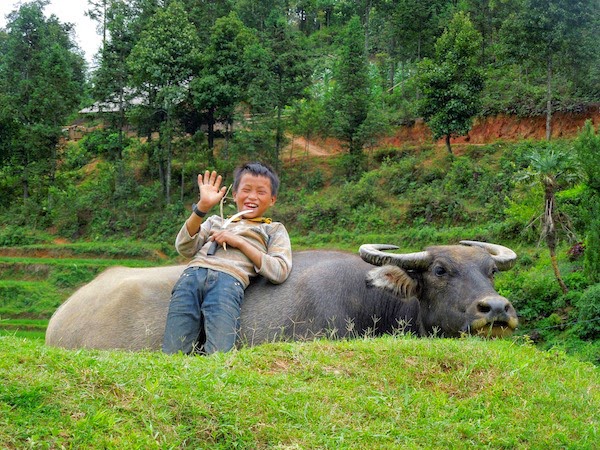
And so, my second day in Sapa, I took a different approach. My second trekking tour with untouched landscapes and zero sales pressure. A local guide, paid handsomely, took our group on a winding trek through the hills and into her own Red Dao village. She took us to the local school, described the rice-harvesting process to us. We saw women cooking outside their homes and little kids riding buffalos along the rice paddies. The whole thing was almost… peaceful.

And then our guide took us to her home to meet her mother in law. And her mother in law’s friends. They gave us little plastic chairs to perch on over the dirt floor, asked us where we were from… and enquired as to wether we’d like to see some handicrafts they had for sale.

Trekking Sapa 5


I definitely do not want to discourage anyone from visiting Sapa. It is truly, stunningly, otherworldly beautiful in the kind of way you only see in tourism campaigns. It’s fascinating seeing how the hill-tribes live, and it’s enlightening speaking with the tribe women – to a point. If you go, just be prepared with an iron will and a scowl in your back pocket — or a lot of cash.

Wednesday, July 30, 2014

Trekking Northwestern Vietnam

By Audrey
A knock on the carriage door. The scent of fresh coffee being poured into cups. The gold duvet wrapped around my body. Thick fog hanging over the sleeping hills. The halt of the train pulling into Lao Cai – a train station which lies only 1 kilometer away from the Vietnam-China border. A little van chugging uphill as it follows the curvature of the mountains.

That was my introduction to Sapa and I felt like I was falling into a dream as opposed to waking from one.

There was something magical about travelling all night aboard a train and waking up to an entirely different landscape in such a remote part of the country. How was this still Vietnam? But that’s the thing about this country, it has one of the most diverse terrains; you can be in a bustling city like Hanoi fighting scooters for a little trekking Sapa in one day, and then you can find yourself wandering the streets of a small hillside village the next.

Sapa won me over with its mountain views and small town feel on the first day, but it was things like pumpkin soup, water buffaloes roaming the streets, gnocchi Bolognese, fresh mountain air, and strawberry tea, that made me want to linger. (Yes, most of my reasons are food, but trust me, this town knows what it’s doing in the cooking department.)

Here are a few photos from my time in Sapa:

Trekking Sapa
Stunning terrace field
Sapa Vietnam
Enthralling scenery
Sapa, Vietnam 2
H'mong woman plays with her daughter
Sapa Vietnam 3
A man balances two baskets on the back of his motorcycle


Tuesday, July 29, 2014

A Confession in Sapa, Vietnam

I've first heard of the Hmong tribe when I read the beginning chapters of Elizabeth Gilbert's Committed (sequel to Eat Pray Love).If you haven't read it yet, this is the book where Gilbert faces her fears about getting married (again) by traveling in Asia and asking people about their views on marriage.

So she travels to northern Vietnam to visit a Hmong household. She asked the women questions like: “When did you realize that your husband might be somebody you wanted to marry?” Finally when Gilbert asks, “But when did you fall in love with him?” and “What do you believe is the secret to a happy marriage?” the roomful of Hmong women broke out laughing. It was as though she asked them to purchase some calcium supplements! They found her questions downright silly. Gilbert then concluded that the Hmong women do not place their marriages in the center of their emotional lives as do women in the West.

Travel Sapa, Vietnam

As I read this book, I vowed to travel to Vietnam and meet these Hmong people myself. They seemed like such an extraordinary bunch! I would later find out that they were much more than that. They were one of the most beautiful tribe I've ever laid eyes on! I finally had my chance after our Halong Bay adventure. Last stop in Vietnam : the rice terraces of Sapa!

Sapa, Vietnam 2

My first encounter with a Hmong girl was at the town square where the Hmong women were selling clothes, jewelry and souvenirs. I went in a photo frenzy. They were so colorful, beautiful and just plain photogenic! I absolutely forgot the number one rule of travel portrait photography.

The rice terraces are the main attraction of Sapa. Starting trekking Sapa tour out was pretty easy. We followed a well worn path down the slopes. But after a while, the path got muddy and steep and it got harder and harder for us to walk our way down.
Sapa Vietnam 3
A nearby Hmong farmer saw our predicament and smiled at us shyly. He then walked down and showed us the way. He walked with us the whole way and even guided us back to town after the trek. We couldn't imagine how he hiked through the muddy terraces in rubber slippers but he was smiling the entire time. His act of kindness just validated what I already knew about the Hmong tribe: that they are a warm and exceptionally friendly people.

I have to confess though, I didn't really finish the book Committed. It lacked the excitement and wonder of Eat Pray Love. I was bored out of my mind when she got to the part about the history of marriage. I felt like I was back in college with a stack of books for 'required reading'. But something great came out of those first few chapters for me. I came to Sapa, Vietnam to encounter a beautiful town and experience its enchanting people. 

Sunday, July 27, 2014

Surreal experience in Sapa, Vietnam

By Asha and Ryan
Sapa – or more accurately, the mountainous countryside around Sapa – is the most stunningly beautiful place we have been since leaving the islands of Thailand’s Krabi provence a few months ago. On this point, Asha and I both agree.

To get to Sapa we took an overnight sleeper train (our favourite mode of transportation) from Hanoi to the border town of Lao Cai, however a bone rattling fever made the trip pretty awful and sleep hard to come by for me. Our hotel (Hanoi Guesthouse – probably the best place we have stayed this year, i think they will get their own post on here later) were incredibly helpful, booking our train tickets, calling out next hotel to organise our pickup at the other end, organising a taxi to the train station and even sending someone from the hotel on motorbike behind our taxi to make sure we got on the right train. In a place like Hanoi, where travelling can be a bit of a headache at times, having this kind of service is just fantastic.

Sapa, Vietnam

From Lao Cai it was only one hour by bus to Sapa, a trip that revealed to us just how mesmerising the scenery in this part of Vietnam is. The region is full of soaring peaks and steep valleys, with terraced fields, rice paddies and thatched roofed villages turning the region (as Asha said) into something out of a National Geographic magazine. Add women in traditional dress (usually chasing you down to sell you their handicrafts), snotty nosed kids and families planting rice across the valley, and yeah, you get the picture.

Sapa is a tourist town high in the mountains, close Fansipan (Vietnam’s highest peak), and it immediately felt very different from everywhere else we had been in south-east asia. The temparatures in Sapa are much lower than everywhere else, with winter temperatures often dropping below freezing and snow even falls from time to time. But its summer now, and we were blessed with some gorgeous sunny afternoons and a cool breeze, allthough at time clouds did sweep in and blanket the town white.

In Sapa it felt like the heat and humidity that had clung to our skin and clothes for the last 3 months had finally dropped away, and the fresh mountain air had our spirits soaring (after my fever had passed).

Travel Sapa, Vietnam

Our hotel was more akin to a mountain chalet, with open fireplaces in each room and wood paneling. The landing in front of our room overlooked the huge valley and distant peaks, but a box of kittens living in the woodshed behind our room was of far more interest to Asha, who was constantly sneaking out to check on them and win the trust of the mother. “She trusts me, I am one of them now”

Apart from gazing at the view and watching endless activity going on in the terraced fields and paddies below and above us, the only real activities we did in Sapa were trekking (well, walking really, but trekking sounds way better) to Cat Cat Village, and doing a Vietnamese cooking course.

The trekking Sapa took a few hours, and it was great to get out and into the countryside, to walk through villages and fields and see people going about their day to day. The return journey however was a bit more difficult, as it didn’t seem to register on the first leg that the return would be all uphill, and all steep. But some strenuous exercise, lungfuls of cool mountain air and a much needed release of endorphins had us pretty content that afternoon, and watching the hawks win in the late afternoon breeze topped it all off.

Wednesday, July 16, 2014

How to trek Sapa in right way

By Robyn
Sapa is renowned for its phenomenal trekking Vietnam. Hills stretch into the clouds and valleys plummet to the floor with such speed and force that it is hard to imagine how people manage to live off the land. Yet, as far as the eye can see, steps of rice paddy fields stretch across these astounding gradients with such precision and innovation that could only have been created by the resilient Vietnamese.

Trekking Sapa

The rice field hills are an awe inspiring spectacle only to be broken by the occasional waterfall, nestle of jungle or bamboo forest, making it the ideal place to go trekking Sapa.  But unfortunately, like so many wonderful parts of the world, it has become very cramped with tourists and subsequently hagglers and other annoying quirks that follow the industry. Sadly it is very easy to go to Sapa and have a very shallow experience, superficially coated with unauthentic tourist fluff instead of the real deal. Here are a few tricks to make sure you have an authentic trekking experience.

Trekking Sapa Vietnam

There is no better way to understand someone else’s culture than to be invited into their home for a night. And the fascinating minority tribes of the Sapa region are no exception. You won’t get a toilet but if you’re happy to squat behind the bamboo you will not only get a loo with a spectacular view but you will have a much more exciting story to tell when you get back home. The bed will be warm, hard but warm, and the food will be fantastic. So keep an open mind and learn what it is like to survive on the hills of Sapa.

From rain, to heat , to freezing conditions. Make sure your overnight bag has it all. Of course it depends on what time of year you go as the weather does vary – but even though the days may be warm and sunny the temperatures can drop at night to extremely cold conditions. Make sure you have a clean set of clothes to sleep in as it is highly likely that everything from your socks to your t-shirt will be caked in mud by the time you have finished your first day of trekking and throw in a waterproof jacket or umbrella in case it suddenly decides to rain. Then it’s all the usual; torch, toilet paper, camera, water.

Monday, July 14, 2014

Five things travelers should experience Vietnam

By Jessica Korteman
Vietnam had been on our travel wish-list for some time, not only because it was where Hai was born but because almost every traveler we met raved about it, and we can understand why. We spent three weeks traveling Vietnam. It’s do-able but we’d recommend a month if you have it to cover the long distances and account for delays. Here are our top picks from our time in this wonderfully chaotic and colorful nation.

1. Go South 
The Mekong Delta region is worth the trip south from Ho Chi Minh City. Not only is there a super-relaxed vibe, but you’ll eat some of the most delicious food Vietnam has to offer, the kind that makes you want to lick your plate clean or slurp every last mouthful of broth from your finished noodle soup. Don’t even get me started on the coffee: hands down the best we tasted in the country.

Coffee Hanoi

2. Get to know Vietnam’s war history from the Vietnamese perspective                
Vietnam is much more than a war, but you can’t put what you experience in the country into context without knowing something about it. And there are many opportunities to get in touch with Vietnam’s war past.

While it is super touristy and you’ll be herded around like cattle, take a tour of the Củ Chi tunnels on the outskirts of Ho Chi Minh City to experience the underground guerrilla network for yourself. Crawling through the hot and narrow tunnels will give you a momentary sense of what conditions must have been like during conflict. Then learn more about the Vietnam War and the effects of Agent Orange at Ho Chi Minh’s War Remnants Museum. It’s not an easy visit, but you’ll come out humbled about the gravity of war and its ongoing legacy. Most Củ Chi tunnel tours swing by the War Remnants Museum on the way back for those who’d like to make it a full day outing.

3. Get a bus from your bus                                                                 
Most bus companies operate a free shuttle service from bus stations to your hotel in town. They are usually unmarked and unpublicized to foreigners so that the taxi services inevitably waiting for you as soon as you step out of the bus can make their dong out of you. Watch the locals and follow their lead. Sometimes it takes a few minutes for the buses/vans to come, so don’t be put off by the empty bus station and save yourself a most likely inflated trip into town.

4. Take a free walking tour in Hanoi  

                                              Walking Hanoi

Want to experience the capital from a local’s perspective without paying for and joining a tour group. They are a student-run organization who provide free English guiding services around the city. While they have some itineraries on their website, these are just as some inspiration. You can go wherever you like for a full or half day depending on your interests. You’ll just need to cover the costs of the student(s) – admission fees, lunch etc and any tips you may want to give. The tour is always private even if you are a solo traveler so you can be sure to have a very personalized experience and lots of interaction with your new friend.

5. Whatever you do, get to Sapa

Trekking Sapa


Sapa is not only one of the most spectacular places you will ever see, but it is so different to other parts of Vietnam that you won’t have truly experienced all that the country has to offer without going here. Go straight to trekking Sapa for a true village homestay experience and we promise you won’t regret it.

Thursday, July 10, 2014

My First Impression Trekking Sapa

By Audrey Scott
Even in winter, Sapa’s landscape dazzles with its rolling hills and terraced rice fields. The villages and people are just as unique. It’s like a portal to another world.
Trekking Sapa

Su was our trusty Black Hmong guide dressed in a dark indigo top and skirt with brightly embroidered trim, velvet strips wrapped around her legs and comfortable sneakers. Within moments of leaving the hotel, we were surrounded by a gaggle of (giggling) girls who came only to hip level and danced around us calling out “what’s your name?” “how old are you?” “do you have any brothers or sisters?”.

Trekking Sapa is like walking through a time warp. Women with bright red headdresses and clothing covered in colorful embroidery walk by with babies and wicker basket backpacks on their backs. Girls are miniature versions or their mothers, learning how to embroider (and sell) at an early age. Boys play in the fields and tend to the water buffalos. Houses are simple structures with dirt floors, often without electricity or running water.

Trekking Sapa VietnamThe second day of trekking tour took us through deeper valleys and muddier paths into villages of other ethnic groups. Children and women with heavy loads on their backs flitted over the hills and steep paths with simple sandals, while tourists in sturdy hiking boots were falling all over each other trying to stay balanced. The simplicity, scope and beauty of the surrounding terraced rice fields was impressive.

We had a long walk ahead of us and weren’t interested in buying any souvenirs. We were waiting for the shopping opportunities at Bac Ha market. At one of the resting points, a Red Dao woman latched onto me. Acutely aware of her befriend-and-sell strategy, I told her straight away that we weren’t shopping that day. The woman laughed and continued to walk with us.

Sapa Vietnam

Sapa is like no other place we’ve visited. It is a visually spectacular, magical place – with its endless hills of terraced rice fields and concentration of hill tribe ethnic minorities whose colorful traditional clothing beautifully accent the landscape. It doesn’t feel like people are wearing traditional attire just to please tourists and their cameras – their dress is a matter of pride and identity.

I wonder how life in the villages and people will change over the next few years. Already, children from the villages stay in town for several days at a time to accompany tourists and sell handicrafts. When I asked Su how tourism had changed her village, she replied that it hasn’t changed it too much yet, but that in 15 years it will be very different. I believe she’s underestimating the pace of change.

Not all change is bad, of course – sometimes it brings a better standard of life with improved health care, education and nutrition. However, if Vietnam wants to preserve the uniqueness and cultures of its ethnic minorities, it will need to responsibly manage the tourism boom in places like Sapa. 

Monday, June 30, 2014

Why You Need to Travel Vietnam

By AUDREY 
If you only have time to explore one country in Southeast Asia, choose VIETNAM!

Let’s admit it, when it comes to travel, Vietnam gets a bit of a bad rep. Before coming here all I heard were stories of travel scams, robberies, aggressive touts, and warnings that I’d be treated like a walking dollar sign. I was beginning to wonder whether I even wanted to spend a full month in this country, but 31 days later as my Vietnamese visa is about to expire, I am sad to leave Vietnam behind.

I’ll admit I’m relatively new to Southeast Asia, and have only covered three countries in the past three months, but Vietnam has left the strongest impression on me by far.

So what makes Vietnam so special?

Travel Vietnam
Friendly Local People
The people are warm, kind, and love to laugh and smile. It is in this country where I have met some of the most caring locals.

When I was sick in Hoi An, it was the woman who runs the Green Moss restaurant who took it upon herself to get me all better. She prepared ginger tea with honey for me, gifted me with a mint balm to rub on my neck and my chest, urged me to wear a scarf to bed, and then checked up on me daily whenever she saw me cycling around town or eating at her restaurant.

In Vietnam people have helped me when I looked lost, locals I met on a train have offered to show me around their hometowns (for free! Further proof that I’m not just a walking ATM), and business owners have been courteous to me even when I didn’t eat at their restaurant or didn’t take their tour.

Vietnam has been an explosion of flavours! Most dinners Sam and I have eaten in this country have been silent because we’ve both been gorging on local delicacies like the food in front of our plates is about to disappear. We’ve been known to order four different dishes in one go because there’s just so much new food to sample.

Whether I was learning to cook Vietnamese food in a dim lit kitchen with no ventilation (picture beads of sweat running down my back and hopefully not onto my food), or enjoying a meal at a local farm in the outskirts of Hoi An, the food was spectacular.

Some of my favourite dishes in this country have been bánh xèo (a rice flour pancake stuffed with pork, shrimp, onions and bean sprouts) and fresh spring rolls. Fresh, flavourful, healthy, filling – what else do you need in a meal?

Kayaking Halong Bay
Halong Bay
Then there is the diversity that comes with travelling in such a big country. I can guarantee that Vietnam will not bore you with its possibilities!

Want to travel down the banks of the Mekong Delta and experience the chaos of vendors at work in a floating market? Do you want to get lost in Saigon’s back alleys as you go in search of the best pho? How about getting clothes custom made in Hoi An? Or can I interest you with kayaking Ha Long Bay .You could also spend your time in Hanoi drinking bia hoi at a little street side bar equipped with plastic children’s furniture? Or if you’re feeling a bit more culturally inclined, go for a hill trekking Sapa where you can do a home stay with the ethnic tribes that call this place home?

Thursday, June 26, 2014

Active Travel Northern Vietnam

By Peter Brown 
After a painfully long flight I landed in the Hanoi airport, and immediately hopped aboard an overnight train heading north. I shared a sleeper cabin with a French couple, and a girl from Quebec. They were all very nice, and we chatted for a couple of hours before hitting the hay. But I’m a light sleeper, and falling asleep on the clanging, jostling train car proved to be impossible- CA-CLUNK, ca-clunk! CA-CLUNK, ca-clunk! CA-CLUNK, ca-clunk!

Sapa
Sapa, Northern Vietnam
I woke up at the Lao Cai train station, near the border with China, and found a car to drive me an hour west, through foggy, winding roads, to the mountain town of Sapa. The town was a kaleidoscope of colors and patterns: farmer’s markets glowed green with leafy vegetables, motorbikes zigged and zagged over every paved surface, and groups of indigenous women wore their customary handmade attire and patrolled for tourists to whom they might sell embroidered bags and Technicolor scarfs.

I spent the next three days trekking Sapa. My days were spent with Sung, a wonderfully peaceful woman from the Black Hmong tribe, who spoke fine English thanks to years of guiding western tourists around those parts. Sung took me to waterfalls, jungles, terraced rice paddies, small villages, across precarious bridges and along muddy mountain trails.

My favorite moment with Sung had to be when she took me to a little lunch spot in the village of Lao Chai. She sat me down in the main dining area (which consisted of picnic benches under a wooden canopy) and then she disappeared into the kitchen. When I realized she was eating lunch with the cooks, I sheepishly poked my head around the corner and asked if I could join them. I guess most tourists prefer the picnic benches, but I was alone, and much preferred getting to know Sung and her friends. They pulled up a chair for me and the cook brought over some of the most delish sautéed greens I’ve ever had, along with some tasty spiced pork and rice, and a can of coke. While eating, I peppered them all with questions about their daily routines, and Sung translated. They laughed at how excited I was to hear about everyday activities like planting rice and raising buffalo. To top it all off, I sat beside a window with a view I won’t bother describing, just look at the glorious picture below.

After exploring the North for three days, I got back on that overnight train and returned to Hanoi. Once in Hanoi, I quickly found my way kayaking Ha Long Bay. Several hours on the bus brought us to a harbor, where our group boarded The Calypso, a worn, but pleasant boat that would take us deep into the fantastical mountain islands that have made Ha Long Bay a UNESCO World Heritage Site. The Calypso was one of dozens of boats making the trip, and so a fleet of us set sail for the islands. The Calypso provided us with lovely bedrooms, and meals, and the crew even gave a nice little cooking lesson and a Tai-Chi class the next morning.

Kayaking Halong Bay
Kayaking Halong Bay
The crew must have noticed the date of birth on my passport when I checked in, because after dinner the main lights turned off, strobe lights turned on, Vietnamese techno blasted from the speakers, and a birthday cake appeared before me. It was ridiculous. But it was a fun night. The other guests were good sports to sing Happy Birthday to a guy they hardly knew.

While in Ha Long Bay we stopped off to see a giant cave, and some of us went sea kayaking through tunnels to explore a lagoon in the center of a ring shaped island crawling with monkeys. My imagination couldn’t get enough of the scenery, and so I found a little time for watercolor painting.

Before I knew it we’d landed back at the harbor, and were boarding the return bus to Hanoi. I had an amazing week of traveling around northern Vietnam.