Monday, January 17, 2011

Discover Hanoi, Vietnam on traveler's eyes

Each foreign tourist arrives in Hanoi and when they return to their home, they all have an individual impression. Hanoi is ancient and peaceful; Hanoi bustles and is full of vitality; Hanoi has precise and unique gastronomy; Hanoi is brilliant with colours; and Hanoi is passionate and charming.

Common impressions for tourist to easily recognize are the friendly, enthusiastic and hospitable people of Hanoi. Living in California, US, Dr Gish chooses Hanoi capital as the tourism destination for his family. He said that his family had visited many famous landscapes, enjoyed traditional delicious dishes in Hanoi and contacted many people. However, the most memorable impression for his family was the vibrant vitality of Hanoi’s traditional culture.
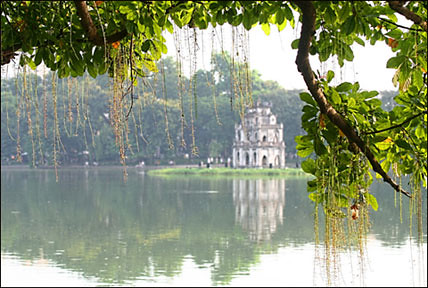
Sword Lake, Hanoi, Vietnam

Sword Lake, Hanoi, Vietnam

Hanoi leaves good impressions for me because the city has preserved its cultural heritages, for example, Tortoise Tower in Sword Lake, daily life and business activities of inhabitants in the Old Quarter. I think that Hanoi is trying to preserve its essential cultural values of previous years and be determined to develop a modern city at the same time,” Dr Gish said.

Sharing these thoughts with Dr Gish, Mr. George Saxton also loves to visit historical sites in Hanoi. For him, these are memorable places during his visit. “I’m sure to remember Sword Lake, Ngoc Son Temple, the Temple of Literature, the house on stilts where Uncle Ho lived and the whole area. I like the way the house on stilts is preserved, that is what I remember about Hanoi.”
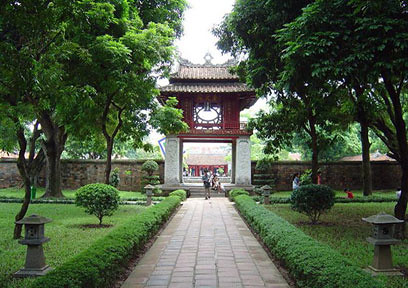
The Temple of Literature, Hanoi, Vietnam

The Temple of Literature, Hanoi, Vietnam

For Ms Marcia of Maryland, US, dishes like pho (noodle soup), cha ca (fried fish), rice vermicelli and meat rolls or coffee in Hanoi are all wonderful but her most memorable impression about Hanoi is completely different. It is the people and cultural character of Hanoi. Hanoi’s culture is charming and plentiful. One of the most beautiful images among Asian countries she has ever seen is the image of Vietnamese women in long-dresses and “any time I close my eyes I see that image”. “I also like the image of farmers growing rice in the fields,” she happily said. That is what she remembers about Hanoi.

That is also the comments of Ms Johnson from Idaho, US. She said that it is hard to use any word to fully describe the people in Hanoi. Therefore, she has to come back Hanoi many times. “Hanoi people are very wonderful and enthusiastic and eager to help strangers. The first time we came to Hanoi was in 1995 we were a little worried of not being welcomed, but unexpectedly every one treated us very kindly. We were helped any time we needed assistance. We had close friends and they treated us very well when we were there. We can not talk all about the wonderful people in Viet Nam,” Ms Johnson said.

Living in Hanoi for many years, James Rhodes and his wife from Alabama, US, were eager to return Hanoi in the autumn to welcome the capital’s 1,000th birthday. Hanoi attracts him and his wife with special things.

“The thing we like most in Hanoi is the Viet Nam National Symphony Orchestra. This is a wonderful orchestra. I must say that we have listened to symphonies all over the world but the Viet Nam National Symphony Orchestra is excellent. Additionally, in Hanoi, the folk music is also good. This year, we come back to celebrate the 1,000 years of Thang Long – Hanoi and we don’t intend to leave this city. We choose to live in Hanoi because this is a cheap city and people there are friendly. My wife and I decided to choose Hanoi as our home.

Mr. Steve Ball living in Maine, US said that for him, Hanoi is an ancient city. Hanoi truthfully reflects the culture of Viet Nam, this is a beautiful city for tourists to visit, go for a walk and are welcomed. Mr. Steve always encourages his friends to come to Hanoi.

“I want to send sincere congratulations to all people of Hanoi capital on the occasion of the Hanoi’s 1,000th birthday. I desire that Hanoi continues to develop prosperously. I myself also expect to arrive in Hanoito share this happiness with the people in the capital about this event. I wish the best things for Hanoi people. Good bye and see you in Viet Nam,” he said on the occasion of Hanoi’s 1,000th birthday.

Source: vietnamtourism

Recommendations:

Northern Highlights
West to East Biking Exploration

Thursday, January 13, 2011

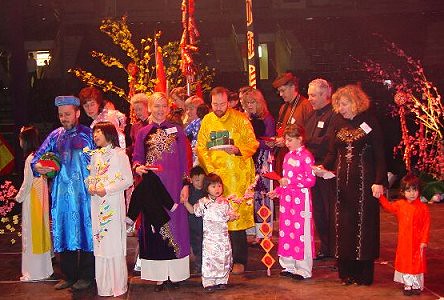
Travel to Vietnam & Discover traditional Tet Holiday

The lunar calendar shows that Tet is coming, and from now until then, all things are Tet. The streets are Tet, the talk is Tet, the thoughts are Tet, the shopping is Tet, it's a Tet world in Vietnam right now and everybody knows it.

Tet is the most cherished time of the year in Vietnam. It is when the cities empty out and thousands go back to the countryside where they were born. City dwellers often choose to spend time at home. The streets empty out. The horns quiet, the traffic no longer congests and the hustle and bustle of city life, for a few days every year, comes to a halt.

New year's Eve in VietnamNew year's Eve in Vietnam

As Vietnam develops and its expat population grows, the holiday has also come to hold a special meaning with foreigners as well.

"For me, Christmas was always the big holiday but now, Christmas is just a sign that Tet is approaching," shared Karen Merlin who has lived in Hanoi for over 4 years now. "It's hands down the best time of year, it is a time to catch your breath, relax and reflect on the last year."

Hitting the streets, Tet for foreigners residing in Vietnam means various things. For Stephen McGrath, living in Ho Chi Minh City, "Tet is a cultural event that perplexes and entertains me, but no-one ever knows when it is until a week beforehand," he said jokingly.

Paula, a long-time ESL teacher in Vietnam said for her, "Tet is the one true break I get all year. I cherish every moment and usually spend half in the city with my Vietnamese friends and half traveling somewhere outside of Hanoi."

As vendors try to stock up and sell as much as they can, many foreigners make plans to travel and get as far away as they can.

"I get as far out of the city as possible. It's the one time every year that I don't want to be in the city, I want to be out and traveling. It's so quiet it is lonely so I always grab a bag and hit the road. For me, Tet is my only chance for a big trip every year, so I take it," shared NGO worker Jason.

Adam, who is married to a Vietnamese woman said, "Tet is obviously a very important holiday. It's family time. We do all the traditional activities and it has been a remarkable cultural experience for me. Local food, local people, local everything. We go out to the countryside and celebrate with a huge and loving family."

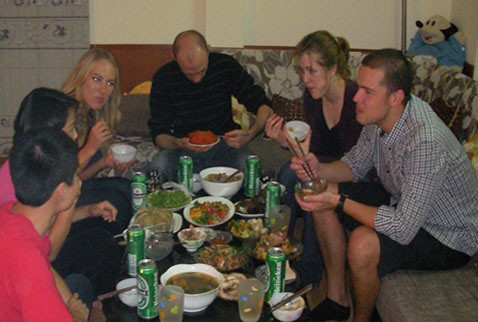
Foreign friends enjoying a traditional Tet meal with a Vietnamese familyForeign friends enjoying a traditional Tet meal with a Vietnamese family

One resident of Hanoi for over 15 years griped, "As much as I love Tet, it is also the time of year where for two months, the price of anything and everything goes up. From a business standpoint, Tet is terrible but once the day arrives, and my wife's family gathers, I realize that I love it. It's really my Christmas now."

For the plethora of teachers living and working in Vietnam, many refer to it simply as, "Tet is for travel."

Tet's meaning can also change drastically as it did for Eric Burdette, "My first four Tet's used to mean time off for continuous partying... However, over the past two years I have courted (and recently married) a Vietnamese woman. Now that I have a family in Vietnam, Tet has a completely different meaning. After over five years of living in Vietnam, being accepted into a family and having a real home during Tet makes me feel like I truly belong here."

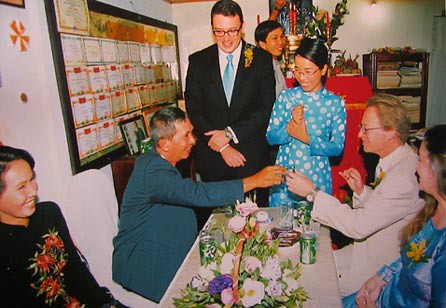
Eric’s Family in Vietnam during Tet holidayEric’s Family in Vietnam during Tet holiday

Tet is a time for family and friends and has different meaning for different people. It is a holiday that like Christmas, both Vietnamese and foreigners have come to embrace and celebrate. It is East meets West. It is a time of joy for all. One embassy worker I spoke with simply said, "It's Tetmas." And this is Tet through the eyes of some foreigners.

Source: dtinews

Monday, January 10, 2011

Travel Vietnam & Cambodia - Fancy a Far East adventure

The New Year is fast approaching, so now is a good time to consider next year's break. With the economy slowly but surely improving, why not travel to somewhere a little more exciting in 2011?

Vietnam holidays are certainly an option worth considering, with the Far East nation offering visitors spectacular landscapes, a fascinating culture and a friendly population. A nation that has successfully emerged from the ravages of war, Vietnam is being explored by an increasing number of travellers, all of whom are keen to experience this most unique of destinations. While its recent history is inescapable, so too is its soaring mountains, stunning coastline and iconic rice fields.

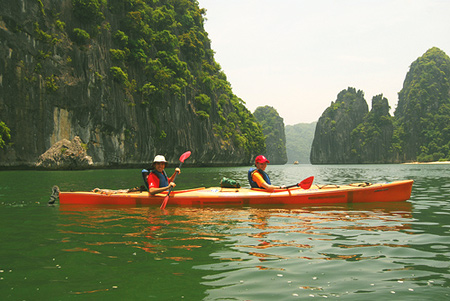
Kayaking tour in Halong Bay, VietnamKayaking tour in Halong Bay, Vietnam

With so much to take in, travellers arriving in Vietnam will want to arrange their transport as early as possible. Trains are perhaps the most comfortable way of travelling around the country, although there is only one major line; that linking Hanoi and Ho Chi Minh, a journey that takes around 30 hours to complete.

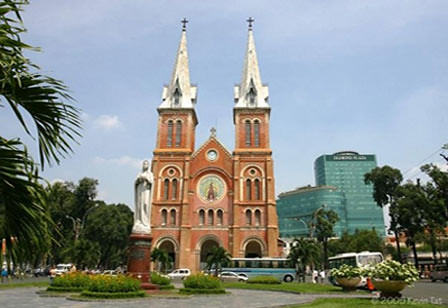
Notre Dame Cathedral, Ho Chi Minh, VietnamNotre Dame Cathedral, Ho Chi Minh, Vietnam

Buses are a cheaper option, with intercity services tending to depart at the crack of dawn in order to beat the morning rush. Services take a while, however, so be prepared to give up a day or two here and there for travelling. Once you've arrived at your chosen destination, you will certainly want to get out and explore your surroundings; in which case, car rental might be an option worth considering.

While hiring your own car is only possible in Vietnam's main cities, you can hire a vehicle with a driver elsewhere. So, not only will you avoid having to negotiate the country's often hectic road network, you will be able to take advantage of local knowledge, possibly discovering places a little off the beaten track and learning a bit of Vietnamese along the way.

The Far East is a long way to travel, so there's no reason to limit your trip to a single country. Neighbouring Cambodia is another nation that has fully embraced tourism. Fortunately, then, there are a number of Vietnam and Cambodia tours for travellers to take advantage of.

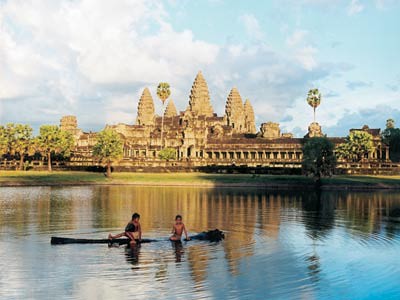
Angkor Wat Temple, CambodiaAngkor Wat Temple, Cambodia

Angkor Wat is arguably the jewel in Cambodia's crown. The huge temple complex, one of the finest examples of classical Khmer architecture, has become the nation's symbol. Dating back to the 12th century, Angkor Wat is the World's largest religious building and has pride of place on Cambodia's flag.

While Cambodia is awash with culture and historical artefacts, travellers will inevitably want some downtime during their Far Eastern adventure. Sihanoukville, known among tourists as Snookyville, is a popular seaside town and home to the country's best beaches. Seemingly becoming more popular as each year passes, Sihanoukville was recently referred to by the New York Times as "Asia's next trendsetting beach".

Seemingly a million miles away, Phnom Penh, Cambodia's capital, is referred to as one of the Far East's remaining undiscovered destinations. Despite being deeply affected by war and revolution, Phnom Penh is a city of optimism and colour; a place of Buddhists, spice markets and a burgeoning economy. It's likely you'll visit the city during your Cambodian adventure, and while the inevitable assault on the senses may exhaust you, it's certainly worth spending a day or two here.

No visit to the eastern corner of Asia can be complete without seeing some of the region's wildlife, so a visit to the 1,581 sq km Bokor National Park comes highly recommended. Home to green peafowl, chestnut-headed partridge and even tigers, the park is well worth a visit, even if it's just to see the deserted French hill station, Bokor, that it contains.

Vietnam and Cambodia are two nations opening their arms to tourism. Why not discover each country next year before everyone else does?

Source : forres-gazette

Thursday, January 6, 2011

Where and how to meet minorities in Southeast Asia

Minority cultures in Southeast Asia are often time capsules of earlier lifestyles that have escaped the full force of globalisation’s effects. Consequently, they are a highlight for travellers to the region who want to get a sense of a country’s past…as it collides with the present.

But how do you ensure that while visiting, you don’t cause unintended damage or offence? You can show your respect for a culture by being educated about its ways, beliefs and taboos. Here are a few general guidelines:

1. Always ask permission before taking photos of tribespeople.

2. Don’t touch totems at village entrances or sacred items hanging from trees.

3. Avoid cultivating a tradition of begging, especially among children.

4. Avoid public nudity and don’t undress near an open window.

5. Don’t flirt with members of the opposite sex.

6. Don’t drink or do drugs with the villagers.

7. Smile at villagers even if they stare.

8. Ask your guide how to say ‘hello’.

9. Avoid public displays of affection, which might be viewed as offensive to the spirit world.

10. Don’t interact with the villagers’ livestock; avoid interacting with jungle animals, which might be viewed as visiting spirits.

11. Don’t step on the threshold of a house, prop your feet up against the fire or wear your shoes inside.

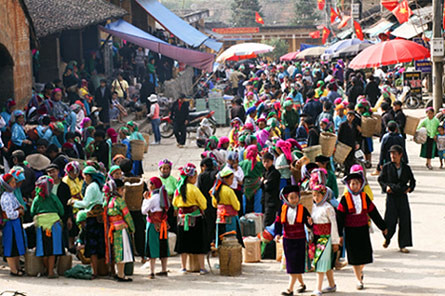
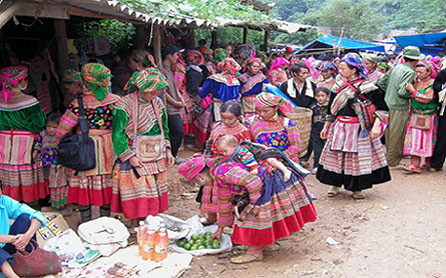
The local annual The local annual "love market" in Ha Giang, Vietnam

Where to meet Southeast Asia’s minority cultures

If you want to meet minority cultures, you’ll often have to get away from popular tourist centres; how far you’ll have to go depends very much on the country and how popular it is with visitors.

The trekking industry in Thailand is very developed and a minority visit can be a disappointment for some, but much depends on the operator organising the trip. Northern Vietnam and the Xīshuāngbǎnnà region of Yúnnán have emerged as popular places to experience minority cultures. Laos is really taking off as a destination to meet minority groups, partly due to its ethnically diverse population and in part due to the relatively small numbers of visitors venturing off the beaten path.

Cambodia and the Central Highlands of Vietnam provide a home to some minority groups in the northeast, but as they dress like lowland Khmer or Vietnamese, they have been less exposed to mass tourism than elsewhere. As for the effects of trekking on the host tribes, many agree that individuals within the village might financially benefit when the trekking companies purchase supplies and lodging, but the overall pluses and minuses are considered to be minimal compared to other larger institutional forces.

Lonely Planet has a suggestion of the top 5 spots for a genuine interaction with a minority culture in Southeast Asia:

1. Cambodia: Ratanakiri
2. Laos: Muang Sing
3. Thailand: Chiang Rai
4. Vietnam: Sapa
5. Yúnnán: Xīshuāngbannà

But there are many other important minority groups in the region, some rendered stateless by the conflicts of the past, others recent migrants to the region, including the many hill tribes.

Cham

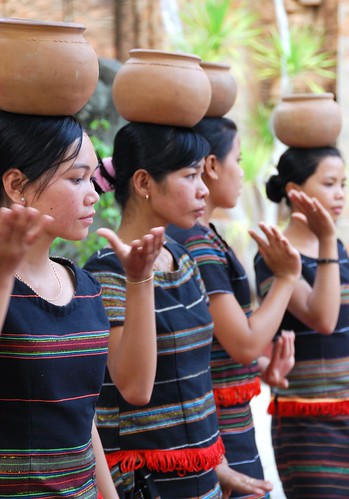
The Cham girlsThe Cham girls

The Cham people originally occupied the kingdom of Champa in southcentral Vietnam and their beautiful brick towers dot the landscape from Danang to Phan Rang. Victims of a historical squeeze between Cambodia and Vietnam, their territory was eventually annexed by the expansionist Vietnamese. Originally Hindu, they converted to Islam in the 16th and 17th centuries and many migrated south to Cambodia. Today there are small numbers of Cham in Vietnam and as many as half a million in Cambodia, all of whom continue to practise a flexible form of Islam. Over the centuries, there has been considerable intermarriage between Cham and Malay traders.

Hmong

Hmong peopleHmong people

The Hmong are one of the largest hill tribes in the Mekong region, spread through much of northern Laos, northern Vietnam, Thailand and Yúnnán.Hmong groups are usually classified by their colourful clothing, including Black Hmong, White Hmong, Red Hmong and so on. The brightest group is the Flower Hmong of northwest Vietnam, living in villages around Bac Ha. The Hmong are known for their embroidered indigo-dyed clothing and their ornate silver jewellery. There may be as many as one million Hmong in the Mekong region, half of them living in the mountains of Vietnam.

Jarai

The Jarai are the most populous minority in the Central Highlands of Vietnam, northeast Cambodia and southern Laos. Villages are often named for a nearby river, stream or tribal chief, and a nha-Rong (communal house) is usually found in the centre. Jarai women typically propose marriage to the men through a matchmaker, who delivers the prospective groom a copper bracelet. Animistic beliefs and rituals still abound, and the Jarai pay respect to their ancestors and nature through a host or yang (genie). The Jarai construct elaborate cemeteries for their dead, which include carved effigies of the deceased. These totems can be found in the forests around villages, but sadly many are being snapped up by culturally insensitive collectors.

Dzao

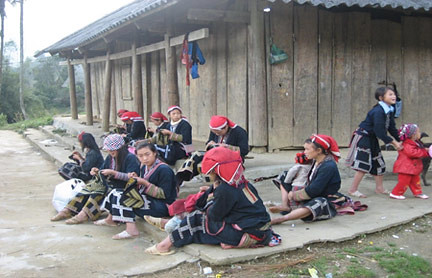
The Red DzaoThe Red Dzao

The Dzao (also known as Yao or Dao) are one of the largest and most colourful ethnic groups in Vietnam and are also found in Laos, Thailand and Yúnnán. The Dzao practise ancestor worship of spirits, or ban ho (no relation to Uncle Ho), and hold elaborate rituals with sacrifices of pigs and chickens. The Dzao are famous for their elaborate dress. Women’s clothing typically features intricate weaving and silver-coloured beads and coins – the wealth of a woman is said to be in the weight of the coins she carries. Their long flowing hair, shaved above the forehead, is tied up into a large red or embroidered turban, a sort of skinhead-meets-silk combination.

Source : lonelyplanet

Monday, January 3, 2011

Local tour guides provide an insight into the real Sa Pa, Vietnam

It's a strange land that leaves me with different feelings whenever I come to rediscover it.

Sa Pa is an incredibly picturesque town in the Hoang Lien Son Mountain Range near the Chinese border in northwestern Viet Nam, 350km from Ha Noi.

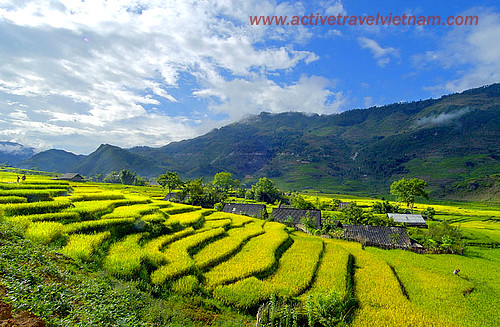
The terraced fields in Sa PaThe terraced fields in Sa Pa

It can be explored almost year-round from March to early December. Vietnamese most like to visit during June and July to escape the summer heat in other parts of the country. Sa Pa is 1,500m above sea level so the weather is quite mild, and cold at night. The best time to go to Sa Pa is on a weekday, as weekenders tend to flock here. However, the famed "love market" only takes place on Saturday nights, so visitors often extend their tour to Saturday to experience it.

Tourists can see many hill tribe people, their villages and rice terraces. The ethnic minority groups generally retain their lifestyles and traditional costumes.

The area's high mountains, deep ravines and lush vegetation rise to the peak of Mt Fansipan – the highest point in Indochina. The combination of fresh mountain air, relaxed ambience, sweeping panoramas and fascinating hill tribes make Sa Pa a must-see destination.

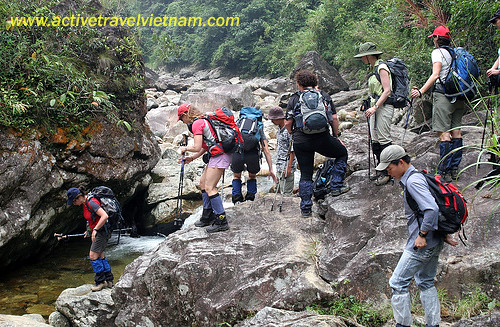
A trek took us deep into a hill tribe region where tourists are still something of a novelty. Staying in village homes allowed us to experience firsthand a lifestyle that has been little touched by the modern world and a curiosity from our hosts just as great as our own. The trekking is fairly strenuous at times but the spectacular scenery and sense of adventure make it worth the effort.

Ta Phin Cave, at the far end of Ta Phin village, is an attractive destination which tourists often bypass without a local guide's suggestion. The cave requires a guide with a flashlight, and the guide will shine the torch on a variety of stalactites.

Some of the locals invite visitors to go to their homes to show how they live and what they have, and tell them about their families. On following them to their houses, tourists find out how simply they live. The tour guides suggest you to buy the merchandise you like from them as repayment for what they have shown for you. Local tour guides also lead the trips to the forests and mountains because they know thoroughly the terrain.

Trekking tour in Sa PaTrekking tour in Sa Pa

City lovers may find Sa Pa is not the place for them as its rich ethnic lifestyle is far removed from modern life. If you expect to go shopping in malls, Sa Pa has nothing to offer. The only way to go shopping is to go to the local market where you can find unique handicrafts, jewelry and fabrics with colourful embroidery. While tourists don't know how to bargain or choose the best items, the local guides are ready to help.

Sa Pa is famous for its "love market" where local young people go to show off and find partners. It is held every Saturday night and provides a unique and unforgettable experience.
The love market is a tradition in the culture of the Mong, Tay and Dao. All the people around Sa Pa live in isolated villages and can only get together once a week during the Sunday morning market. The night before, young men and women from all around come to the love market to meet and express their emotions through playing the khen (pan pipe) and singing according to traditional customs of their people.

The experience of Sa Pa trip is not something that everyone can buy, but adventurous people and those who seek to know the hidden charm of Vietnamese hill tribes living in their old traditional mountain villages cannot miss this place.

Source : VNS

Recommendations:
Sapa Trekking & Homestay
Heaven Gate Route