Showing posts with label laos. Show all posts

Thursday, November 25, 2010

Ready for Active Travel Indochina – Vietnam, Laos and Cambodia

What could be a great option for someone have retired like you, who'd like to try something different, something more fun and exciting maybe? How about going for an active travel experience?
"Boy, when I retire, all I'm going to do is lie around in a hammock all day" – this is probably what you have said and thought about all these years while working your way through life, but now that you have retired or planning to retire, do you really find the concept that satisfying? The answer could be no.

So what could be a great option for someone like you, who'd like to try something different, something more fun and exciting maybe? How about going for an active travel experience?

Traveling in Twilight

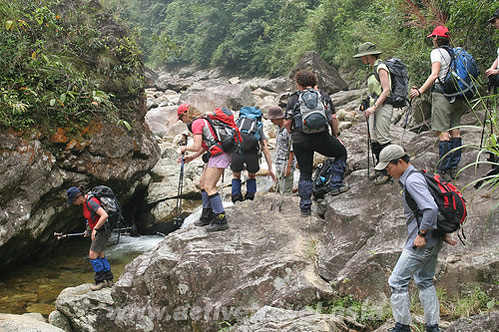
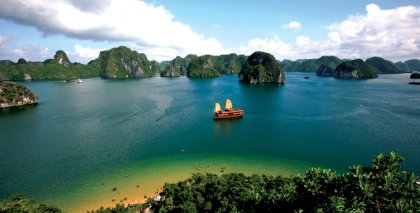
Whoever said you need to be an on-the-go person to sign up for an active vacation after retirement could not have been more mistaken. From adventurous kayaking in Halong Bay or historical trips on Ho Chi Minh Trail and Angkor Wat explorer- there is something for everyone out there
Just that you may need to hit your nearby gym at least twice a week, or ask your yoga teacher for classes immediately.
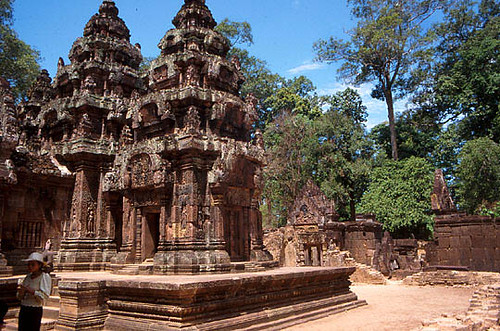
Angkor Wat, Cambodia

Here are some more options to help you plan a perfect active travel vacation:

- Fitness boot camps in Luang prabang, Lao or Ha Giang, Vietnam
- Golf vacations in Vietnam & Cambodia
- Kayaking in World Heritage sites such as Halong and Nha Trang bay, Vietnam
- Cycling trips through the countryside in Mekong Delta or Hoi An of Vietnam, Luang Prabang of Laos or Angkor Wat of Cambodia
- Hiking vacations on the top of Fanispan Mountain, Vietnam
- Walking tours of various World Heritage or historic sites of the world like Angkor Wat of Cambodia
- Museum trips in Hanoi, Capital of Vietnamand especially in Phnom Penh of Cambodia
Trek Fansipan Mt, Vietnam
Travel Agencies

Travel experts prefer classifying adventure tourism in two categories- "soft" or "hard" (also called "gentle" or "demanding"); but don't get caught up in these jargons. Make up your mind as to whether you would like to go kayaking, mountain climbing, biking, motorcycling or would you prefer enjoying the blue ocean in an obscure island in Phu Quoc, Vietnam.

Once you've made your choice, you can begin your research by browsing through websites and on-line travel agencies that will help you pick the right tour package.
Here are some of the names you might find handy

Walking the World
50plus Expeditions
SeniorsSearch
Seniors Go Travel
Forty Plus Adventure
ActiveTravel Asia is one of names that has been organized more adventure trips for American Veterans travel to Vietnam war in the past from 2006. From motorcycling tours on Ho Chi Minh Trail to trekking trips in some ethnic villages of Sapa, Vietnam, they offer tour packages in Indochina.


Ready to Leave?

Here are some tips to help you organize your trip:
Confirm the legitimacy of your travel agency with associations like-American Society Of Travel Agents (ASTA) and United States Tour Operators Association (USTOA)
Check if they can customize your tour per your requirements
Find out whether your budget covers all the expenses
Remember to carry your travel and health insurance papers with the other entire document


A Few Words on Outdoor Safety

Find out as much as you can about the place you are traveling to Carry things like waterproof reflective survival blanket, Global Positioning System (GPS) units and mobile phones Check if your medical kit is well stocked with all the necessary drugs and first-aid supplies
For more tips on how to stay fit on the move, you can browse through the TravMed website


Be a Fit and Healthy Globe Trotter

There is nothing like traveling with an agile body and mind. To ensure this:
Eat healthy and drink plenty of water
Carry ginger pills to abate motion sickness
Stop and stretch every alternative hour while driving for long hours

Wednesday, October 27, 2010

10 Things Travel Guidebooks Won't Say

1. We’re already out of date.

After more than a week in $5-a-night hostels in Peru, Caitlin Childs was looking forward to a hot shower and a comfortable bed. But when she got to the Hotel Paracas, there was no hot shower, no bed – and no hotel. “It had been leveled in an earthquake the year before,” says Childs, a graphic designer and frequent traveler. It turned out her Footprint Peru Handbook – the latest edition – had been published a year and a half before her July 2008 trip.

Even without earthquakes, much of the information covered by guidebooks changes too fast for book publishers to keep up. Restaurants close, quaint markets lose their cachet, and trains change their schedules. If it’s essential to your trip, make a phone call before you go, says Peggy Goldman, the president of Friendly Planet Travel, a tour operator. Never rely on a guidebook for key information like whether you’ll need a visa to enter a country and how much it will cost, or what vaccinations you might need, Goldman says, because those facts can change rapidly. Although the guidebook’s web site may have more up-to-date information, travelers should still check with the consulate and look for CDC alerts for the latest information.

2. No news is bad news.

There’s simply not space in most guidebooks to include negative reviews – so a hotel or restaurant that isn’t in the book might not have made the cut for a reason, says Thomas Kohnstamm, a former Lonely Planet guidebook writer and the author of the memoir, “Do Travel Writers Go to Hell?” Guidebooks are also trying not just to inform but to sell potential travelers on the idea of a particular destination, he says. The end result: Every beach is beautiful, and the people of every country are “some of the nicest people in the world.” “It’s supposed to be an unvarnished take on places but you have to be pretty PC about everything,” Kohnstamm says.

It’s true that space is limited, so if something isn’t in the book, “there may be a reason,” says Ensley Eikenburg, the associate publisher of Frommer’s travel guides. The exception: “There are certain iconic places that can be overrated, and that’s something we encourage our writers to say,” she says.

3. We haven’t actually been there.

It’s called a “desk update": Writers use the phone, the Internet, stories from other travelers and even old-fashioned books to research a destination, but they never actually go there. The practice is common throughout the travel industry, Kohnstamm says. And with tight budgets, some publishers simply never ask how writers are getting their information.

Eikenburg, of Frommer’s, admits that the company does desk updates, but only on a few titles that cover multiple countries, while Lonely Planet’s Americas publisher, Brice Gosnell, says that the company’s contracts with writers always require travel to the location they’re covering.

4. We’re relying on you to catch our mistakes.

There’s essentially no fact-checking process for most guidebooks, Kohnstamm says. “They might do a random check, but mainly they’re trying to rely on the writer” to get things right, he says. (Lonely Planet and Frommer’s say fact-checking is the writer’s responsibility.) In practice, and with the prevalence of the “desk update” (see No. 2), that may mean waiting for readers to point out errors or out-of-date information. Jeffrey Ward, the founder of Savvy Navigator Tours, says he once wrote to Fodor’s to let them know that the index to their South Africa guide was from a previous edition, making it very difficult to quickly look up restaurants or sites while out walking around. Ward says the company sent him a free copy of a corrected book within a couple of months.

5. That “easy” hike is only easy for experts.

In 2007, a 32-year old hiker died taking what a guidebook had described as the “easy way” up Tryfan, a 3,000-foot mountain in Wales. “The definition of ‘easy’ is relative depending upon your experience, your physical ability, your footwear, clothing and kit, and your party,” explains Chris Lloyd, a spokesman for the local Ogwen Valley Mountain Rescue Organization. Death by hiking is fortunately uncommon, but Brian King, the publisher of guidebooks for the Appalachian Trail Conservancy, says his organization frequently hears complaints from less-experienced hikers who feel the books make scrambling over boulders sound like an easy day’s stroll. “We could probably do a better job of accommodating the day hiker,” King says.


6. We ruined that secluded spot we mentioned.

Brian Ghidinelli thought he and his wife were the only tourists in Old Hanoi’s winding streets – until they walked into a Lonely-Planet-recommended restaurant, which was packed with other travelers, some with their own Lonely Planet Vietnam guides on their tables. “While we ate, several more pairs walked in with guidebook in hand,” Ghidinelli, an entrepreneur and experienced traveler, says. Accidentally walking into a tourist trap can have financial consequences, too. In Ghidinelli’s experience, hotels and restaurants recommended by the guidebook tended to cost 25% or 30% more than those that didn’t cater to tourists.

7. We’re terrified of your smartphone.

Ten years ago, guidebooks to popular destinations like Walt Disney World or Paris were common on the New York Times best-sellers list, says Michael Norris, a senior analyst for Simba Information, a market research firm that covers publishing and media. These days, the physical books just don’t sell as well as they used to, in part because so much information is now available for free online – TripAdvisor, anyone? – and can be accessed on the spot with a GPS-equipped phone.

8. Going to Estonia? We don’t really care.

Guidebook writers sent to less well-traveled destinations are often hindered by tiny budgets, Kohnstamm says, explaining that books about popular destinations command the majority of the companies' resources. “The rest get sort of short shrift,” he says. Other publishers see it differently. Frommer’s doesn’t spend more on the more popular guides either, Eikenburg says. “If one of our customers buys our guide to Panama and it’s not accurate, then we’ve lost that customer to the competition when they go out and buy an Italy guide or an Alaska guide,” she says.

9. We’re tourists too.

Guidebooks can’t always be trusted for “insider” tips on what the locals eat, how they behave or what the cultural norms are in a country, says Bryan Schmidt, who has traveled to six countries on four continents over the last ten years. Guidebooks for Brazil, for example, will recommend places to get “authentic” feijoada, a traditional meat and bean stew – but Schmidt, whose wife is Brazilian, says even those meals are designed for tourists. Of course, some may see that as a blessing: The truly authentic dish involves “a lot of pig ears and pig snouts,” Schmidt says.
“It’s possible to overcome the challenge of not being from a place, but it just takes a lot of time,” says James Kaiser, the author of several independent guidebooks to national parks. Kaiser says he likes to spend about two years doing research so he can get to know locals and see how a place changes over time. Of course, even locals can make mistakes. Kaiser grew up near Acadia National Park in Maine, but his first guide to the area included a recommendation of a picnic spot for families that he came to regret. “Nude bathing was not uncommon,” Kaiser says. “I learned the hard way to triple-check my information.”

10. Don’t take all of our advice.

Some travelers feel guidebooks encourage a frenzied, see-it-all approach to tourism. “I have a really good friend who’s a lawyer, and she prepares for a trip the same way she prepares for a murder trial,” says Friendly Planet Travel’s Goldman. Relying on a guidebook for minute-by-minute planning robs a trip of spontaneity, she says. “The true reason for travel is the absolute thrill of discovering something all by yourself.”

Correction: The name of Peggy Goldman's company is Friendly Planet Travel. An earlier version of this article called it Family Planet Travel.


Source: SmartMoney.com
ACTIVETRAVEL ASIA focus on promoting Active Travel in Vietnam, Laos and Cambodia in 2011

Active travel refers to an approach to travel and transport that focuses on physical activity (walking and cycling) as opposed to motorized and carbon-dependent means. Doing so would have the multiple benefits of increasing levels of physical fitness and reducing rates of overweight and obesity, whilst reducing the consumption of fossil fuels and consequent Carbon emissions.

Why ACTIVETRAVEL ASIA (ATA) focuses on active travel? Global climate change due to fossil fuel usage and the continued increase in obesity and overweight are amongst the most serious health and environmental problems the world is currently facing. A shift towards active travel is being increasingly presented as an effective approach to tackling both these challenges. ATA makes strong recommendations that promoting and facilitating cycling, walking, trekking and kayaking should become key components of an integrated anti-obesity strategy, as this would represent "...physical activity incorporated into the fabric of everyday life."


Sapa terrace field, Vietnam
Sapa Terrace Field Vietnam

Studies have shown that the recent global increase in levels of overweight and obesity are in large part due to the decrease in physical activity by children and adults. Partly this is explicable through an increase in more sedentary forms of leisure (TV, video games) but to a large extent low levels of walking, cycling, trekking and kayaking are also implicated.

In response to this, in UK, Public Health and environmental had campaigns to advocate for stronger policies and practices that promote active travel, and make cycling and walking safer and more attractive. The intention being that these modes could in many instances replace car usage for everyday journeys to school, shops, public services etc. To facilitate this would require local planning and highway authorities to invest in ensuring safe routes are available to these destinations especially in Vietnam, Laos and Cambodia (danger from other road traffic is frequently cited as the primary reason for not cycling.) In many areas in Vietnam, Laos & Cambodia, the current focus of development for cycle, trek and kayak provision are on isolated leisure trails, resulting in highly fragmented cycle routes and pavements/sidewalks, which do not link effectively to everyday destinations.

Actions on Active Travel
ATA have studied the itineraries in local areas for Active Travel which helps travelers have habits to increase in walking and cycling after holidays as well as effective response to the steadily increasing problem of overweight and obesity, and also help reduce carbon emissions.

Recommend some itineraries

Vietnam
- Sapa trekking & homestay
- West to East biking exploration
- Kayaking Halong bay

Cambodia

- Cycling Angkor Wat
- Trek Angkor Wat

Laos

- Trek Luang Prabang
- Trek Luang Namtha

Thursday, July 8, 2010

Two months in Southeast Asia - Travel Vietnam, Laos, Thailand

Since my second backpacking trip through Europe, I wanted to journey to Southeast Asia.

I chose to visit Thailand, Vietnam, Cambodia and Laos, and developed a loose itinerary, starting in Bangkok, Thailand.

Halong Bay, VietnamHaLong Bay, Vietnam

Bangkok was everything I expected. The number of people everywhere was staggering, but before long I got used to the crowds, the heat and the food.

I visited many temples and shops, including the Grand Palace and the famed Khao San Road. The Grand Palace was amazing. Inside there were countless statues of Buddha. To my disappointment, Khao San was the typical tourist trap, with vendors selling T-shirts and bootlegged CDs.

After a few days I headed to Phuket, where I played beach bum for a few more days before flying to Saigon, Vietnam.

Scooting around Vietnam

Now, that was exactly what I pictured an Asian city to be - scooters everywhere! Crossing the street in Bangkok was like crossing a street in Des Moines compared to trying to cross the street in a Vietnamese city. The first time in Saigon was a big leap of faith. The trick is to just walk and keep your head turned to oncoming traffic.

I spent three weeks in Vietnam traveling from south to north. The highlights were eating the food in Hoi An, enjoying Hanoi’s famed Bia Hoi beer gardens and eating snake, and seeing the rock karsts of Halong Bay.

I had many choices of border crossings into Laos from Vietnam but I chose the crossing near Vinh in central Vietnam. This meant that I had an eight-hour bus ride from Hanoi to Vinh followed by a 14-hour bus ride to Phonsavan, Laos.

Phonsavan is famous for its “Plain of Jars” fields. These are fields of stone jars, each about 4 feet tall and 2 feet wide, scattered everywhere. Other jars are scattered in jungles surrounding Phonsavan.

Floating through Laos

After a day in Phonsavan I headed to Luang Prabang for a few days and then to Vang Vieng. My time in Vang Vieng was some of the best. There I went on a two-day trek that included hiking over mountains, spelunking through caves and kayaking the Nam Song River that runs through the town. The town has become a hotbed for young tourists who tube down the river. The river has a number of bars along its banks. Some have zip lines, bungee jumps and slides for the patrons to enjoy and all blare techno music.

Cambodia was the biggest surprise of the trip because I knew the least about it. The biggest draw to Cambodia is Siem Reap where Angkor Wat is located. Many people go only to see Angkor Wat but there are many more temples around Siem Reap and Cambodia. I felt like I was on another planet when I went to Angkor Wat to watch the sun rise over the temple.

I spent two months in Southeast Asia and there are still parts I didn’t see. I enjoyed every minute. Many people ask if I felt safe. I did.

Wednesday, June 10, 2009

Why ACTIVETRAVEL ASIA ?

In 2006 four outdoor enthusiasts who are close friends, Kien (Tony), Bich (Bobby), Bao and Jimmy, decided to take their passion for adventure travel in Asia and create a travel company with a difference: ACTIVETRAVEL ASIA. Today ATA has grown to become one of the Indochina's leading adventure travel companies. We offers a wide selection of Vietnam, Laos, Cambodia and Myanmar adventure tours, including hiking and trekking, biking, motorcycling, overland touring and family travel packages. Our packages and tailor-made private itineraries will take you through exotic destinations to really experience the culture, history and nature of Asia.

Kien (Tony) Bich (Bobby) Bao
Kien (Tony)
Bich (Bobby)
Bao


History

In 2006, the ATA first operated in Vietnam with 2 offices in Hanoi and Saigon and a range of unique trekking routes and cycling routes developed in Northern Vietnam and Mekong Delta. Later this year ATA developed the first adventure motorcycling trip on the historic Ho Chi Minh Trail from Hanoi to Hoi An. This trip quickly grasped adventurous riders' interest and has become one of ATA's most successful trips so far.

The next year, 2007, the success of ATA in Vietnam led to increasing forays into neighboring countries, Cambodia and Laos. Cycling route from Mekong Delta to Angkor Wat temples in Siem Riep was explored in early 2007 and two months later, the first expedition was run with 20 pro cyclists from UK. The full operation of ATA in Cambodia and Laos marked with the opening of branch offices in Phnom Penh, Siem Riep and Vientiane.

The increasing demand for adventure travel and the endless passion of our team for exploring hidden lands make us to step further to develop ATA style of adventure travel in other countries in Asia.

ATA Team
A young, dynamic team of ACTIVETRAVEL ASIA - They're ATA's key success
Today

With 4 Years of Experience, we have a deserved reputation for innovation, for quality of service and for providing once-in-a-lifetime active holidays. ATA's accumulated expertise allows you to maximise your precious holiday time and to experience the very best of your chosen destination.

ATA has continued to grow and develop an increasing range of destination and extensive range of adventure trips. Nowadays, ATA operates with 5 offices in major cities in Indochina, a team of professional adventure travel consultants and tour leaders and last but not least an ambition to be the leading adventure tour operator in Asia.

ATA trip style
Our trips

We run the most adventure tours available in Indochina and Asia. Our active trips are designed for all levels of outdoor enthusiasts, real people seeking real fun and adventure. Of course, a reasonable level of personal fitness, good health, and interest in outdoor activities is advisable, but you don't need to be a tri-athlete or be an expert in any of the activities you will undertake. Come along and even try something new if you wish. If you like to walk, run, trek, hike, paddle, bike, or go to the gym, you'll love our trips!

_______________________________________________________________

ACTIVETRAVEL ASIA
#31 Alley 4, Dang Van Ngu Street, Hanoi, Vietnam
Phone: +84-4-3573-8569 | Fax: +84-4-3573-8570 | Mobile: +84-979-800-588 | Email: info@activetravel.asia
Skype: ACTIVETRAVEL ASIA

ActiveTravel Asia


VIETNAM
| CAMBODIA | LAOS | MYANMAR | TRAVEL SHOP

Facebook | Twitter