Thursday, August 12, 2010

Top 5 adventure destinations in Vietnam

According to Bootsnall travel network, there are 5 adventure destinations Vietnam recommended for tourists to travel.

Vietnam seems to be one of the new hotspots in Southeast Asia. Vietnam’s new slogan is “it’s a country, not a war”. Currently Vietnam is experiencing a massive influx of tourists not only interested in it war history, but also interested in the immense amount of soft adventure trips available throughout the country.

Below are a few of our favorites and recommendations:

HALONG BAY
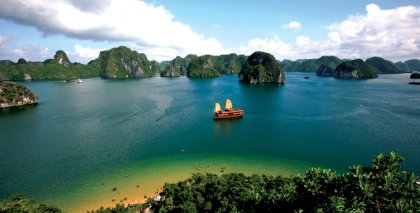
Halong bay, VietnamHalong bay, Vietnam

Often touted as Vietnam’s number one tourist destination, Halong Bay, literally means “where the dragon descends into the sea.” This is an area of more than 3000 islands, where tourist come to swim, explore, and visit a natural, scenic areas recognized in 1994 on UNESCO’s World Heritage list. This is a scenic area not to be missed!

Many of the islands are uninhabited, but some have floating villages of fishermen. Most travelers rent boats and spend multiple days exploring the tiny islands. There are some great caves and inlets to explore. The great way to experience this is on sea kayak, and sleeping in a tent at night, instead of taking the main tourists boats like everybody else.

BACH MA MOUNTAIN
The highest point in Bach Ma National Park, the mountain is only 140 meters above sea level and about 18 miles from the coast. Although the mountain is steep and dense, it makes a good day hike to the top. There are great view on the way.

WESTERN CENTRAL HIGHLANDS
Using Dalat as a starting point, head west toward the border of Cambodia and Laos. If you go far enough west, this is a great way to get somewhere way off the typical Vietnam traveler circuit. This is home to a bunch of ethnic minority villages.

Some traveler’s report that tourists are not welcome, but other report to have truly remarkable experiences.

DALAT
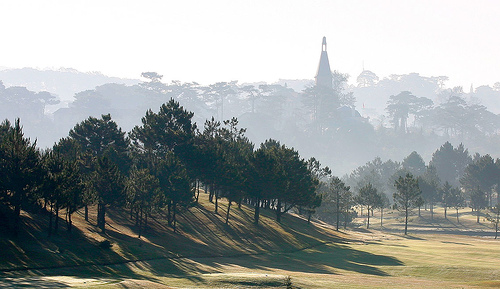
Dalat, VietnamDalat, Vietnam

If you don’t have time, energy, or the will power to visit the Western Central Highlands, then the areas around Dalat are perfect for adventure. Dalat is a hill station in the central highland. There are mountain highlands with tiny villages scattered around throughout the area. It makes a fascinating area worth exploring.

There are a number of standard expensive tours you can arrange in the city, but it’s much better to hire your own guide, usually one that approaches you in the streets. Then, you hire a moped, and he will take you to little villages in the middle of bascially nowhere, staying a night or two and having a real cultural experience.

There are some villages in the area that is off limits to tourists – just look for the sign that has a C.

MEKONG DELTA
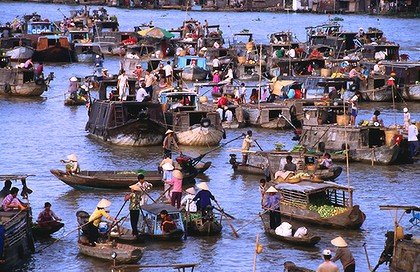
Mekong delta, VietnamMarket floating in Mekong Delta, Vietnam

In southern Vietnam near the border of Cambodia lies Mekong Delta. Known as “Vietnam’s Rice Belt,” the Mekong Delta is a huge system of canals of all sizes that flow into the Mekong River, one of the longest rivers in Asia. This picturesque area is almost all under cultivation, and produces enough rice to feed the entire population of the south and the central regions of Vietnam. This is a great place to relax away from the big cities, taste good fruit and vegetables, and meet local people.

There are a number of interesting adventures through the Mekong Delta. You can take a boat through some of the rural waterways. Most people hire guides but you can also attempt it on your own. The Mekong Delta is also a fascinating place for cycling. You can get a true glimpse of rural life and interact with locals, although conversations are difficult.

Source: bootsnall

Recommendations for tours in Vietnam:
Kayaking Halong bay 3 days
Biking Adventures Mekong & Centre Highland

Wednesday, August 4, 2010

Vietnam’s Thang Long Imperial Citadel becomes UNESCO heritage

The Imperial Citadel of Thang Long in the capital Hanoi has become UNESCO heritage as the world culture body added this site to its top heritage list in the morning of Sunday (8/1/2010 - Vietnam time).

Thang Long ancient, Ha noi, Vietnam

The World Heritage Committee of the United Nations Educational, Scientific and Cultural Organization chose the new sites at a meeting in Brazil, updating its list of top spots for historical interest or natural beauty.

The UNESCO World Heritage stamp is a valuable asset for countries as it boosts tourism.

The Thang Long Imperial Citadel was first discovered in late 2002 during excavation work to build a new national assembly on Hoang Dieu Street, Hanoi.

Thang Long Citadel was part of a citadel system built in the 11th century that included the Dai La Citadel, which acted as a defensive rampart with a complete dyke system, and the Forbidden City, where the king and his royal family lived.

Vietnam is this year celebrating 1,000 year-old culture of Thang Long-Hanoi.

Vietnam has nine things in the UNESCO heritage list. The cultural and natural tangible heritage sites are Hue Ancient Capital City (1993), Ha Long Bay (recognized twice in 1994 and 2000 as natural and geological heritages), Hoi An Ancient Town (1999), My Son Holy Land (1999), and Phong Nha-Ke Bang National Park (2003).

Intangible heritage includes Hue royal court music (2003), Central Highlands gong cultural space (2005), Bac Ninh love duet and Ca Tru (2009).

Source: sgpdaily

Recommendation in Hanoi, Vietnam:
Hanoi travel information
Hanoi tours

Thursday, July 29, 2010

Luang Prabang, Laos

The author and his friends had spent long time in Luang Prabang, Laos. He would really liked it and he had thought it was a great city.


Bike Luang Prabang,Laos


Luang Prabang
was another of the places Xan had visited before, and he’d really liked it so we were keen to spend as long there as we could. Loved it, it’s a great city. We stayed in a fab guesthouse just back from the Mekong River and close to the night market, bars and restaurants. It was managed by a young guy who regularly played guitar in reception. He was very embarrassed that he had a shaved head and explained why - there’d been a family death, his grandmother and as per Laos tradition when a grandparent passes away, he’d become a monk for a day. We treated ourselves to the most expensive room (still a lot cheaper than many we’d stayed in) which had huge windows on three of the four walls and a big 4-poster bed!

We hired bikes for most of the time we were there and did a 64km cycle! And it was no flat straight road I can tell you! I struggled on the steep hills and though I should have loved the downhill bits I just couldn’t stop thinking that I had to cycle up them on the way back. Xan did have to do a bit of waiting for me, though I did delight in noting he had a total sweat on and struggled with the biggest climb at the end.

The scenery was incredible though and our destination - Tat Kuang Si Falls - just amazing. At the base of the falls is a rescue centre for bears - it’s a pretty small enclosure for the number of bears in there but all the bears were rescued from poachers, so I guess being in there is better than their alternative fate.


Luang Prabang tour, Laos

We started the walk up the falls with a dip in the bottom pool. Had it to ourselves to begin with, our own private pool! Water was pretty cold but we got in, had a swim and it wasn’t long before we were jumping off a huge log into the deep pool.

From there we headed up to another bigger pool that had a rope swing from a tree out over the water. So much fun! We both had about 5 ’one more’ goes! Was a pretty high drop from the swing to the water, brilliant?

As we neared the top of the falls a group of people we were chatting to earlier say they were heading to a pool at the very top of the falls and asked if we wanted to join them. One of the guys had been before which was the only reason they knew how to find it. So we all set off, climbing up bits of waterfall and along river beds. Was so worth it? The pool at the top was amazing - a natural infinity pool. The rock formation meant you could lean right over the edge and look at the water plunging down below.

Before we got back on the bikes for the punishing cycle back we had another couple ‘one more’ shots on the rope swing. Really, it was just so so much fun! The cycle back was tough but not nearly as bad as the cycle there, maybe because we knew exactly what we were in for. On the way tuk tuks carrying the guys we’d been at the top of the waterfall with went passed -they helpfully cheered, waved and teased us with the ice cold beers they were drinking!

I ached the next day and spent it wandering round the town centre and reading and writing by the river. Xan hadn’t had enough and did the same cycle again, but a bit faster without having to wait for me! At the falls he didn’t go all the way to the top but did obviously get in some rope swing action before heading back.

That evening we treated ourselves to a well deserved and well needed massage at a place run by the Red Cross which employs women from violent/abusive backgrounds. I was a bit concerned when a young girl of about 7 showed me to my curtained off mat, thinking that I didn’t think the Red Cross would be an organisation that went in for child labour however it turned out she was just helping out while her mum finished breast feeding her wee sister. Was a brilliant massage, one of the best yet.

While in Luang Prabang we ate lots of amazing food. A lot of them from street stalls - cheap but fantastic. We did though treat ourselves to an amazing meal in a place called Tamarind. Run by a local Laos man and his Oz (I think) wife. Dishes we shared for mains included pork wrapped in banana leaves and bbq’d which was just delicious and we had a dessert made with their own special sauce with purple rice. Like the most amazing rice pudding ever!

We headed by tuk tuk to the local airport on our final day, gutted to be leaving Laos which we’d just loved. The airport did not disappoint, it’s so small that your main and hand luggage goes through an x-ray from the outside into the building and you all queue outside for this to happen. Brilliant last image of Laos before heading back to Thailand.

Source: travelblog

Recommendation:
Bike Luang Prabang
Luang Prabang Trek

Thursday, July 8, 2010

Two months in Southeast Asia - Travel Vietnam, Laos, Thailand

Since my second backpacking trip through Europe, I wanted to journey to Southeast Asia.

I chose to visit Thailand, Vietnam, Cambodia and Laos, and developed a loose itinerary, starting in Bangkok, Thailand.

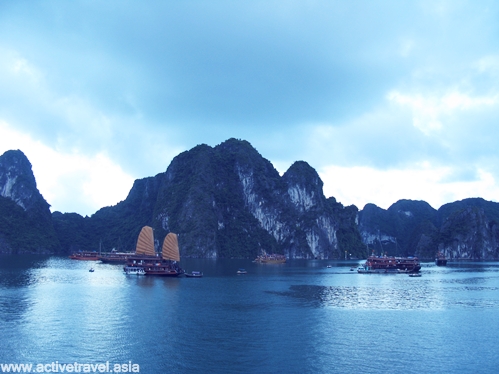
Halong Bay, VietnamHaLong Bay, Vietnam

Bangkok was everything I expected. The number of people everywhere was staggering, but before long I got used to the crowds, the heat and the food.

I visited many temples and shops, including the Grand Palace and the famed Khao San Road. The Grand Palace was amazing. Inside there were countless statues of Buddha. To my disappointment, Khao San was the typical tourist trap, with vendors selling T-shirts and bootlegged CDs.

After a few days I headed to Phuket, where I played beach bum for a few more days before flying to Saigon, Vietnam.

Scooting around Vietnam

Now, that was exactly what I pictured an Asian city to be - scooters everywhere! Crossing the street in Bangkok was like crossing a street in Des Moines compared to trying to cross the street in a Vietnamese city. The first time in Saigon was a big leap of faith. The trick is to just walk and keep your head turned to oncoming traffic.

I spent three weeks in Vietnam traveling from south to north. The highlights were eating the food in Hoi An, enjoying Hanoi’s famed Bia Hoi beer gardens and eating snake, and seeing the rock karsts of Halong Bay.

I had many choices of border crossings into Laos from Vietnam but I chose the crossing near Vinh in central Vietnam. This meant that I had an eight-hour bus ride from Hanoi to Vinh followed by a 14-hour bus ride to Phonsavan, Laos.

Phonsavan is famous for its “Plain of Jars” fields. These are fields of stone jars, each about 4 feet tall and 2 feet wide, scattered everywhere. Other jars are scattered in jungles surrounding Phonsavan.

Floating through Laos

After a day in Phonsavan I headed to Luang Prabang for a few days and then to Vang Vieng. My time in Vang Vieng was some of the best. There I went on a two-day trek that included hiking over mountains, spelunking through caves and kayaking the Nam Song River that runs through the town. The town has become a hotbed for young tourists who tube down the river. The river has a number of bars along its banks. Some have zip lines, bungee jumps and slides for the patrons to enjoy and all blare techno music.

Cambodia was the biggest surprise of the trip because I knew the least about it. The biggest draw to Cambodia is Siem Reap where Angkor Wat is located. Many people go only to see Angkor Wat but there are many more temples around Siem Reap and Cambodia. I felt like I was on another planet when I went to Angkor Wat to watch the sun rise over the temple.

I spent two months in Southeast Asia and there are still parts I didn’t see. I enjoyed every minute. Many people ask if I felt safe. I did.

Tuesday, July 6, 2010

Exploring Villages of Northwest Ethnic Minorities, Vietnam

According to exploration of some tourism companies, tourists could choose Northwestern Vietnam as an ideal destination for trekking, cycling, climbing, kayaking, and exploring traditional culture of the ethnic minorities…

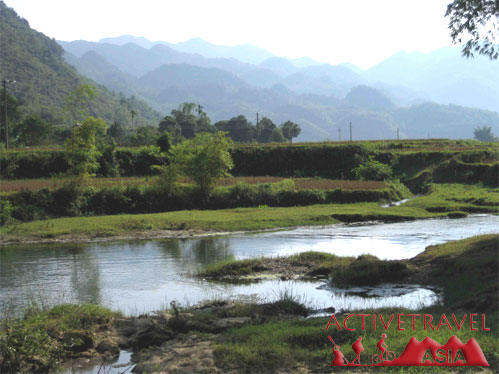
Mai Chau, VietnamLandscape from Mai Chau, Vietnam

Mother nature has given special favour for northwestern Vietnam with grandiose mountains, fanciful caves, lots of bumpy streams and winding rivers. Besides, it’s the unique traditional culture of the ethnic minorities that creates the seductive beauty for the northwest.

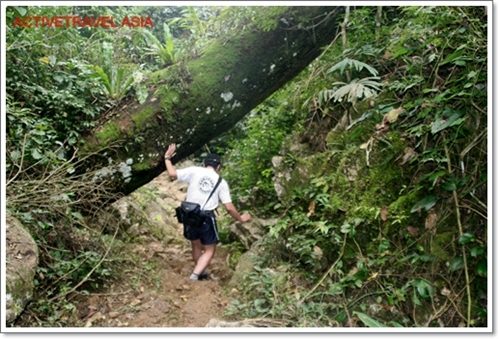
One of the favorite traveling programmes for foreigners is trekking through the mountainous villages of the northwest region. This is a new kind of tourism for those who love to discover, experience, and learn about manners and customs from many cultures.

The Muong ethnic group still transmits orally the saying “First Bi, second Bang, third Thang, forth Dong”. The saying names four accent mountain villages of the Muong ethnic minority. These are the biggest villages that the Muong ethnic group gather and settle down.

In Hoa Binh province, some villages are being exploited for tourism purposes. 10 kilometers from Hoa Binh City, Giang Mo village lying at the foot of Mo Mountain includes 106 houses on stilts. These houses are kept in their original form in structure, daily life activities, water system, rice mortar, bow and cross-bow, farming method, tradition and custom of the Muong people.

Being guests in these houses, you will be warmly greeted, enjoy folk art performance; buy tiny souvenirs made by the Muong people. It is even more interesting when you have a chance to listen to the host playing the flute and monochord beside the traditional wine jar (drunk through pipes).

Mai Chau village is 60 kilometers from Hoa Binh City. It has been a popular, tourist attraction. The houses on stilts are quite large and are covered by palm trees. The floors are made of bamboo’s wood. The windows not only are big in order to pick up the wind but also hang on orchid of baskets and bird cages. It is difficult for tourists to forget the camp-fire nights playing gongs, communicating with artisans, dancing with Muong girls.

According to Mr. Ha Cong Tim, the head of Lac village, tourism has brought a great change in the ethnic minorities’ life here sice 1993. There are 25 Houses on stilts in Pom village and Coong village to serve tourists. In 2007, more than 14,000 tourists went there; 60 percent of that was from foreign countries.

Only three kilometres from Son La town, you can live in Thai’ ethnic tradition. Thai’ girls who have not gathered their hair in a high bun yet (it means isn’t married) will invite you to their traditional party with wine, bamboo-tube rice, “com khau”, “mang lay”, “ pinh top” etc. Son La also has Mong village which is a green tourism, cultural, and relaxing site in the Hua La commune. Mong village has a hot natural stream named Bo Nam Un. The water has got medical properties. 100 Thai families live in here.

They live in houses on stilts in the edge of mountains. The roofs are well-decorated with the images of elephant tusks and the moon. The handicraft here includes forging, making brocade, knitting, making pottery. The sound of drums, gongs, birds, combining with stretching dance, butterfly dance, Pieu dance and the song “Inh La Oi” in will make good impression for tourists visiting Mong village.

Trekking Mai Chau, VietnamTrekking Mai Chau, Vietnam

Cooking culture with unique dishes is an interesting factor to attract tourists. To name some traditional dishes, they have steamed glorious rice, bamboo tube rice, grilled fish, vegetable, bitter bamboo sprout, dried meat, thin-top mushroom, etc. Coming to Nam Son commune, Tan Lac district, Hoa Binh Province, visiting the original Nam Son cavern, you will enjoy the specialty here: Nam Son chicken.

It is not only soft but also sweet. According to Mr. Bui Thanh Truyen, the president of Nam Son commune, it is one of the three special dishes of Vietnam that is introduced into the famous book Slow Food Editore with 1600 other dishes of 150 countries by Terra Madre Organization (administered by Italian Department of Agriculture and Forest).

In an exploration to some North- West tourist spots, representatives of tourism companies affirmed that mountain villages of the ethnic minorities are a potential advantage. What we have to do is to connect the main tourism spots in Hoa Binh with other provinces to make a route for inter-provincial tourism program including adventurous exploration, mountain biking, trekking, etc. We have to support the trade name North-West Tourism, consolidate the stability of tourism and improve the economical life of the northwest ethnic minorities.

Source: VCCI

Recommendation in Vietnam:
Trekking Mai Chau
Biking Pu Luong Nature Reserve