Tuesday, November 3, 2009

Vietnam: the rewards of peace

Modern Vietnam has many attractions, says Tim Jepson, but one event from its recent past still looms above all others.

Don't mention the war. This, more or less, is the gist of my Rough Guide to Vietnam. Or, more accurately – and I'm paraphrasing here – don't become obsessed by the war. But it's hard when visiting a country where the association, for me at least, is immediate and inescapable: Vietnam – war.
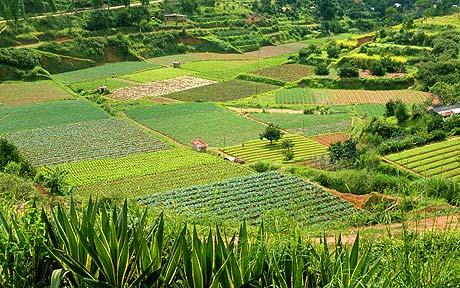
Countryside in Dalat, Vietnam - Photo by Getty


The closeness of the real world must have been the strangest thing, I think, as I sit reading the guide and looking down on miles of jungle during my flight from Bangkok to Ho Chi Minh City, better known by its former name, Saigon. It's just an hour from the Thai capital to a city synonymous with war: just an hour for all those GIs between fighting and the various pleasures afforded by a few days' leave in Bangkok.


Returning to who knows what, doubtless in far less comfort, they would have looked down on the same landscape: the jungle-covered hills, the numerous tiny villages, the sudden, sprawling urban scar of Phnom Penh, and then the majestic, churning waters of the Saigon and Mekong rivers, sweeping in vast brown meanders through emerald paddy fields.

As we come in to land, it's impossible not to note that Saigon's airport was obviously once much larger – the outlines of buildings long gone are still clear from the air. Nor to ignore the rows and rows of bunkers once used to shelter assault helicopters, their ageing concrete, for now, resistant to the effects of time and tropical weather. In this part of Vietnam, the war is right there, right from the start.

Impossible, too, not to notice the victors' symbol, the red flag and hammer and sickle – not an image one often sees these days – adorning the airport and most of the streets and larger public buildings as we drive through Saigon.

And so to hot, humid Saigon itself, a place that manages to be modern and moribund at the same time. I know you shouldn't judge a place solely on its sights, but the city, as far as I can make out, has just two things to see: the swarms of motorcycles, weaving and jostling on every street as if in some exhaust-filled ballet; and Vietnam's most popular tourist "attraction" – the War Remnants Museum.

The latter is a nasty, graceless old-fashioned sort of museum, housed in a bleak, crumbling Eastern Bloc-style building and a few ramshackle Fifties huts around a courtyard full of hawkers, beggars, tanks, bombs, howitzers, a US helicopter and other twisted-metal memorials to the events of 35 years ago.

Nasty and graceless, but utterly compelling. Especially the helicopter, of a sort you've seen in all those war movies. Its interior is virtually bare, utterly stripped down to basics, its battered, dirty, spartan appearance strangely, eerily redolent of combat. For some reason, I've assumed the equipment of war would somehow be polished, pristine, hi-tech. It very much isn't, at least once it's seen combat. The helicopter interior powerfully evokes the utilitarian grime of war in a way I've never encountered. The battered, scratched and dented rifles and other guns elsewhere in the museum have the same effect. Written down, these are platitudes, but the effect on the spot is revelatory.

There's more, of course, all worse, if anything (the guillotine used by the French, the instruments of torture used by the South Vietnamese, the deformed foetuses almost certainly caused by Agent Orange), and somehow it's all the more harrowing because of the ramshackle setting.

It's also the victors' museum, of course, and skewed in their favour, but the Americans looking around with me – and there are many of them – are talkative and engaged. The equally large number of elderly Vietnamese men, by contrast, are silent and inscrutable. You can't help but wonder: where were they and what they were doing 40 years ago?

Give Saigon a day or so. Stay in the wonderful Grand Hyatt, maybe visit the famous Cu Chi tunnels (where the Viet Cong – incredible this – hid for years just 15 miles from the centre of the city); see the markets (Ben Thanh especially); climb the Jade Emperor Pagoda; take on the mopeds at road junctions. And eat the fantastic food – the French, who contributed so much to the mess of the Fifties and Sixties, at least left a gastronomic legacy.

Then do as we do, and as the Rough Guide implores – forget the war and head out, being sure to avoid the usual dash from Saigon to Hanoi, or vice versa, preferred by most visitors.

The Vietnamese government, belatedly, and still half-heartedly, awakening to the possibilities of moneyed tourism, is keen for you to visit Da Lat, a 40-minute hop by plane from Saigon. We obliged, helped by the presence of the
Ana Mandara Villas, among the first of only a handful of upmarket resorts in Vietnam (but surely, if – as everyone tells you – Vietnam is like Thailand was 15 or 20 years ago, not the last).

A hill station pioneered by the French in the early 20th century, Da Lat largely escaped the war; a town so pretty the US and North Vietnamese tacitly agreed not to bomb it. But that was then. Even in the Fifties, travel writer Norman Lewis found parts turning into a "drab little resort", and Lewis is the kind of writer who was invariably right. Today, the town's popularity with Vietnamese visitors, honeymooners in particular, has rendered it largely a mixture of kitsch and concrete.

But there are compensations. The Ana Mandara resort, for one, built around a series of French colonial villas saved from the Communists' progress-is-all wrecking ball. Perfect in every period detail, it makes a cosseted and tucked-away base for forays into the surrounding mountains, which are superb, and where you can hike or make fascinating visits to the villages of the area's minority peoples.

Vietnam has 52 ethnic minority groups, many of them splintered into hundreds of much smaller groups – 11 million people in all out of a population of 82 million. Many are mysterious of origin, semi-nomadic and highly resistant to the attempts of successive rulers to tame them – even the current Communist government. Many mountain areas have been off-limits to visitors in the past two or three years as the Vietnamese army – in an ironic echo of the war it fought and won against the Americans – struggles, unsuccessfully it appears, to quell the guerrilla uprisings of disgruntled and intransigent mountain "rebels".

Trips to these villages alone, however, would probably not have made the detour to Da Lat worthwhile. What did was the spectacular new road (built for those hoped-for new visitors) from Da Lat through the mountains to the coast. It's a glorious drive, offering a window onto some of the country's most dramatic scenery, from soaring crags and mist-shrouded jungle, still home to tigers, to the gentler hills and fertile lowlands close to the coastal town of Nha Trang.

Nha Trang is another place for which the government has high hopes, and here they're on to a far better thing – as is Six Senses, former owners of Ana Mandara, which has opened a second and, for me, more enticing resort, the Six Senses Hideaway at Ninh Van Bay, sequestered on a pristine cove well away from the town.

This really is a hideaway, built on a crescent of white sand framed by steep, jungle-covered mountains, its combination of stylish beach, hill and water villas reached only by boat. Six Senses' mantra is "intelligent luxury", exemplified here by the clever use of wood, stone bamboo and the exemplary rendering my "four-S" requirement of a resort: Sea, Sand, Setting and Service.

The last is wonderful: the Vietnamese really are an exquisite people, exemplified by the young women who take us around the resort on bicycles. Charming and friendly, they are proud and happy as they tell us how they have just passed their English exams.

For much of my stay, I am prone, but lever myself up to visit Nha Trang, a spotless, trim resort town with an extraordinary four-mile beach and a wonderful palm-lined promenade that (seriously) puts Nice to shame. The sand and waterfront are immaculate and busy – but not too busy – with locals and Vietnamese visitors. If this is the new Vietnam, and the one the regime wants us to see, then I'm all for it.

Even so, it is still nice to return to the sanctuary of our resort, and the soft beauty of sand and jungle. The war seems a long way away here, the smiling young staff the bright embodiment of a new generation; the baby boomers of their particular war. And it should seem distant, of course, for it was 35 years ago.

But as I walk from the restaurant one evening along the sandy trails cut through the jungle, I can't help but imagine a US soldier walking this same, silent path. Here, the jungle has been thinned, the paths cleared. Yet in the gloom, even in this manicured enclave, I can barely see a few feet into the undergrowth. Suddenly everything seems eerie, ominous: 35 years ago, anything, or anyone, could have been concealed, watching, waiting, tracking, trailing.

As in the war museum, the moment is revelatory. It makes me realise with sudden clarity the futility of the whole US venture in Vietnam. An American soldier would have had little chance here; at the mercy of an opponent completely at home in this environment. A child could have walked down this path and told the US generals their project was doomed.

An odd thought, I admit, after a sumptuous dinner, with the creamy comforts of a luxury villa waiting farther down the beach. But Vietnam does that. Vietnam – war. It's a tough link to break.

Source: Tim Jepson/telegraph.co.uk

Related sites
- Vietnam Travel Guide
- Short Excursions in Vietnam
- Adventure tours in Vietnam

Monday, November 2, 2009

Exploring water lifestyle of Mekong Delta Vietnam

When the conversation is about the Mekong Delta, people immediately think of tropical rivers, interlacing canals, immense rice fields and the floating homes.


A view of floating Market in Mekong river, An Giang province.


Lazing on a small sampan, tourists can feel they are so tiny on the boundless river and under the shade of countless trees. Witnessing the trade on the floating markets surely makes an impression on those in the delta for the first time.


Upon reaching the raft village, tourists are introduced to the structure of the rafts which are designed as homes and as floating fish farms. Tourists can catch a view of farmers feeding fish and can be served indigenous dishes made from local fish.

Tourists should not miss a visit to a weaving village of the Cham people. Here, tourists can witness the dexterity and talents of Cham ladies who painstakingly weave on looms by the riverside.

On the way back, tourists should not miss the floating restaurants to enjoy specialties of the Mekong Delta in tide-water season. Floating on the immense rivers and taking a look at the lifestyle in the delta are unforgettable experiences.

Chau Doc town is about 300 kilometers from HCMC.

VietNamNet/SGT

Related to Mekong delta, Vietnam
- The Mighty Mekong delta Vietnam

Thursday, October 29, 2009

A memorable trip to Fansipan by Sapa, Vietnam

We are a group of Malayan, We often take adventure tours and this time to Vietnam is Fansipan.

Get pick up at Laocai train station and transfer to Sa pa, we stopped at Hotel, got a room for shower, breakfast, prepared our gears for the coming trek.

On the way trekking Fansipan Mt, Vietnam

Driving by Jeep along a up-down, zig-zag road to get the mountain pass to start our hike. The first sight to us is the large mountain, the trek at the beginning is quiet easy. we are all eager to conquer.


Lunch was good, much better than I had expected. We had baguettes, tomato, cucumber and cheese followed by pear. I had read someone else's blog about their trip up Fansipan and they had eaten rice, noodles and an increasingly rancid piece of pork for 4 days.

After lunch we actually had to loose high to get to the camp to where we were going to sleep. There was another big river to cross but this time there was a bridge so we got across with dry feet. Camp 2 was just on the other side and consisted of a couple of wooden buildings.

After getting cleaned up and changing into dry clothes we were served up a massive banquet of really tasty food. We had stir fried chicken and mushroom, beef and onion, tofu, potatoes, cabbage, rice and more.

There was twice as much as we needed.

After that it was straight to bed. We slept in the camp that our guide and porter had made, it is really fun, the camp is bigger enough for our group. Our place to sleep was well prepared, we had thick mattress and sleeping bag. It was fairly comfortable and it didn't get cold during the night.

In the morning we were served up a really massive bowl of vegan noodle soup with a fried egg on top. It was tasty but way too heavy for 6:30 in the morning. None of us managed to eat more than half of it.

Another hard day to conquer the roof of Indochina, this day We had to head up to the top from 2200m, then down to the camp at 2800 for the night. The hike was really true for mountain climb, the higher we climb, the better landscape we enjoy.

We were at the top at about 1pm, had a lunch on a big rock in windy and sunny noon, Life is fantastic!
Back to the camp at 2800m at about 5pm, we spend this night in a cottage make by the national park. To congratulate the winners of Indochina roof, our guide killed a pig that they had carried all the way up from Sa pa to make barbecue, we had some wine too.

The last day seemed to be easier to us, we went all the same way down to Tram ton Pass then took a Jeep to Sa pa. Got a room with hot shower.

This was the best trip I had done in Vietnam.

Source: Petercampel's traveler from TravelPod Blog

Recommendation for Trekking Fansipan , Vietnam:
Sapa Travel Guide
Trekking Travel Guide
Trek Fansipan Tours

Wednesday, October 28, 2009

ACTIVETRAVEL ASIA hosts a group of Burrows Red Spider Travel Vietnam in Jan 2010

ACTIVETRAVEL ASIA (ATA) will host a group of Burrows Red Spider to take the motorcycle trip in Ho Chi Minh Trail, Vietnam. This trip will start from Hanoi and finish in Saigon (Ho Chi Minh City) in Jan 31, 2010.


Motorcycle tours in Ho Chi Minh Trail, Vietnam


With 10-day motorcycling tour in Ho Chi Minh trail in total 16 day trip from Hanoi to Saigon, this motorcycling grading of tour is considered as Moderate to challenging by ATA

Recent road work that follows original sections of the trail has changed this. Besides incredible driving, deep in the Vietnamese countryside; this ride takes in the charming ancient trading town of Hoi An, Khe Sanh battle site and DMZ. Travelers also take time to stay overnight in a traditional Thai hill tribe and visit to some tribal villages on the way.

Burrows Red Spider is group of American motorcyclists and love motorcycling travel especially travel to Vietnam War in the past by motorcycling.

Travel Tips
- Motorcycle tips: Viet Nam motorcycle travel tips
- Motorcyle guide & trail: Ho Chi Minh trail & travel guide
- Motorcycle tours: Motorcycle tours in Vietnam

Eight Wonders of Vietnam

UNESCO lists five World Heritages in the country, but Adventure Beat editor Christian Kallen's list presents a more varied picture: the Eight Wonders of Vietnam.

If many of a certain generation tried to avoid going to Vietnam at all costs, now these same travelers may be tempted to explore a densely textured destination as historic, culturally rich and scenically stupefying as any country on Earth.

Adventure Beat editor Christian Kallen's "Eight Wonders" of Vietnam:


1) Ha Long Bay


Halong Bay, Vietnam

Legend has it that the dragon that created civilization dove into these waters (Ha Long means "descending dragon") to his rest. There is a mythic, supernatural quality to this bay on the Gulf of Tonkin, east of Hanoi, that must be experienced to believe. Limestone "haystack" islands draped in jungle foliate erupt from the placid bay, fishermen in dragon-headed boats lay their nets, caves both above and below water level invite exploration. There are some 700 islands in the bay, and nowadays you can sea kayak among them with local tour operators — although in ancient times the Vietnamese general Tran Hung Dao outwitted the Chinese navy here.


2) Hanoi's Old Quarter

Hoan Kiem Lake, Hanoi, Vietnam by you.

Hoan Kiem lake, Hanoi's Old Quarter, Vietnam

Few capitals necessarily qualify as "wonders" — Paris comes to mind — but Hanoi belongs in that class. It was first made capital of Vietnam in 1010 A.D., along a bend in the Red River, and even today, 996 years later, it's still a rush of urban energy and pastoral ease. Walk around the central district's Hoan Kiem Lake in the cool morning hours, while the locals do their daily tai chi; shop in the narrow streets of the Old Quarter where tradesmen have practiced in the same shops for up to 25 generations; dine European, Asian, or fusion at one of the many restored colonial mansions.


3) Cao Dai Temple

Cao Dai Temple

Even knowing in advance that the Cao Dai religion counts among its saints Victor Hugo, Louis Pasteur, and Sun Yat-Sen does little to prepare the visitor for the psychedelic splendor of its Holy See. Primary colors run riot over plaster dragons, flowers, and figurines crawling up the pillars and walls, while the all-seeing eye (a Masonic symbol also found on the US Great Seal) is everywhere. The temple is just a short drive from Ho Chi Minh City, and elaborate services and ceremonies are held almost daily.


4) Mekong Delta

Float market Mekong River, Vietnam by you.

Mekong Delta, Vietnam

The Mekong's route begins 2,500 miles upstream in Tibet, and its course through China, Burma, Laos, Cambodia and Vietnam is a waterway through the exotic. It flows into the South China Sea through a delta of many streams (its Vietnamese name, Cuu Long, means Nine Dragons), a fertile region known as "the ricebowl of Vietnam." The highlight for most visitors are the floating markets of Cai Be and Vinh Long, where you can get everything from fruits, flowers, and handicrafts to exotic snakes — and dishes as memorable as the “elephant's ear” fish (not endangered).


5) Tonkinese Alps

trek Fansipan, Sapa, Vietnam by you.

Fansipan Mountain, Sapa, Vietnam

The Tonkinese Alps create the barrier between Vietnam and China to the north, and their highest peak is Mount Fansipan (10,312 feet). Most people don't think of going to Vietnam to go mountain climbing, but consider this multi-day trek anyway, not only for its spectacular views into China but for the hilltribe villages you pass through en route. The route begins in Sapa, a popular tourist center in the midst of hill country, then forges through valleys of terraced rice fields into ever more remote villages peopled byanimistic minorities, such as the Dao, Hmong and Nung. Frommer's Guide on the Tokinese Alps.

6) Endangered Wildlife

Tram Chim National Park, Vietnam by you.

Tram Chim National Park, Vietnam

With its centuries of warfare and commerce, napalm and revolution, it's hard to think of Vietnam as a wildlife hot spot, but it is becoming increasingly recognized as such. Exotic creatures such as several rare species of langurs, gibbons and monkeys; wild boars and the extremely rare brown-antlered deer vie with lizards, snakes and birds for life listers. Although habitat loss in this growing country is a problem, an even bigger one is the catholic appetite of the Vietnamese palate – and the illegal trade in endangered species and restaurants that serve them.


7) Phong Nha-Ke Bang

Phong Nha cave, Quang Binh, Vietnam by you.

Phong Nha cave, Vietnam

The most recent of Vietnam's World Heritage Sites is the Phong Nha-Ke Bang National Park. Travelers to Southeast Asia are well aware of the widespread karst formations of the region (Ha Long Bay is one such). Karst topography is limestone-based, riven with caves and cracks, given to weird shapes and striking vistas. The formations in Phong Nha-Ke Bang are among the world's oldest, 400 million years old; its geomorphology is complex and a motherlode for earth sciences.


8) Hoi An Village

Hoi An lantern, Vietnam by you.

Lanterns, Hoi An, Vietnam

Designated a World Heritage Site in 1999, Hoi An is the former main port of Vietnam in the 16th century, and today 844 of its historic structures are preserved as landmarks. You can walk down the crooked streets surrounded by the atmosphere and odors of times gone by, take a sampan ride down the Do River or the streams that lace the town, hunt the traces of the foreign traders – Japanese, Chinese, Dutch, and Indian – who made Hoi An the center of culture in old Vietnam. Helpful hint: visit during full moon, when the shop owners turn off the lights and illuminate the streets with candle lanterns.


Related sites:

Viet Nam travel guide

Tours in Viet Nam

Short Excursions in Viet Nam